[email protected]
Cinemablography
  • Home
  • About
  • Blog
  • Articles by Category
  • Videographic Essays
  • Contributors
  • Journal
    • Existentialism in Film >
      • The Existential Philosophy of Melancholia
      • The Philosophy of Camus in The Dead Don't Die
      • The Existentialist Subtext of Dear Evan Hansen
      • An Existentialist Reading of "The Turin Horse"
    • A Woman's Perspective: Gender, and Identity in the Romanian New Wave
    • Film Theory Issue 1
    • Film Theory Issue 2
    • Science Fiction
    • Science Fiction Issue 2
    • Pan's Labyrinth
    • Kathryn Bigelow >
      • Opening Scene
      • Supermarket Scene
      • Round Table Discussion
  • Our Work
    • Links

No Time to Die: A Review

2/4/2022

 
by Reed Milliken
Cary Joji Fukunaga’s No Time to Die is the perfect bookend to the Daniel Craig James Bond era. I wouldn’t have labeled myself as a fan of the James Bond character before seeing No Time to Die, but despite that, I was still interested in seeing the new release. I rewatched all of the prior Daniel Craig installments in preparation, and I’m glad I did. I was instantly made aware as to why this franchise had such a following, and No Time to Die only fueled my newfound love for the films. The film not only served as a proper end to Daniel Craig’s take on the character, but it was also just a high-octane thriller that is just as exhilarating as it is poignant. If you’re a fan of action movies, the Daniel Craig James Bond movies, or any of the James Bond movies for that matter, you’re going to love No Time to Die.

Picture
The following review contains spoilers for No Time to Die (Cary Joji Fukunaga, 2021), as well as the other films from Daniel Craig’s run as James Bond; Casino Royale (Martin Campbell, 2006), Quantum of Solace (Marc Forster, 2008), Skyfall (Sam Mendes, 2012), and Spectre (Sam Mendes, 2015). Reader discretion is advised.
Stepping out of the theater, I was a little overwhelmed. With a runtime of over two and a half hours, there was a lot to unpack. I can confidently say that rewatching all of the Daniel Craig James Bond movies prior to your viewing is the best way to go into this movie. The plot of each movie heavily references the ones before it and the people who accompanied me to the theater who hadn't seen the prior four found themselves lost.
One of my favorite hidden details of the movie is that I could tell that director Cary Joji Fukunaga was clearly a fan of some of the older Bond movies. The main villain of No Time to Die, Safin, owns an elaborate secret base set on a private island and employs a bunch of henchmen that wear matching clothes. I originally criticized the film for being too cartoony, but I soon realized that these features make the film very reminiscent of two of the more iconic James Bond films Dr. No (1962) and You Only Live Twice (1967), starring Sean Connery. Furthermore, a majority of the characters in No Time to Die are prone to quippy one-liners, one of the more iconic and memorable features found in the Connery era of James Bond. These features did admittedly feel a little out of place considering none of the other Daniel Craig movies used these tropes, but they were too much fun to feel negative towards.

Picture
Director Cary Joji Fukunaga behind the scenes with Daniel Craig
After looking through others’ reviews of No Time to Die, my biggest complaint of the movie seems to be a common one; not enough Ana De Armas. Her character, Paloma, was a charming and entertaining way to kick off the movie and was easily my favorite character apart from Bond. The two’s chemistry together was phenomenal, something I wasn’t exactly surprised to see after Daniel Craig and Ana De Armas’ work together in Knives Out (2019), therefore I would have loved to see her stick around as a main character throughout the film, rather than just the 10 minutes she got. Her absence in the remainder of the runtime was a letdown, but considering this is my biggest critique of the movie, I’m very happy with what we got.
Picture
Daniel Craig and Ana De Armas during Armas' first scene
Ana De Armas’ character was not the only one I enjoyed. Felix Leiter, a repeating character from throughout the franchise who was mainly business-oriented, is now featured as a fun-loving, quirky companion to Bond. I enjoyed seeing this side of Felix, as it finally felt like Felix’s character was done justice, and I don’t think his death would have hit me as hard as it did if it weren’t for these minor changes. As for the other characters, M worked for me all but once where his macho came off more comedic than stern, Moneypenny had a fun line about shooting Bond, Nomi did exactly what her character was supposed to and frustrated me from start to finish, and Q came out as gay which was a nice way to show inclusion without feeling too forced. 
Lyutsifer Safin, Rami Malek’s villain character, worked well for me too. Having Safin be the man that invaded Madeline Swann’s house as a child, a backstory that was given one movie prior in Spectre (2015), was not only a neat tie-in to a prior installment but also just worked really well from a plot standpoint. However, Safin as a character began to crumble as the movie continued. There is a scene in the third act where Bond's daughter bites Safin's finger and Safin just lets her run away. It didn’t make sense for Safin to do this, as he was, up until this point, shown to be ruthless towards all things James Bond, so it just came off as lazy writing. Safin was by no means my favorite Bond villain (looking at you Javiar Bardem), but I do like that he got his revenge on Madeline by killing Bond. Bond’s death gave Safin a happier ending than he did which was an odd choice but not one that I entirely disagree with.
Picture
Rami Malek's villain character Lyutsifer Safin
Speaking of, I love Daniel Craig's Bond, he really is the perfect cast. He can play the stern and intimidating, but switch it up to playful and flirtatious at the flip of a switch. I felt like his character changed a little bit with each movie, but at least he ended on a high note. I'm still a little unsure how I feel about the nature of his death, but despite that, it still hit me like a ton of bricks. It is probably the most emotional I've gotten in a movie theater, especially after watching the other four so soon before my viewing. My only issue is how long those missiles took to reach the island. There were at least 10 minutes of runtime between the launch and the impact, giving Bond plenty of time to die which is funny considering the title.
I liked the story. It wasn't perfect, for example killing off Spectre and Blofield, the big overarching villains from the entire franchise so unceremoniously was frustrating, but besides that, it was all pretty decent. I wish the main disease used in the movie didn't parallel so much with COVID, but the movie was filmed before the pandemic so I won't be too harsh about that. It is, however, very interesting how that not only happened to line up but that the studio decided to keep it in too. I know that parallels to COVID have scared movie studios in the past, I think Locked Down (2021) set a good example moving forward for how audiences want Hollywood to treat the pandemic. Locked Down is a movie about a heist that takes place during COVID that performed poorly at the box office presumably because people wanted to escape from the virus, not consume more content about it. One instance of a studio changing their work to avoid parallels to COVID was Marvel Studios’ The Falcon and the Winter Soldier (2021). The show had a subplot involving a viral disease and was reshot to work around it. I respect No Time to Die for not trying to rush and change the plot last minute, as The Falcon and the Winter Soldier didn’t exactly turn out amazing. However,  parallels or not, I just wish they hadn't included the prefix "nano-" in the virus description. It’s such a cliché name for a MacGuffin and felt very out of place here.

Picture
One of the more memorable shots of Daniel Craig's James Bond
In the end, No Time to Die was a fitting end to the Craig era. Moving forward, I am excited to both go back and rewatch the old ones, as well as see who Eon has in store for us next. If you have followed the Daniel Craig movies thus far, and enjoy movies like the Mission: Impossible franchise or the Jason Bourne franchise, this movie is a must-see. It’s an amazing action movie even on its own, I just suggest you watch it with someone who’s a little more knowledgeable on the franchise so you’re not completely lost.

Licorice Pizza: A Review

1/28/2022

 
by Mason Leaver
Picture
In the constant delays and release date push-backs caused by the pandemic, there were few movies I was more saddened to see delayed than Paul Thomas Anderson’s highly anticipated Licorice Pizza (2021). On top of this, the film was released in a limited capacity, and wasn’t available in all theaters for some time. However, having seen the film, I have mixed feelings. On the one hand, Licorice Pizza is one of my favorite films of the year. On the other hand, the film feels underwhelming, when one considers the titanic career of Paul Thomas Anderson (PTA). While Licorice Pizza is not PTA’s best work, it still makes for a highly entertaining and lighthearted film, introducing two new, promising actors. 
    Licorice Pizza focuses on the story of Alana Kaine (Alana Haim) and Gary Valentine (Cooper Hoffman) growing up in the 1970’s. Gary is an entrepreneurial 15 year old, determined to be a successful actor and businessman. Gary develops a crush on 25 year old Alana after they meet at his high school picture day. The two slowly develop a friendship, and we witness their complicated relationship progress through a series of misadventures. Over the course of the film the pair create several money-making plots, and interact with a host of wild characters played by a variety of celebrity cameos. Indeed, one of the more entertaining aspects of the film are these strange characters that the pair interact with - some dangerous, some downright bizarre. The central tension of the film is this will-they-won’t-they as the pair argue and come together repeatedly. There is not a single narrative through-line; the film features a more episodic structure. All of these elements come together to give the film a sense of adventure, along the lines of a bildungsroman. 

Picture
Cooper Hoffman and Alana Haim
One of the most impressive aspects of Licorice Pizza is how PTA has pulled such high quality performances out of two actors who are new to the silver screen. The film features the debut performances of both Haim and Hoffman, and both show great promise for future roles. PTA previously worked with Alana Haim and her sisters in their band, Haim, on several of their music videos. Allana’s sisters, Este and Danielle, also make appearances in the film, as do their parents. Haim’s ability to capture the feeling of being simultaneously frustrated with and charmed by someone is convincing and human. Additionally, Hoffman manages to walk a fine line as he portrays a character who could easily come across as annoying or unlikeable. Indeed, Gary does at times come across as rude, annoying, and chauvinistic, but Hoffman’s portrayal also offers moments of levity and emotional honesty which allow us to relate with the character. Despite the flaws of both characters, the actors portray the couple in such a way that by the end of the film, we are rooting for them. 
    Paul Thomas Anderson is a well known name in the world of film. His films (There Will Be Blood, Phantom Thread, Magnolia, among others)  have won countless awards over the years, and he has directed some of my personal favorite films. Across his filmography, Anderson has consistently created films which have deep symbolic meanings and which raise difficult questions. Licorice Pizza feels like a much lighter film by comparison. It does not feature the same provocative symbolism of his previous films, and it does not drive its audiences towards any weighty truths. Instead, the film offers a much lighter approach, favoring a general nostalgic aesthetic and emphasis on themes surrounding the importance of family, friendships, and romance. These themes are explored through Gary, following his journey in a coming of age story. The film never gets too heavy or highbrow, instead taking an approach which favors creating a mood over establishing any deep concepts. Licorice Pizza feels like PTA’s least intellectually stimulating film, yet it is also one of, if not his most, charming film. For these reasons, it seems unlikely that Licorice Pizza will have the same staying power that the rest of PTA’s filmography has enjoyed. 
Picture
Tom Waits makes a cameo in the film
That said, it is not as if Licorice Pizza is a weak film. All of its various aspects - performances, jokes, plot - shine through spectacularly, and it is certainly worth seeing, as it makes for an entertaining two hours. Strangely enough, this film feels almost more in line with some of the work of Wes Anderson, director of films like The Grand Budapest Hotel (2014) or the recent The French Dispatch (2021). Some of Wes Anderson’s weaker films have similarly featured heavy use of celebrity cameos, lighthearted romance and adventure, and have ultimately proven to be less memorable and thought provoking than his strongest work. In some parallel world, I could see Licorice Pizza directed by Wes Anderson rather than Paul Thomas Anderson. My hope is that Licorice Pizza proves to be a short detour from Anderson’s usual work, rather than a hint of what is to come. It may be that this film is more of a personal project rather than a defining film for PTA’s career. Despite my concerns over the director’s trajectory, Licorice Pizza still manages to be a highly entertaining film, and its strong performances and endearing characters make it a film worth seeing.

A Leap From Expectations- Spiderman: No Way Home

1/21/2022

 
by Samantha Shuma
Picture
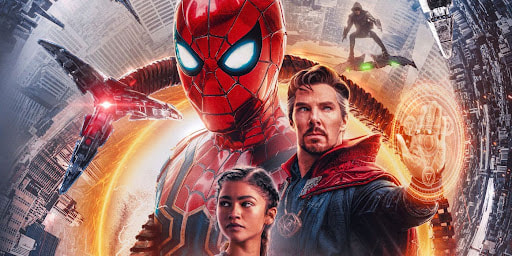
Spiderman: No Way Home (NWH) (Jon Watts, 2021) took the movie industry by storm by being the highest grossing solo superhero movie. Being the newest addition to the ever growing list of superhero movies, it is beating out previous films not only financially, but artistically as well. So many different creative minds have joined together to make a once in a lifetime film, and their talent comes through in every element of the production. The acting, pacing and music tie the film together into an endearing, action packed adventure.  

The review contains spoilers for Spiderman: No Way Home, reader discretion advised.

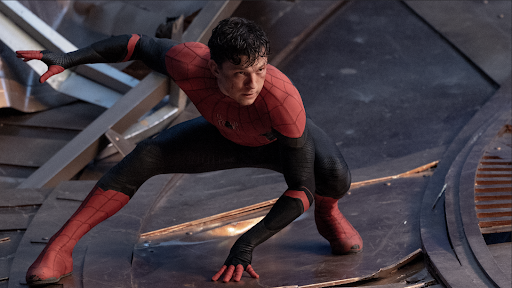
The film starts as eerie music plays, revealing the disaster left from the previous film, Spiderman: Far From Home (Jon Watts, 2019). For Peter Parker (Tom Holland), his world is turned upside down as his identity as Spiderman becomes public knowledge. Seeing how any association with him has cost his friends their futures, he seeks the help of Doctor Strange (Benedict Cumberbatch) to reverse the damage of the world knowing Peter Parker is Spiderman. The spell Strange performs goes awry, propelling those from every universe who know Peter Parker is Spiderman into their own. When these uninvited quests start pouring in from other universes, we can think of who, across infinite universes, knows Spiderman to be Peter Parker. This does come with the later discovery of Andrew Garfield (The Amazing Spiderman 1 & 2) and Tobey Maguire (the original Spiderman trilogy), we also get to experience the villains their Spiderman have faced with their own franchises respectively.
Picture
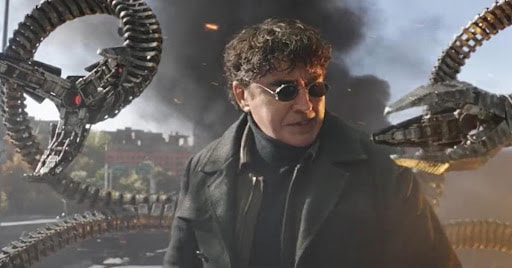
Doc Ock (Alfred Molina) is the first character to appear. His character changes dramatically throughout the film, showing that Doc Ock isn’t evil at heart but rather under the control of a damage chip attaching his robots arms to his brain. There is a dramatic shift between how he acts before and after the chip is fixed. Molina portrays this contrays well, giving the audience hope that a villain can change for the better. Becoming a friend of Tom Holland’s Peter Parker, Doc Ock is the first and most well explored redemption arc in the film. Molina’s acting is believable and likable, making his character’s arc satisfying by the film’s end. His performance is one of many that amazed me during the film, others being Willem Dafoe (Green Goblin) and Marisa Tomie (Aunt May).

Strong actors are what make and break a good story. Of course, stellar acting cannot make up for a poorly written script. When it comes to NWH, the story and the pacing works in the actors’ favor and both the acting and story work to create a film that is character focused. By the end of the film, their universe is about to implode as an infinite number of people flood in. With stakes so large, it can be hard for audiences to grasp and relate to the scope of the situation. In many superhero movies, those kinds of stakes remove any emotional tension to be had for its story. NWH manages to show the ‘saving the universe’ plot on a smaller, more relatable scale by focusing more on the relationships and goals between characters.
​
Picture
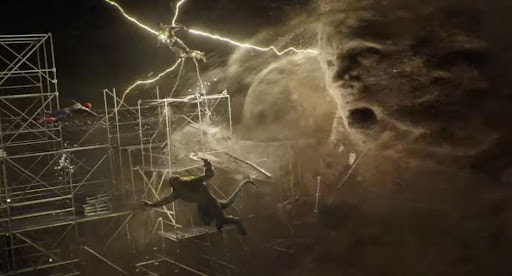
This is one of the few superhero films in recent memory where the soundtrack plays an integral role. The music in NWH sets the tone and maintains this motif of danger and excitement. As this film does draw from the other live action Spiderman franchises, it is interesting to listen to where the previous Spiderman themes have been tied into this new trilogy. This reincorperation doesn’t overshadow the original music or feel out of place when it is played. This doesn’t only come through composition but also through style. When Electro (Jamie Foxx) is introduced, the techno style music of the film he was previously in (Amazing Spiderman 2) comes forth through some new music. The music choices in Amazing Spiderman 2 (2014, Marc Webb) were generally seen as questionable by fans. This music continued to feel true to the character while also remedying fan concerns.
​
A lot of smart choices have been made when it comes to how previous Spiderman properties would be referenced throughout NWH. This story could have easily been oversaturated with reference humor or exposition dumps in order for old Spiderman fans to enjoy the film while also making the film understandable for those who haven’t watched the other Spiderman trilogies. The balance between appealing to old fans while adapting to new ones is one of this film's unique challenges. Since Tom Holland’s Spiderman has never met these villains before, viewers who haven’t been introduced to these characters will be in the same situation as the film’s main character. While older fans can have a deeper appreciation for these characters and their background, there is no vital information that is missing for those who are watching a Spiderman movie for the first time. From beginning to end, each moment of the film is introduced just enough to be enjoyed by any viewer.
Picture
Seeing how each aspect of the filmmaking process comes together, it is understandable why NWH has become one of the highest grossing superhero movies ever made. Its character focused story brings in characters from different universes as Tom Holland’s Peter Parker helps to redeem old villains who would have died otherwise. His caring heart forces a broken spell to turn into a new beginning for everyone involved. While we are left with what will happen in future films, there is also a great amount of satisfaction for how the villains of this film have been dealt with. This is all underlined with excellent music, making the film immersive and fulfilling as an audience member. NWH hits the mark as a fun action movie and as an artistic endeavor for all the creative minds involved. Whether it’s the music, acting, or story, each element of the production shows their ability to make an exciting, character driven film.
The Editing Style of Edgar Wright

12/30/2021

 
by Joel Cowart
Picture
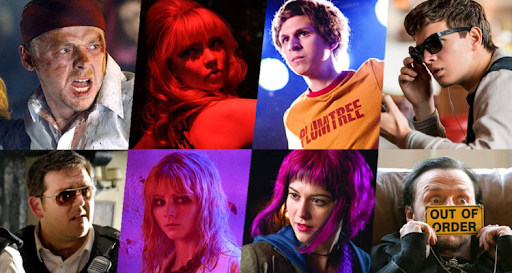
Up until watching the film Hot Fuzz (2007), I believed that the editing style and techniques used in a film were largely determined by the editor of the film. However, upon watching this particular film, directed by Edgar Wright, I realized that the director has a profound impact on the editing of a film. When a director has a clear vision for how they want the editing to affect the mood of a film, the film is greatly enhanced. Wright is one example of such a director, which is evident in the numerous films he has written and directed in the past 20 years, including Shaun of the Dead (2004), Hot Fuzz (2007), Scott Pilgrim vs the World (2010), The World’s End (2013), Baby Driver (2017), and most recently Last Night in Soho (2021). 
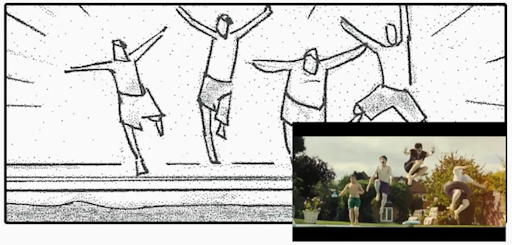
    The main editing techniques that define Wright’s genre-breaking films are dramatic, jarring, often comedic cuts as well as interesting and unique transitions between shots. In addition to this, he is also meticulous in editing pre-production, that is, in storyboarding everything. This style of editing developed from his early days of filmmaking. At the start of his career, Wright didn’t have enough coverage for his film Dead Right (1993), and, as a consequence he didn’t have many choices when it came to editing (Edgar). In order to combat this problem and keep his films interesting, he had to use quick cuts and creative transitions, techniques that he continues to use and have become a defining characteristic of his films today.

Picture
Wright’s animated storyboard compared to the shot used in The World’s End (2013)
In addition to his initial filmmaking blunders leading to one of his greatest trademarks, Wright also learned the importance of pre-production editing, more commonly known as storyboarding. Wright uses his storyboards to jump start the editing process, animating them before shooting, which is not unique to him as a director, but is necessary for his vision of how he wants the editing to impact the film. In order for all his cuts and transitions to hit at the right time, he edits these animations, which includes dynamic shots and effects, to plan out the timing of each shot as well as the major movements in the shot, which is important, as almost everything, both performances and cuts, is in time with music. This is nowhere more apparent than in his film Baby Driver.
Picture
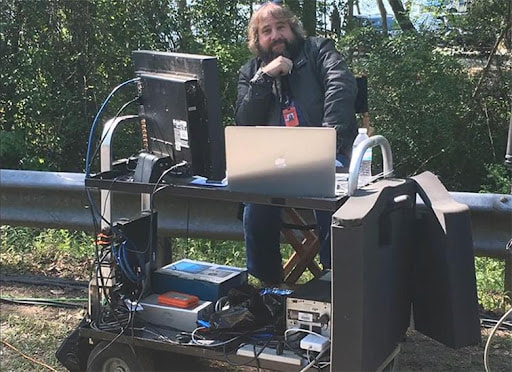
Paul Machliss at his editing cart on set of Baby Driver (2017)
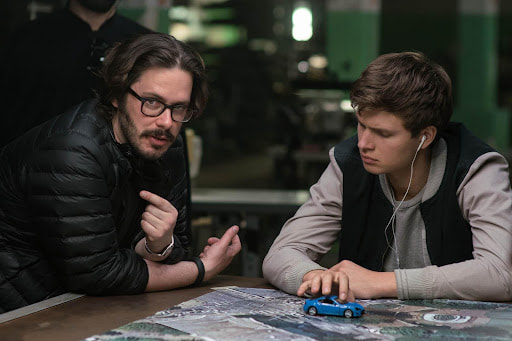
Baby Driver follows a young getaway driver named Baby (played by Ansel Elgort) with tinnitus who constantly plays music to drown out the ringing in his ears. It is this music that drives the film. Everything, from characters walking to camera movements to car chases to gunshots, every detail, no matter how small, is timed to Baby’s soundtrack. This was achieved through editing on site as production was going on. After each shot, Wright would check with Paul Machliss, the editor of the film, to make sure it fit with the music as seen in the animated storyboards. Machliss, who brought with him a mobile editing cart to be able to keep up with the quick pace of the production, would immediately put the shot into the edit to make sure all the visual beats matched with the music. This mesh of music and visuals brings the viewer into the film and gives them a sense of awe. Through his precise style of storyboarding and editing, Wright works with the editors and crew of his films to create beautiful, driven pieces of art. 
Picture
Edgar Wright (Left) working with Ansel Elgort (Right)
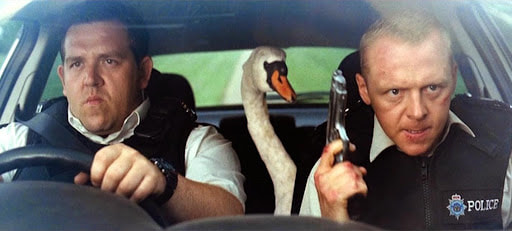
In addition to making his films more visually stunning and compelling, Wright’s editing style is also versatile. Whether the genre of a film is a rom-com set during a zombie apocalypse, a satirical mystery thriller, or a time-travelling horror commentary, Wright’s use of editing accentuates the strong points of that genre. For instance, Hot Fuzz follows a serious London beat cop sent to a small town where almost nothing goes wrong. At first, Wright’s signature jarring cuts seem almost out of place, as there is no notable action in the first half of the film. However, upon re-watching the film, I realized the brilliance of this choice. Hot Fuzz is a satire, not of some problem in society, as one would expect from a satire, but of the modern action film genre itself. As small town cops are chasing down petty criminals down small town roads, Wright uses his quick cuts and transitions, similar to those seen in almost all action films today, to parody the fictitious nature of action films which makes the film all the more hilarious.
​
Picture
Nicholas Angel (played by Simon Pegg) and Danny Butterman (played by Nick Frost) track down a criminal with a goose in tow in Hot Fuzz (2007)
This is the main reason the works of Edgar Wright are so brilliant. Film is a form of art, not just a means of telling a story or sharing a message, and Wright understands that. He uses film to tell a story, instead of simply telling that story through film. All of his edits and shots have a purpose. In many of his films, comedy fills that purpose, as he uses the full extent of cinematography and editing to create comedic content. Instead of simply putting characters in comedic situations or relying on witty banter to make his films comedic as many modern comedy films do, he chooses the look and feel of each shot and cut to make those choices in and of themselves as funny as they can be. The framing or focus of a shot, jump cuts, and camera pans can be hilarious when used to their full advantage, something Wright does magnificently. 
    In today’s filmmaking world, many filmmakers do not have a specific vision for how they want the editing of their film to add to the feel or mood of the film as a whole. In contrast, Edgar Wright takes the time to plan out every cut and transition in his film in order that each one adds to a theme or a mood he wants the film to portray. Wright uses the medium of film to its full advantage, creating some of the most innovative, entertaining, and beautiful films in modern cinema, something I hope to see more filmmakers utilize in the future.
Works Cited
“Edgar Wright on How He Writes and Directs His Movies | The Director's Chair.” YouTube, uploaded by StudioBinder, 7 December 2020, https://m.youtube.com/watch?v=fa_lP82gAZY

I'm Thinking of Ending Things: Analysis

12/17/2021

 
by Sebastian Tow
Picture
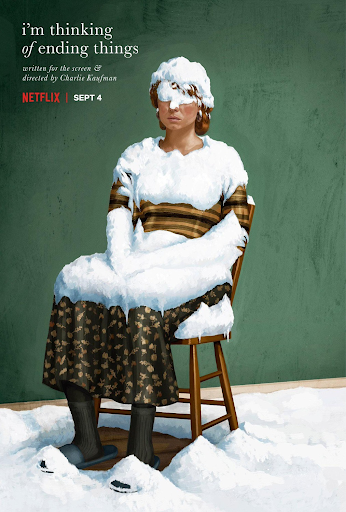
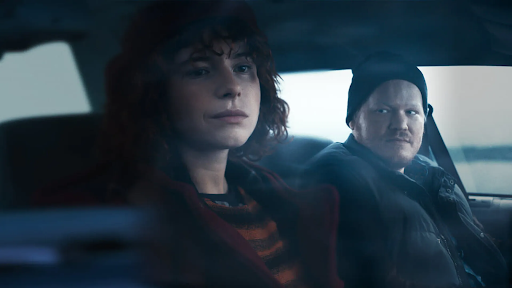
Director Charlie Kaufman’s  I’m Thinking of Ending Things is a film that will leave some viewers feeling like they experienced a bad acid trip. Others may be unsatisfied, even angry after sitting through two hours of confusing pseudo-thriller cinematography and countless plot derailments. Others may try to theorize about what it all meant, but the unifying feeling among every viewer will be one of perplexment.

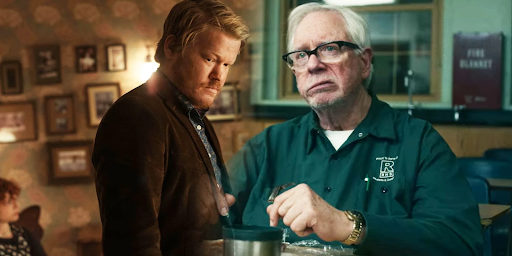
The film begins with a long ride through a snowstorm. In the car is a young woman named Lucy (Jessie Buckley) riding with her boyfriend Jake (Jesse Plemons) on their way to meet his parents. The film mainly follows Lucy and Jake’s narrative, but it cuts back and forth between seemingly unrelated scenes of an old janitor. First he is in his home, eating breakfast, watching TV, and getting ready, but for the majority of the film his scenes take place in the highschool where he works. The film’s structure continues in four discernable parts, each part descending further into plotlessness and consequent confusion. After arriving at the parents house, an uncomfortable dinner occurs between the couple and the parents, constituting the second part. After the couple leaves, they stop for ice cream, even though they are in a blizzard. After driving further, they stop to dispose of the ice cream in the parking lot of a highschool. The couple shares a moment outside of the car in the snow, and when Jake sees a man inside the building spying on them - the janitor -  he goes in to confront him. This is the bridge to the fourth part of the film, the denouement, when Lucy goes in after him, and the plot following her breaks down completely, ending in a series of surrealist scenes centered around Jake and the janitor. This is a vastly simplified summary, since the complexity of signs and metaphors contained within the movie is immense. 

Picture
The general verdict on the meaning of the film is that it is only a portrait of the inner workings of Jake’s mind, that all the symbols of the film are merely extensions of a distorted and lonely male psyche. But I think that this interpretation leaves out a secondary orientation at work in the film, the orientation of Lucy. We see the film through Lucy's eyes, and as she realizes that she is really just a projection of Jake's mental space, we do as well.  I’m Thinking of Ending Things could be read as a more elaborate version of the standard Hitchcockian story of a woman who intrudes into the psychological world of the male protagonist, as in Psycho and The Birds. Lucy enters into the psychic space of Jake as it were, materialized by the parent’s house.

The basement symbolizes his subconscious, or his Id,  just as the format of Norman Bates house in Psycho. At a closer examination, Jake’s parents house is akin to the Bates’ house as the representation of the three Freudian levels of the psyche often portrayed implicitly in films: the Superego, the Ego, and the Id. The Superego being the upstairs where the parents reside, their presence acting as a force detached from Jake, and the Ego being the middle floor of (somewhat) normal appearances. The parallel is clear when Jake attempts to stop Lucy from going into the basement. Like in Psycho, when Marion finds Norman’s mother’s corpse in the fruit cellar, once Lucy finally goes down to the basement she finds janitor uniforms in the washing machine. This symbolic object is what Jake tries to hide from her, tries to stop her from finding. It is the traumatic object that holds the key link between Jake and the janitor, who are two sides of the same coin. The basement, a mix of Jake’s Id and subconscious drives, is the reservoir of repressed symbols.

There are constant binary symbols that connect along the timeline of film, symbols that act as the central metaphors for Jake and the janitor’s subjectivity. For example, Lucy recites a poem of her own composition for Jake during the car ride at the beginning of the film. Later on, she finds a book of poetry in Jake’s childhood bedroom that contains the same poem, making her, and the viewer, unsure of whether she is just a figment of Jake’s mental space. Jake’s parents seem to age during the dinner, and at the end of the film Jake stands on stage in front of an audience of everyone he knows, all wearing highschool level production age makeup. This bears reference to the highschool production of Oklahoma that is referenced throughout the film. One of Oklahoma’s central characters is Jud, the dumb, disliked outsider who fails to win the affection of the heroine. The janitor has consistent fantasies about the musical, and Jake sings Jud’s depressing solo about failed dreams in the last sequence of the film, when he’s up on stage caked in age makeup. In the janitor’s last scene,  he walks naked down the highschool halls following an animated pig filled with maggots, making reference to the earlier scene when Jake explains to Lucy that maggots ate his parent’s pigs alive. All these connected signifiers point to Jake and the janitor's feeling of being the lonely outsider, and this is the central concept aimed at by the film.
Picture
What if we are to invert this and orient towards the meaning of the film through Lucy’s eyes? The obvious question of what is reality and what is not is not so important. Once it is understood that all the events of the film take place in the fantasy space of (Jake and) the  janitor, what is interesting is to see how this is symbolized. Despite the whole landscape of the film residing in the mind of Jake/the janitor, it is nonetheless explored through our gaze via Lucy. Lucy is both a symptom of Jake/the janitor’s psyche, and the intruder in it. She is the object cause of Jake/the janitor’s desire, and yet she is autonomous of them, and the schizophrenic finale represents this deadlock in Jake/the janitor’s relation to Lucy as the signifier of a lack of love. From Lucy’s point of view, Jake and the janitor’s inadequacy and loneliness is a projection of Lucy’s low opinion of her boyfriend, and doubt about his personality. In this way, Jake’s attempts to cover up his inadequacies and Lucy’s persistence at finding them constitute the psychoanalytic notion of ‘the abyss of the other’, the unbridgeable gap between the psyches of two people. So while ‘I’m Thinking of Ending Things’ signifies the janitor’s breakdown towards death in the end, and ultimately his and Jake’s despairing loneliness, ‘I’m Thinking of Ending Things’ to Lucy signifies her doubt about her relationship, and ultimately the irreparable gap between the desires of two people. Lucy is the perspective central to our experience of the film, but external to the meaning of it. She is the ex-timate core of the film, both within and without the central semantics of the film’s structure; this can be seen clearly by reading the cinematography closely. The disorienting form of the film is paradoxically reliant on the oscillation between Jake/the janitor’s and Lucy’s perspectives, leaving I’m Thinking of Ending Things open for a plethora of interpretations. 

Demon Slayer Movie Review

12/10/2021

 
by Aaron Argot
Picture
Spoiler Warning for Demon Slayer: Kimestu no Yaiba: The Movie: Mugen Train.
Trigger Warning: Depictions of suicide.
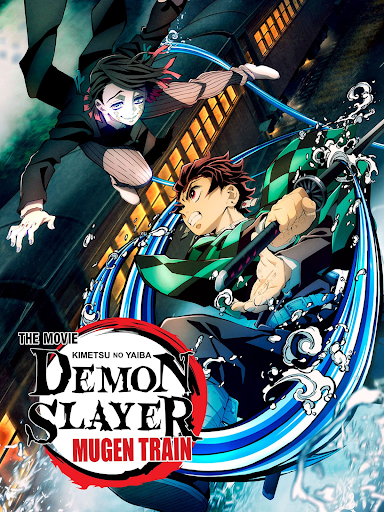
Demon Slayer: Kimestu no Yaiba: The Movie: Mugen Train (Haruo Sotozaki, 2020), which will be shortened to Mugen Train for all intents and purposes, is a film filled with action and emotion, great story elements and themes, and beautiful animation and sound direction. This Japanese film, at least visually, supports my belief that animated films carry the most freedom and potential to be the best that they can be. The story is set in Japan at the turn of the 20th century, in a fantasy world with a population of demons lurking in the shadows. Demons are former humans who feast on humans to get stronger. They all have the power to regenerate, and some possess a wide array of supernatural abilities. It is the job of the Demon Slayer Corp to ensure the safety of humanity by destroying demons through the use of decapitation or sunlight. 
Mugen Train follows the main cast of Tanjiro, his sister Nezuko (who has turned into a demon, but is docile), Zenitsu, and Inosuke, as they join the Flame Hashira (one of the most powerful Demon Slayers) Kyojuro Rengoku on the Mugen train to investigate and hopefully stop demon attacks that leave people missing. Despite following mainly Tanjiro, this film is about Rengoku. If you had seen the series beforehand, which is definitely recommended, you actually do not know that much about Rengoku, and his character is explored in the film. Also if you have not seen the series and go into the film blind, the first 15 minutes of the film give audiences a pretty clear view of each major character as well as the world they live in, and is done in a way not to make the viewer who has done their homework bored. As the film progresses you do get to learn deeper aspects of characters.
Picture
One of the things that I appreciate about this film is that it takes place almost entirely on the train. But, it still manages to have diverse locations so it doesn’t get stale. There is a long sequence at the end of the film that takes place off of the train and right next to it. The train also shifts halfway through the film to where it looks completely different. The main villain of the film, ends up putting the protagonists to sleep early on in the film, so a major part of the film are the dream sequences. Speaking of the dream sequences, they serve as great insights into various characters through backstory elements and/or symbolism. In Rengoku’s dream he relives a memory that gives important information into how he is as a character. We also get to see everyone’s “Realm of the Subconscious”, which is like a window into a person’s soul. Rengoku’s realm is filled with essentially fire and brimstone, while Tanjiro’s is filled with water which one can walk on and a bright blue sky with puffy clouds. I love the subtle and stylized nature of things like this, as it takes “a picture is worth a thousand words” to the next step.
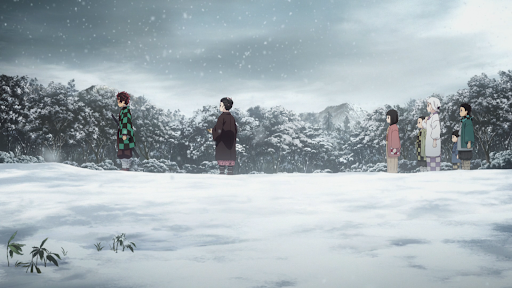
    A lot of emotion comes out in Tanjiro’s actual dream sequence, where he gets to be reunited with his family, who all had died at the beginning of the series. While this is another great way to fill in first time viewers of the main character’s past, it also serves as a great character moment as Tanjiro starts to come to his senses. The internal struggle he faces when he eventually realizes he is in a dream and has to leave his family behind again is a highlight of the film. Another interesting and particularly heavy note, which also highlights Tanjiro’s character is the way to forcefully exit the dream, which is to die or essentially commit suicide. Tanjiro slices his neck to get out, and then does it more than once as he has to fight Enmu, the demon that put everyone to sleep. He does it so many times that he has to be saved from accidentally doing it in the real world. Even Enmu admits that it takes incredible mental fortitude and says that Tanjiro is “out of his mind.” Despite what it may look like to some, I do not think that it glorifies suicide and instead does the opposite. To make someone have to kill themselves in order to leave the dream is cruel and incredibly hard, which is why Enmu looks so surprised and exemplifies how motivated Tanjiro can be.
Picture
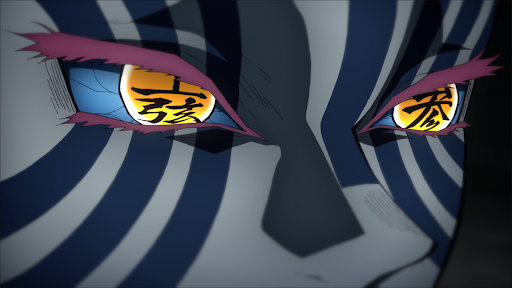
Mugen Train is filled with a lot of spectacular action sequences, and it all ends up being satisfying. Every sword swing or punch is fixated upon and holds weight. This is due to the direction, animation, and sound design. Animation as a genre lends itself really well to having near perfect direction, as you aren’t framing and filming the shots in the real world, which makes it way easier to do what you want to do. The animation of the action is a major part of what makes this film a true work of art. Everything is so beautifully crafted and really takes you into the story and into the world. Even the 3D CGI elements blend well with the 2D elements. The sound design of every hit also makes each impact feel, well, impactful. Paired with the background music that plays throughout the film, this film is an aesthetic masterpiece. During the fight against Enmu is where a lot of the action of the film is. It is where each of the main characters can shine with their attacks and it is also where the animators can shine. However, I feel like every aspect of the film is exemplified in the last and best sequence, the final fight between a new demon who shows up, Akaza, and Rengoku.
Picture
Picture
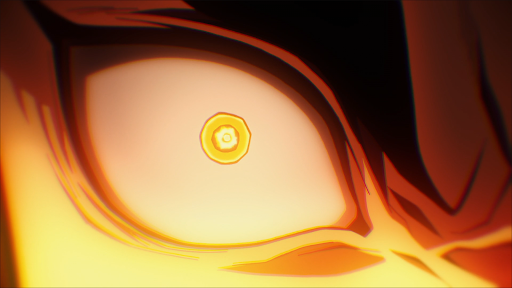
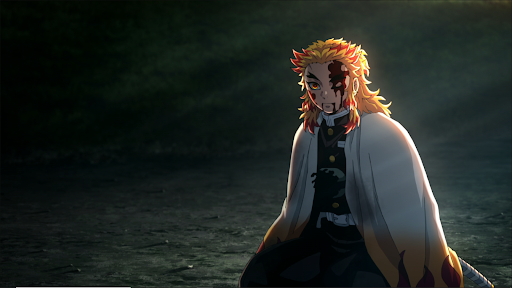
This last part of the film takes place after an event that one might think would end the film, with the train getting derailed. But this takes you beyond your expectations by bringing you past the Mugen train so it feels as if it is almost a bonus sequence. However, this makes the whole film. As previously stated, the animation and direction teams can set up shots  very precisely. This allows for some of the hardest closeups you can imagine to really get the emotion in a character’s face. This fight has every aspect of the film that I like, only elevated. The deeper battle Rengoku and Akaza are having also makes it that much better. Both combatants are very steadfast in their beliefs. Akaza believes demons to be superior due to their strength and regeneration, while Rengoku believes humanity as well as the fact of death are beautiful things and does not take Akaza up on his offer to become a demon. The fight ends with essentially both of them being proven right, as Akaza basically takes a net zero damage, and Rengoku ends up dying but holds him off long enough for him to have to escape, with zero casualties. The film ends along with Rengoku’s arc as he fulfilled his duty and inspires the next generation. This fight puts the nail in the coffin for why this is a film about Rengoku. With him being the first in the film to make an attack, having a dream sequence that was actually a memory, and seeing as how Mugen Train encapsulates almost all of what we see of Rengoku in the Demon Slayer series. You go into the film not knowing much about the character, to come out of it absolutely loving and missing him. 
Picture
Mugen Train is a beautiful, fun film with themes of humanity, perseverance, responsibility, and death. It is a fantastic continuation of a great series as well as being incredible as a stand alone film. A lot of things happen that will satisfy both veterans and newcomers to the story. The story and characters are simple yet don’t feel one-note, and everything aesthetically is almost perfect. I would highly recommend watching all of Demon Slayer, but even if you just watch Mugen Train, you will not be disappointed.

The Power of the Dog: A Review

12/3/2021

 
by Mason Leaver
Picture
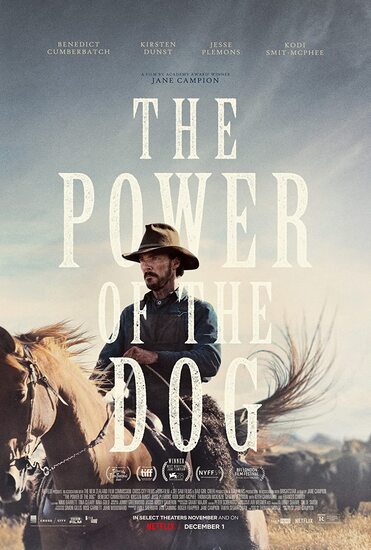
The Power of the Dog is a film that understands the importance of simplicity. The story is straightforward, the cast small, the performances understated - powerful, but not “flashy.” This emphasis on simplicity lends The Power of the Dog a “slow-burn” tone, allowing the drama and tension to build between the four main characters over the entire two hour runtime. It is an adaptation of a book by the same name, and director Jane Campion has delivered a film with a distinctly literary quality. The Power of the Dog is a western which takes its time to focus on the simple and intimate story of a handful of characters, and it’s intensity of focus leaves the audience with a deeply rewarding experience.
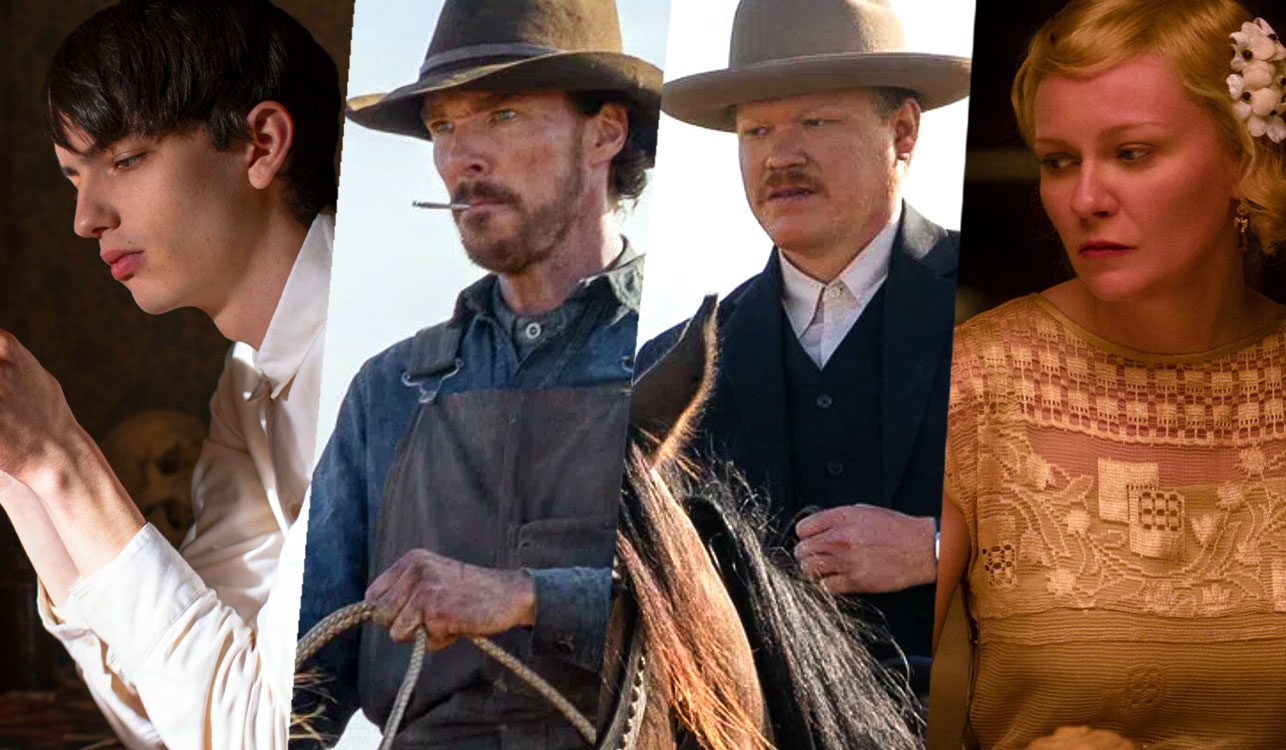
Power is the story of four individuals living on a cattle farm in 1920’s Montana. Phil (Benedict Cumberbatch) and George (Jesse Plemons) are brothers, the owners of the cattle ranch. We are given a sense that the brothers were once close friends, but have drifted apart as George has grown more accustomed to a comfortable life and a desire for a family. Phil, meanwhile, is strictly dedicated to the ranching life, and is often very cruel towards others. The film frequently references the story of Remus and Romulus, the brothers from the ancient Roman myth. The brothers’ relationship is further strained when George falls in love with Rose (Kirsten Dunst), who runs a small inn that the brothers stop at. After marrying Rose, George invites her and her son Peter (Kodi Smit-McPhee) to stay at his and Phil’s home. Tensions rise as Phil seeks ways to make the lives of Rose and Peter miserable, and as Rose’s mental health begins to decline.
Picture
The four central characters of The Power of the Dog
Without much exciting spectacle or action to lean on, The Power of the Dog relies heavily on the performances of its main characters. Thankfully, each actor rises to the occasion. Cumberbatch has played villains in the past, such as his performances in Star Trek: Into Darkness or The Hobbit, but this is the first role I have seen him in where he feels genuinely frightening. The intensity with which Phil hates Rose is detailed subtly in Cumberbatch’s performance. In a similar film such as There Will be Blood, Cumberbatch would be given a scene in which he explodes dramatically in anger. However, in this film, Phil is much more reserved, only shouting occasionally to scare others off. Most of his time spent is subtly manipulating Rose and going out of his way to bully her. Plemons and Dunst (who are married in real life as well as the film) play off of each other remarkably well. Plemons manages to capture a certain kind of melancholy stemming from his utter devotion to Rose. Dunst, meanwhile, demonstrates a different sort of melancholy as she slowly slips into alcoholism and depression. 
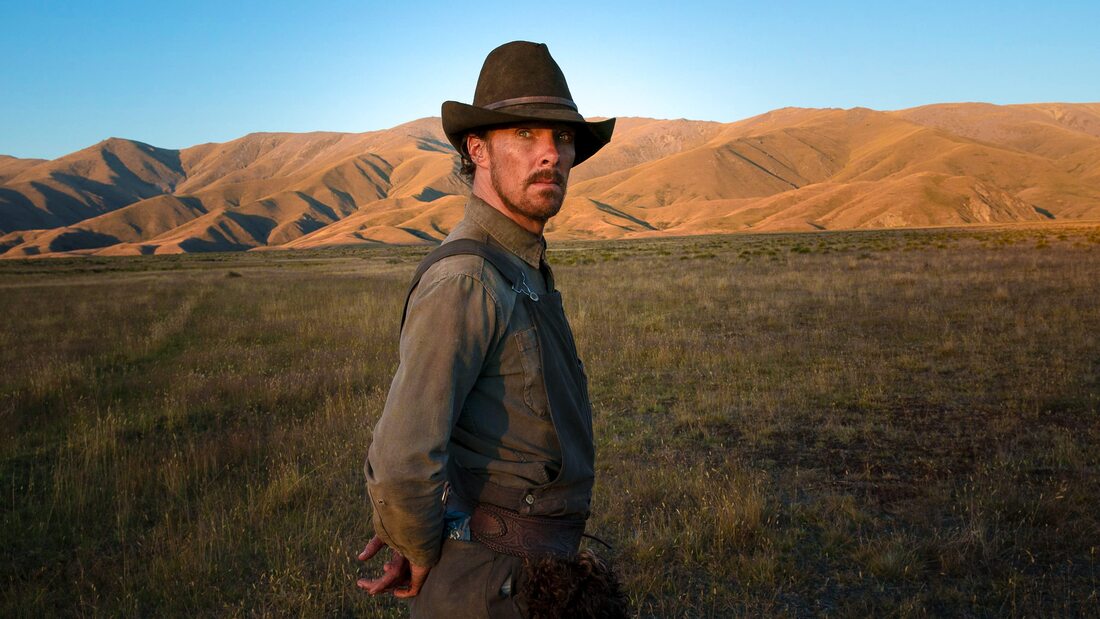
Besides its performances, the film also has a great deal of artistic merit in its visuals and music. The cinematography of the film is sprawling and vast, featuring beautiful landscapes filmed in New Zealand, passing as Montana. Cinematographer Ari Wegner has an excellent understanding of when to pull the camera wide to show the gorgeous vistas that the characters occupy, and when to punch in for a closeup on an actor’s face that communicates a great deal without ever speaking a word. Much of the interaction between the characters happens in silent gazes and stares, and Wegner captures these movements with precision. Another stand out aspect of the film is the score. Written by Jonny Greenwood (of Radiohead fame), the score builds an atmosphere of dread and tension throughout the film. The music is mainly composed of instrumentation that would be typical in a Western, but Greenwood spins these leitmotifs in such a way that the listener is always just slightly on edge, slightly unsure of what is next. 
Picture
Benedict Cumberbatch stands in front of the vast New Zealand landscape
The Power of the Dog is a film which shines in every aspect. Beyond its technical mastery of the art form, the film’s pacing allows for a fresh tone not often seen in modern westerns. It’s slow and brooding pace creates a world which feels lived in and real, a sense that the characters that we see are complex individuals. Director Jane Campion has arranged a compelling drama that strikes a balance between visual beauty, nuanced performances, and an intriguing story.
The Power of the Dog​ is available now on Netflix

Reverence & Revision: David Lowery’s "The Green Knight" in Conversation With the Original Poem

11/19/2021

 
by Ned Kuczmynda
When works of literature are brought to the silver screen a common litmus test revolves around the fealty paid by the adaptation to the source text. Faithful films are praised for being true to the original story, but those that deviate are often panned and viewed as artistic compromises. One such example is Robert Zemeckis’ Beowulf (2007), which took many liberties with its adaptation of the ancient poem. Similarly divisive was Baz Luhrman’s Romeo and Juliet (1996) which transported the classic play into a heavily stylized gangster-epic.
These films’ failures to win the approval of devotees indicates that despite being thousands of years old, ancient works are not exempt from the confines of the source. This is what makes David Lowery’s screenplay for The Green Knight (2021) so daring. His film is not just a recreation of the Arthurian original but a response as well. Despite many major deviations from the events of the source material, the film is true to the heart of the myth and embodies a similar tone despite its occasional alternate events.
Picture
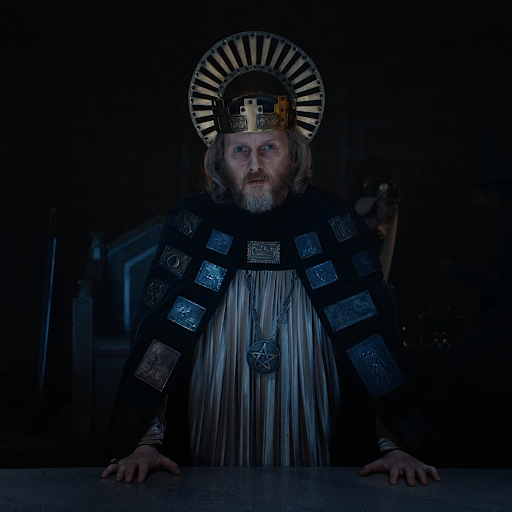
King Arthur (Sean Harris)  at the head of his round table
David Lowery understands the importance of context. Sir Gawain and the Green Knight was a story told to represent the ideals of the society that birthed it. The poem represents three things that were of utmost importance to Medieval society: physical prowess, chivalric honor, and chastity. Lowery seems to isolate those specific aspects of the play, offering his own revisions for how they are portrayed, and raising questions about how much of their value persists in modern society.
In the film’s most famous scene, the Green Knight enters the room, and makes his fateful proposition. Gawain’s acceptance is not bold, it is scared and reluctant. As he takes to his knees the Knight raises his axe in offering. Gawain refuses, instead using Excalibur to deliver the deadly blow. In the text Gawain sees an enemy kneeling in submission as much less of a threat. He confidently raises the axe and mightily strikes downward.

Gawain grips to his ax and gathers it aloft--
The left foot on the floor before him he set--
Brought it down deftly upon the bare neck,
That the shock of the sharp blow shivered the bones
And cut the flesh cleanly and clove it twain,
That the blade of bright steel bit into the ground (421-426).
​

Curiously, the story that the people of Gawain’s village seem to latch onto in the film with their stories and puppet shows is much more akin to the myth, in which Gawain’s smiting of the Green Knight is an act of bravery, not of fear.
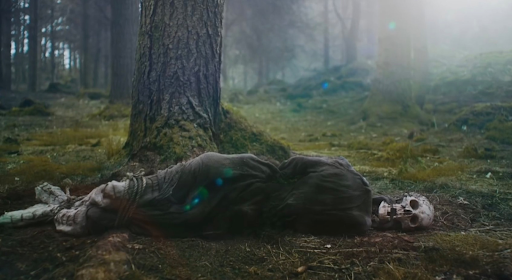
A year later, when Gawain embarks on his journey he is almost immediately set upon by teenaged bandits. Instead of fending them off, they subdue Gawain, taking everything from him and leaving him tied up to die. Lowery uses a clever time lapse here showing the seasons passing as Gawain slowly starves to death on the forest floor, unable to escape his bonds. Suddenly he awakes from his morbid dream, but the message of what could have happened is clear. The quest nearly ended before it even began.

Picture
Lowery shows us a vision of Gawain’s quest going horribly wrong
Lowery’s Gawain does not just subvert the average moviegoers idea of what a knight should be, he undercuts what one would have been historically. Throughout the film, different characters see Gawain, and expect strength from him; after all knights are meant to be armor clad saviors. Gawain is a coward carrying armor and weapons that aren’t his, riding a horse he acquired on loan from his uncle. In doing this, Lowery also manages to subtly castigate the notion of a benevolent warrior. We don’t see much actual armed conflict in the film but we do see the aftermath of one of Camelot’s battles. All the glorious heroes have ridden off, and Gawain travels through a field of smoke and slain bodies.
The second major change that Lowery makes is to Gawain’s moral character. The mythical Gawain, though powerful, is known for his rectitude. Lowery robs him of that too. We first find Gawain in a brothel. We learn that he frequents it and is particularly close with a woman named Essel. Despite their relationship Gawain refuses to make any commitment to her. Then there is his on-screen motivation: which is solely for himself. Arthur asks him prior to the Green Knight’s entrance to tell him a story, and Gawain responds that he has none. His willingness to take the Knight's challenge can be seen as a response to the desire to finally have a story of his own to tell. Standing in contrast is Gawain’s speech in the text in which he begs Arthur to let him take on the challenge. “My body, but for your blood, is barren of worth; / And for that this folly befits not a king, / And it is I that have asked it, it ought to be mine,” (357-358). Here, his sole motivation is for King Arthur’s honor, and this is shown by the way Gawain demeans himself in the process of asking.
After Gawain beheads the Green Knight, and becomes a celebrity, he uses his new fame in the worst ways. He carouses about in bars, trying to drink away the threat looming in the future. At another part of the film Gawain is faced with the opportunity to help a ghostly damsel in distress. He asks her what she will do for him if he completes this task for her. Her response is likely the same as the audience’s “Why would you ask me that?”. Gawain does eventually oblige but such a question is one that would likely not even enter his mind in the poem.
A central attribute to Sir Gawain and the Green Knight is the way our hero is tested along his journey. The Gawain Poet pits him against two tests. The most obvious is the beheading test: how will he answer the challenge to take a knee before the Green Knight and meet his axe? The second is what is colloquially known in Gawain scholarship as “the love test”.
Picture
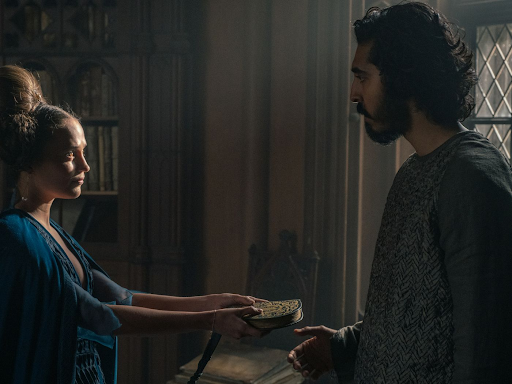
Lady Bertilak (Alicia Vikander) “tests” Gawain (Dev Patel)
In his travels, Gawain comes upon a mysterious castle, with a very hospitable lord. He invites Gawain to stay for three nights. Because it is near Christmastime, he proposes a friendly game. When he returns out from hunting each day, he will give Gawain whatever he catches. In return, Gawain must pay him back with whatever he happens to receive while he is gone. Each night while the lord is away, his wife enters Gawain’s bedchamber, and tempts him. He resists each time, only accepting kisses – one the first night, two the second night, and three the third --  and nothing more. However on the third night, she gives him a magical girdle, woven with an enchantment that will protect him from the Green Knight’s blade. When it comes time to make good on their agreement, the lord of the castle gives Gawain a deer, a boar, and a fox. For each of those, Gawain gives the lord the kisses he received, he withholds the sash.
David Lowery’s changes to this portion of the story are perhaps the most jarring, probably because one could easily say that Gawain decisively fails the love test. He allows much more than a kiss, but an act of sexuality that concludes with the lady exclaiming “you’re no knight!”. Gawain does not make good on his agreement however, instead he leaves the castle in a hurry and runs into the lord on his way out, at which point the lord takes his kisses, indicating that he knows more than he is letting on.
Also worth mentioning is that Gawain’s encounter with the spirit of Saint Winifred practically constitutes a third test. Winifred is a woman who was brutally raped and murdered by a nobleman, who beheaded her and threw her head into the spring. When she meets Gawain, she asks him if he will retrieve her head from the spring. He does, and this bodes well for the quality of Gawain’s character. Here Lowery gives Gawain an opportunity to offer dignity to a woman who has been starkly wronged by a powerful man.
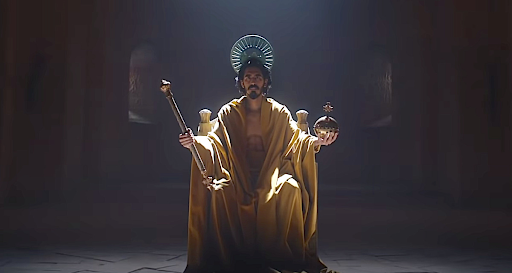
Finally, Lowery changes how Gawain reacts to the most important test - facing his death at the hand of the Knight. Like in the text, Gawain kneels down, and flinches at the first blow. In the text, Gawain braces himself for a second blow, and the Knight swings, but does not complete the strike, simply saying that he was seeing how Gawain would react. In the film however we receive an extended alternate ending sequence a la La La Land (2016), in which Gawain runs away from the second blow. He leaves the Green Chapel, mounts his horse and rides back to Camelot, where he is received as a hero. He inherits Arthur’s throne and becomes a powerful ruler. As the years progress we see evidence of his conquest. Finally, invaders come to Camelot, breaking down the castle door. Gawain removes the magic girdle from his waist, and his head dramatically falls from its shoulders.

Picture
Gawain’s vision of himself as King
We flash back to reality and Gawain, still kneeling before the Knight, removes the girdle. He urges the Knight to finally make good on his promise. The Knight thanks Gawain for his honesty and says, “off with your head”. What happens after that, unlike in the text, is left ambiguous for us to infer. In the text, the Knight merely knicks Gawain’s neck, and spares him, chiding him for keeping the girdle a secret (he doesn’t take it off in the original version). In the film, we cut to black.
Lowery’s motives are ambiguous. One could assert that he is simply varying the story of Sir Gawain for the sake of telling something new. Although he does accomplish this, Lowery’s revisions to the story are part of the conversation he is having with it. Sir Gawain and the Green Knight became the classic poem it did because it addressed something that was of serious concern to people in that society. Gawain’s fealty to the code of chivalry, and steadfastness in doing right save his life in the end.
Lowery gives us a modern myth in which we don’t know what Gawain’s fate is. Whether he lives or dies is left up to the imagination. Throughout this film Gawain fails time after time to do the right thing, and at the end as he looks death in the face, he does what is honorable. He may still die; we don’t know. Lowery wants us to know that doing the right thing won’t save us, but right or wrong death will come for us. He invites us to consider what kind of death we want to have. 

Image Credits:
Wonderland Magazine
Vox
Geek Girl Authority

The Last Duel: A Review

11/12/2021


by Mason Leaver

Picture
Trigger Warning: Domestic Violence and Sexual assault in The Last Duel 

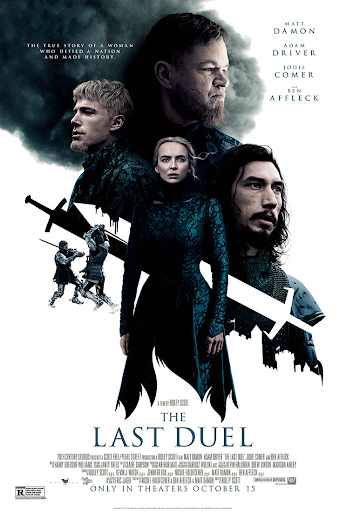
The Last Duel (2021) by Ridley Scott is a complicated work to review. It is a film with incredible spectacle and action, beautiful cinematography, gripping performances, and a compelling narrative. At the same time, the story deals with a subject matter that is so horrific, it’s hard to analyze any part of the film save for it’s handling of this event. In his latest film, Ridley Scott rides a fine line between creating an epic and sensationalizing assault, between denouncing brutality and highlighting it, between criticizing medieval values and oversimplifying modern values. Nevertheless, he has succeeded in threading the needle, though not without the occasional misstep. 
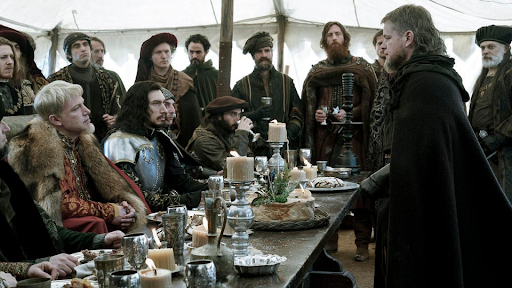
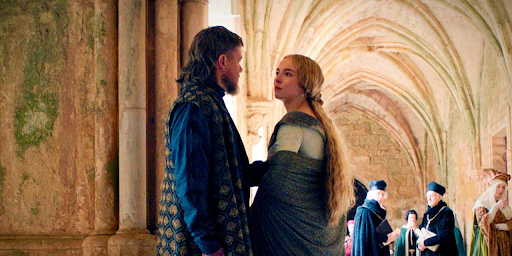
    The Last Duel focuses on the story of the historical duel between the French knight Jean de Carrouges (Matt Damon) and squire Jacques Le Gris (Adam Driver). After Carrouges’s wife, Marguerite (Jodie Comer) accuses Le Gris of violently raping her, Carrouges challenges the squire to a judicial duel, to “allow God to decide” who is lying and who is telling the truth. Carrouges and Le Gris were once friends, but the film shows how the two slowly fall apart over the years. This takes up the majority of the runtime, and plays out as a complicated medieval court soap opera. The characters and their relationships are complex, and the politics of medieval France are played out carefully and dramatically. ​
Picture
The film is structured in three chapters, each offering a different character’s perspective on the events. The first chapter focuses on the perspective of Carrouge, and the second shows Le Gris’s. The final chapter is titled “The Truth”, featuring the perspective of Marguerite. What we learn through these repeated viewings of events is that both men have horribly misunderstood Marguerite and have horribly mistreated her, culminating in Le Gris raping the woman. As we learn more about the two men and their history, we begin to realize that the reason for this duel may just be a pretense - it is suggested that the two men just want a reason to try to kill each other. Using this repeating structure allows the audience to progressively gain a better understanding of the characters and their motivations in a unique way. At the same time, it naturally creates a three act structure, culminating in the climax of the titular duel. After the duel, the film wraps up so quickly that it feels as if the film may have been better served by ending on the conclusion of the duel, rather than trying to fit in additional content. 
Picture
                                                                     Carrouge (left) and Marguerite (right)
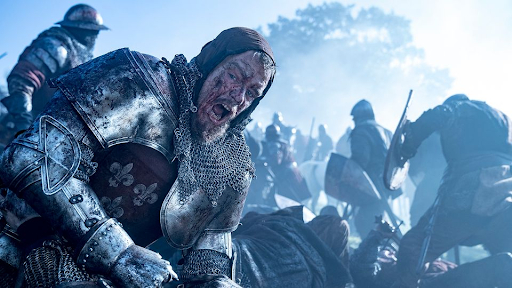
    One of the most outstanding aspects of The Last Duel is the incredible scale of the film. Ridley Scott frequently features massive set pieces that depict a Medieval France that feels lived in and real. Likewise, the war scenes and battles feel epic in scale. The film cost around 100 million dollars to make, and this huge budget makes the film feel as grand in scale as some of the Biblical epics of the 1950’s. Likewise, the final duel of the film feels extremely gritty and personal. The scene is dynamic - the positions of the two duelists shift and change throughout the fight, offering a tense and dramatic conclusion. It feels like Ridley Scott brought much of what he learned from making Gladiator (2000) into these scenes, though this film’s combat feels a bit weightier and more brutal than the combat of Gladiator. ​
Picture
                                                                  One of the intense duels in “The Last Duel”
    As I stated previously, it feels like Ridley Scott is walking a fine line in this film. The scenes are gorgeously shot and feature huge set pieces and high drama. At the same time, the film is centered around some horrific events and depicts the horrible conditions that women lived in during the Medieval times. Scott simultaneously uses these events to critique the modern treatment of women, suggesting that many of the barbaric tendencies of the Medieval world have persisted to this day. Scott’s decision to show the assault not once, but twice, may seem to some viewers to be gratuitous. Indeed, I do wonder if this was necessary; it feels as if the film would have been just as powerful without showing us the scene from Le Gris’s perspective. Nevertheless, Scott broached a very difficult subject with a level of finesse and sophistication, even if I do not agree with every decision he made throughout, as I would have advocated for removing the assault scene from Le Gris’s chapter. Ultimately, it will be up to each viewer to form an opinion on what is in good taste and what is not. 
    The Last Duel is a film which features deep truths, challenging content, beautiful cinematography, excellent performances, and a compelling drama. It is a shame, then, that the film has done horrendously at the box office. The film has grossed just $23 million out of the initial $100 million budget. It is upsetting that more people are not seeing the film. If films like The Last Duel are going to be made in the future, audiences need to show their interest and appreciation by attending these films in the theater. A film like The Last Duel deserves to be seen on a big screen, in order to capture it’s grand scale. I cannot recall a film in recent memory which feels quite as large as Duel, and I fear that we may not see another for some time as a result of it’s financial failure. Regardless of its box office struggles, the film remains a deeply engrossing epic, worthy of seeing in a theater. ​

The Danger of Movie Remakes: The Guilty (2018) vs The Guilty (2021)

11/12/2021


by Reed Milliken

Picture
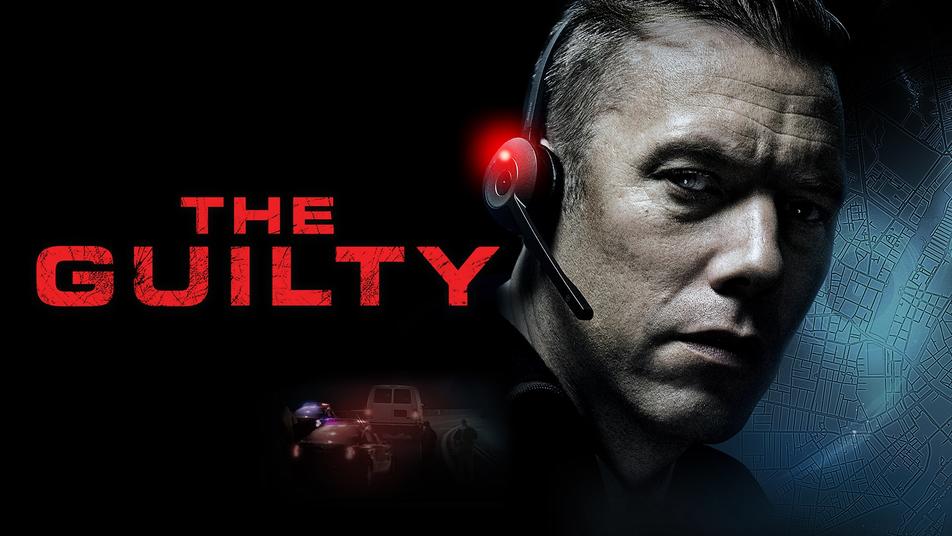
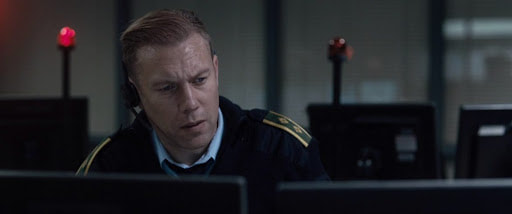
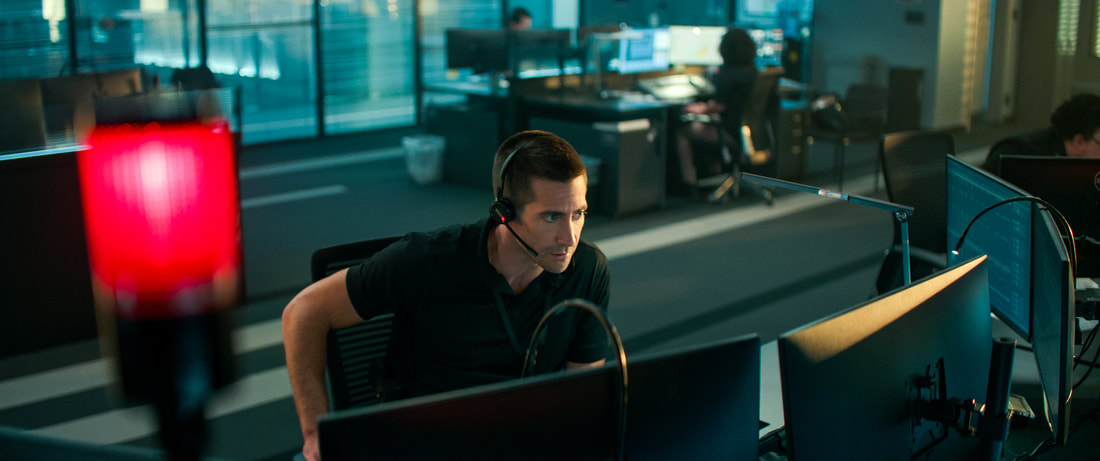
The Guilty (2018, Gustav Möller) is a Danish drama crime thriller about an emergency dispatcher and former police officer, Asger Holm, who answers an emergency call from a kidnapped woman. When the call is suddenly disconnected, the search for the woman and her kidnapper begins. The Guilty (2021, Antoine Fuqua) is an American drama crime thriller about an emergency dispatcher and former police detective, Joe Baylor, who answers an emergency call from a kidnapped woman. When the call is suddenly disconnected, the search for the woman and her kidnapper begins. Sound familiar?
The following article includes spoilers for The Guilty (2018) and The Guilty (2021). Viewer discretion is advised.
Picture
When a movie is remade, a new version of an already made movie is created to tell the same story using a different cast and alters the theme or changes the story's setting. Remakes are by no means a new concept, but my grievance towards them first started when I saw that Bong Joon Ho’s six-time Academy Award-winning, South Korean drama-thriller, Parasite (2019), was being remade into a TV show on HBOMax. With the film’s laundry list of awards and overwhelmingly positive reviews, Parasite (2019), is the closest thing to a masterpiece we have gotten in the last ten years.
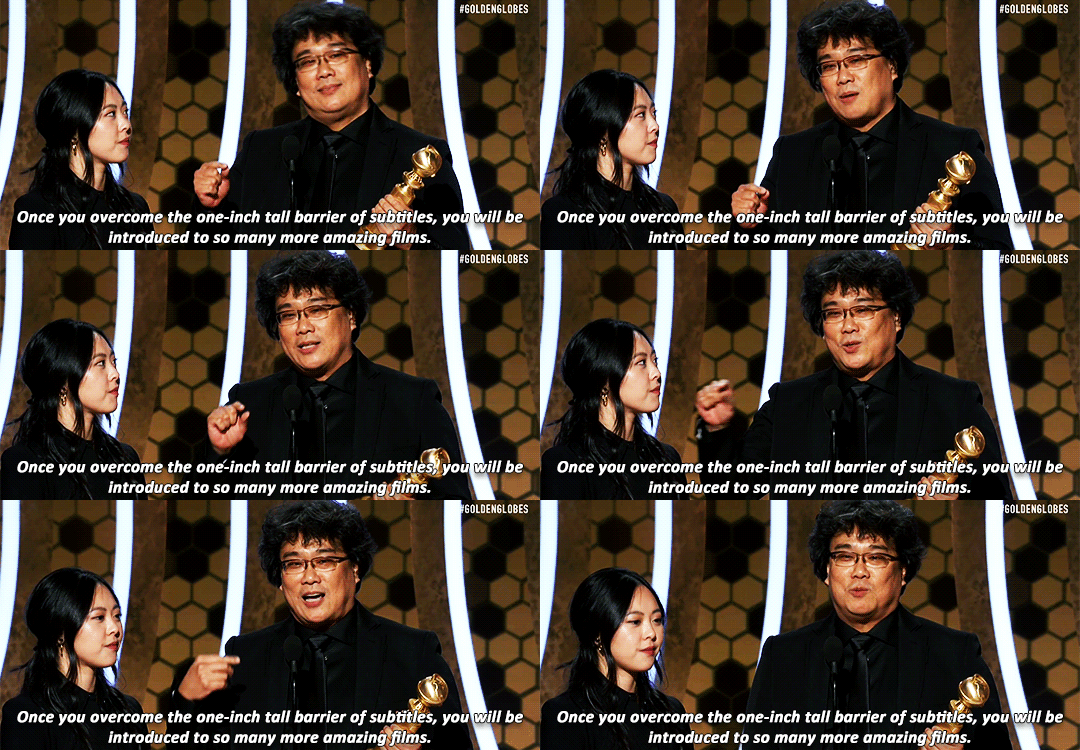
So, you may ask yourself, if this movie is so good, why would it need to be remade? In this situation, where the remake involves taking a foreign film and remaking it in English for an American audience, the answer is simple. People don’t want to read subtitles. Joon Ho acknowledges this and even goes as far as to mention it in his acceptance speech for Best Picture at the 2020 Oscars, “Once you overcome the-one-inch barrier of subtitles, you will be introduced to so many more amazing films.” (Joon-Ho, 2020). From a personal perspective, this is very true. Movies such as House (1977), Train to Busan (2016), and The Guilty (2018) are all amazing films that I wouldn’t have watched if I was afraid to read subtitles. A film being made in a foreign language isn’t always the reason for remaking a movie, but it is one of the most popular. A prime example of this involves the two films I want to discuss today, The Guilty (2018) and The Guilty (2021).
The Guilty (2018) was produced in Denmark and was therefore released in Danish. This version of the film has been very well received by audiences and critics alike; mostly due to its style of storytelling is. As mentioned before, The Guilty (2018) follows an emergency dispatch operator named Asger Holm as he tries to help a woman who has been kidnapped. However, the camera never leaves Holm’s perspective, and every aspect of the kidnapping story is heard over the phone. By keeping the story within the operator's room, we're forced to picture the rest of the story in our heads. This made for an entirely new film-watching experience, almost combining the charm of reading a book with the luxury of watching a film. ​
Picture
Unfortunately, The Guilty (2021) is not many of these things. Released three years later and in English, this version of the movie has not been as critically successful as its father film. Furthermore, there are a plethora of differences between the two when it comes to the story and how it is told. In what I assume was an effort to differentiate itself from its predecessor, The Guilty (2021) does not use as unique of a storytelling method. For starters, the camera is taken outside of the operator's room, therefore ruining the magic of being able to picture the situations on the other end of the line for yourself. My father, who I watched The Guilty (2018) with at the time, as well as myself both really enjoyed being able to picture the action for ourselves. On top of being able to experience a unique filmmaking experience, this technique also was beneficial to building tension. With fewer cuts between different locations, and not truly knowing for sure what is going on the other end of the line, we both found ourselves captivated and immersed in the severity of the situation. Not only does the camera stay with Asger the whole time, but we do too, feeling each twist and turn just as Asger is experiencing it. Going back to The Guilty (2021), by leaving the operator’s room and cutting to other locations, the suspense, at least for me, was ruined. Therefore, a large part of what made the original so special and so unique became absent in the remake. I encourage filmmakers to distance themselves from the original work when producing remakes, but not so much so where the intrigue is lost. 
Picture
Furthermore, the differences lie deeper than just what you see on screen, as a lot of the meaning and context behind The Guilty (2018) is lost in its adaptation. For starters, there is a change in the name of the main character. In the Danish version, the emergency dispatcher is named Asger, while in the American version, he’s named Joe. This may not seem like too large of a change, it even makes sense for an American name to be chosen for the American version, but a lot of depth is lost in this translation. In Danish, the name Asger means spear, deriving from the Old Norse elements Æsir or ás, meaning "gods" and geirr, meaning "spear". This name is a proper reflection of the character, a spear is a pointed weapon made for quick, violent jabs. As we find out by the end of the movie, the reason Asger was put on dispatch duty was because he killed an innocent teenager by gunshot. His name reflects the reason he was put in the position we see him in the film. As for the American version, the main character’s name is Joe. In English, the name Joe just means an ordinary man, i.e. the phrase “just your average Joe”. While it could be argued that the character was named Joe as a juxtaposition to his true nature, I don’t think it’s that deep. 
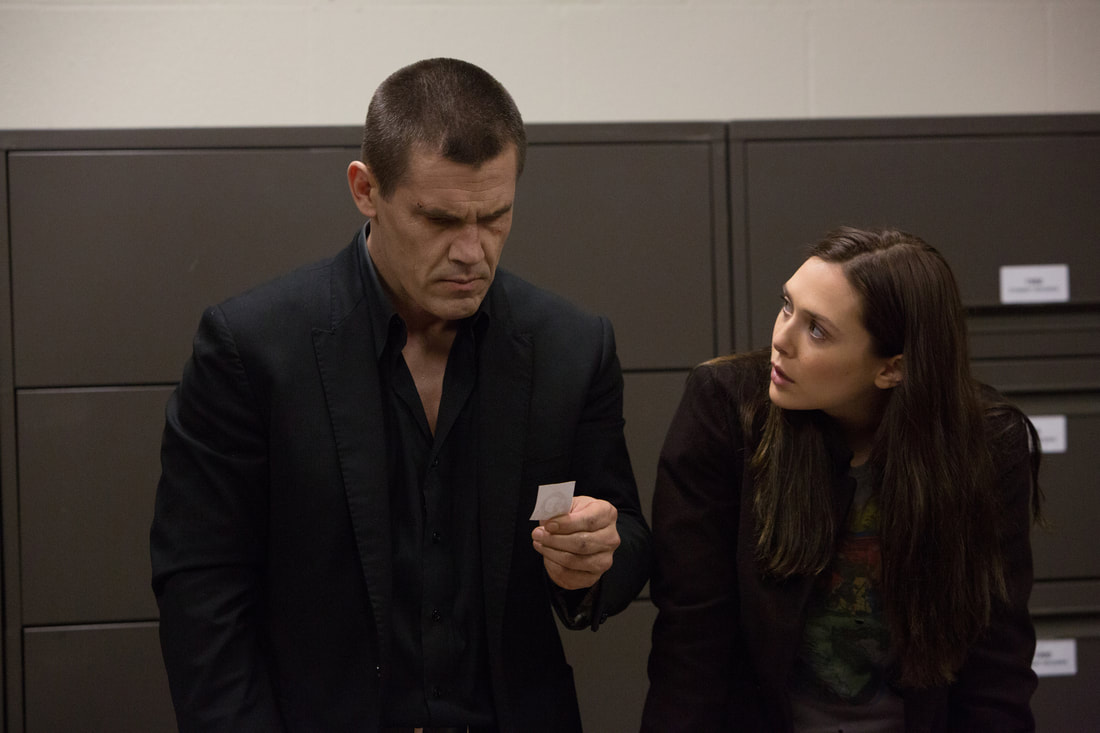
My main reason for not making a mountain out of a molehill is that this isn’t the first time a meaningful name has been stripped of significance in favor of the name Joe in an American remake. Oldboy (2013) is a Spike Lee directed remake of the Korean mystery thriller Oldboy (2003), directed by Park Chan-Wook. In the original, the main character’s name is Dae-su, which means “to get through one day at a time”. Oldboy (2003) follows Dae-su as he is imprisoned for fifteen years, leading his name to signify the long, slow-paced life that he lives. Changing foreign names to a more common American one in this context is a no-brainer, but it’s unfortunate to see the new name choices become stripped of meaning when the originals held such significance. ​
Picture
On top of this, the twists and turns of the plot of The Guilty (2018) are copied, in some cases, word for word in The Guilty (2021). Therefore, anyone who wishes to watch the original after the remake will have the story spoiled for them, removing one of the most compelling parts of the movie, the tension. It could then be argued that the target audience for the remake are those who have not seen the original, therefore being able to enjoy the twists and turns as I did while watching the original, but I argue that if nothing is changed to the plot of the story then why does it need to be remade? If there are only aesthetical changes made to the film compared to the original, then is remaking it worth it? Again we go back to the issue of subtitles, but there are much easier ways to make foreign films a bigger appeal to English-speaking audiences, such as dubbing, rather than remaking the whole movie from the bottom up.
A common trend I noticed while perusing reviews for The Guilty (2021) is that those who hadn’t seen the original enjoyed the remake much more, those who had seen the original enjoyed it much less, and vice versa. What this means is that remaking a movie can damage the original work it was based on. The common intent while remaking a movie is for the story of the original to be more easily viewable by a wider audience. Instead, remakes are damaging the original films by making them less enjoyable for those who watched the remake. If remakes accomplished what they set out to do, then that would be a different story.
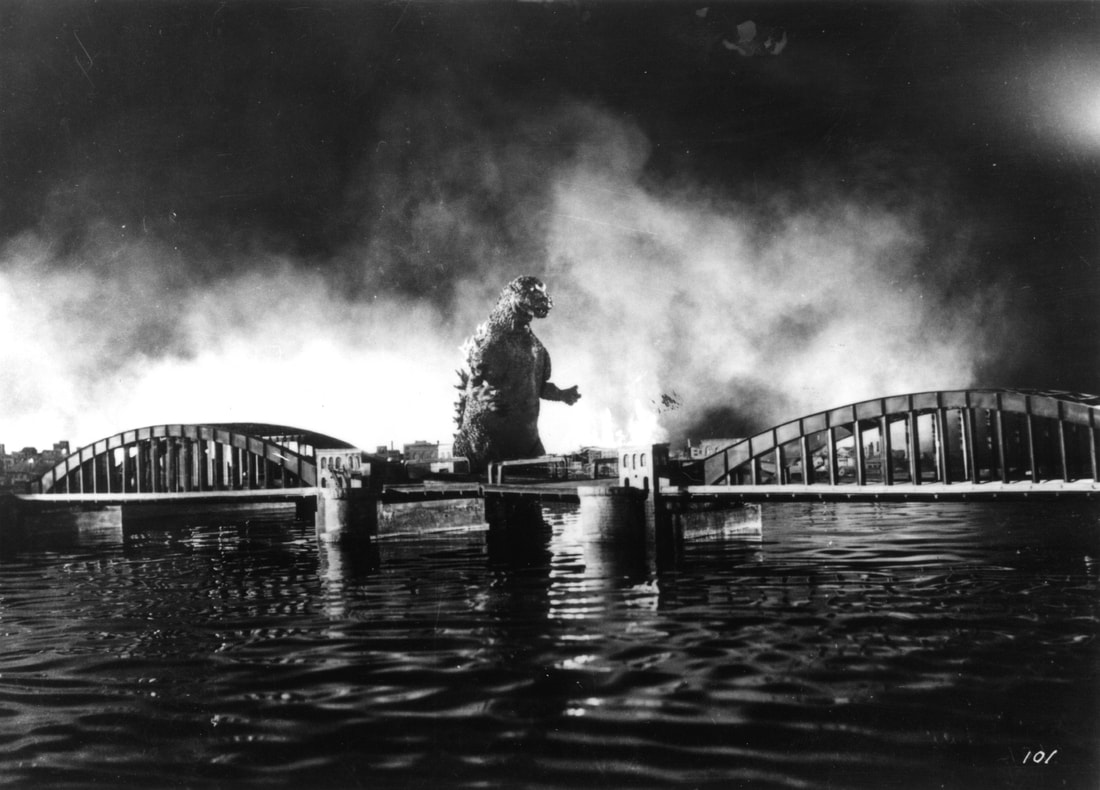
The length in time between the release of the original and when the remake gets greenlit is another large issue with remaking a movie. There were only three years between the release of The Guilty (2018) and The Guilty (2021). If a remake is made long enough after the original that modern-day technology can make a significant difference in the look and feel, then remaking the movie feels more worthwhile. Godzilla (2014) was released 60 years after its predecessor, Godzilla (1954) In the time between the two movies, there were vast improvements to almost every aspect of filmmaking. Godzilla (1954) brought the Kaiju to life through clever puppetry and suits shot on film, whereas Godzilla (2014) utilized CGI and VFX and was shot on digital. When you boil it down, both movies are the same when it comes to story, but due to these improvements, the look, style, and feel of the movies are vastly different. With only three years between the two versions of The Guilty, there was nothing new to bring to the table from a production standpoint.
Picture
When foreign movies are remade by an American studio and there is no ulterior motive other than to introduce the story in a more easily digestible form to American viewers, producing the remake doesn’t feel as worthwhile. Going back to that quote by Bong Joon-Ho, if someone isn’t willing to jump that one-inch hurdle to watch a great movie, then maybe they don’t get to watch that movie. It may seem like I’m gatekeeping, and maybe I am, but running around the hurdle instead of jumping over it by remaking it in English, only for a more bland version of the movie to be produced is a terrible way to overcome that obstacle. It not only ruins the original for those who watched the remake first, going against what the remake set out to do, but it strips the original of all of its meaning and importance. If Hollywood continues this trend of remaking film after film, creating a more dull and bleak version each time, how long is it before these stories are lost in the very thing that set out to make them known? I leave you with this question: would you rather jump that hurdle and preserve the movie’s true nature, watching a great film in the process, or run around it and watch a mediocre movie instead?
Picture
<<Previous
Forward>>

    Archives

    October 2024
    April 2024
    February 2024
    January 2024
    December 2023
    November 2023
    October 2023
    April 2023
    March 2023
    February 2023
    April 2022
    March 2022
    February 2022
    January 2022
    December 2021
    November 2021
    October 2021
    September 2021
    April 2021
    March 2021
    February 2021
    January 2021
    December 2020
    November 2020
    October 2020
    September 2020
    May 2020
    April 2020
    March 2020
    February 2020
    January 2020
    December 2019
    November 2019
    October 2019
    September 2019
    May 2019
    April 2019
    March 2019
    December 2018
    November 2018
    May 2018
    April 2018
    March 2018
    February 2018
    December 2017
    November 2017
    October 2017
    September 2017
    May 2017
    April 2017
    March 2017
    February 2017
    January 2017
    December 2016
    November 2016
    October 2016
    September 2016
    May 2016
    April 2016
    March 2016
    February 2016
    December 2015
    November 2015
    October 2015
    September 2015
    April 2015
    March 2015
    February 2015
    December 2014
    November 2014
    October 2014
    May 2014
    April 2014
    March 2014
    February 2014
    January 2014
    July 2013
    April 2013
    March 2013
    February 2013
    December 2012
    November 2012
    October 2012
    September 2012
    June 2012
    May 2012

Powered by Create your own unique website with customizable templates.