[email protected]
Cinemablography
  • Home
  • About
  • Blog
  • Articles by Category
  • Videographic Essays
  • Contributors
  • Journal
    • Existentialism in Film >
      • The Existential Philosophy of Melancholia
      • The Philosophy of Camus in The Dead Don't Die
      • The Existentialist Subtext of Dear Evan Hansen
      • An Existentialist Reading of "The Turin Horse"
    • A Woman's Perspective: Gender, and Identity in the Romanian New Wave
    • Film Theory Issue 1
    • Film Theory Issue 2
    • Science Fiction
    • Science Fiction Issue 2
    • Pan's Labyrinth
    • Kathryn Bigelow >
      • Opening Scene
      • Supermarket Scene
      • Round Table Discussion
  • Our Work
    • Links

Midsommar: An Occult Examination of Grief

11/5/2021

 
by Emma Zeller
Picture
Ari Aster stated that the concept for Midsommar (2019)  came to him after a breakup of his own. The first time watching the film I was in shock, but the second time around it was easier to pick up on the details Aster placed within the film.  
One night Dani (Florence Pugh) is sitting by her computer worried about her sister's well-being, she calls her boyfriend Christian (Jack Reynor) a boyfriend who is too afraid to end his long-term relationship, later Dani receiving a horrific call at her entire family, including her parents and sister are dead.  Realizing she has no one left in her life she must stay in her rocky and unstable relationship. On the other hand, Christian and his college friends planned a trip to Sweden with their friend who is a native and wants to take them to the Midsommar festival. Dani is made aware of her boyfriend's trip at a party, when they return home the conversation turns sour and given the circumstances Christian feels obligated to invite Dani both unaware of the events about to unfold.
Picture
The audience goes through all the events at the same time as Dani, this causes the viewer to feel Dani’s despair. Throughout the film all Dani wants is Christian’s full attention and devotion. Even when she starts to understand the Cult’s deepest intentions, she still seems to compromise her will for Christians. In the second half of the film, Christian is chosen and rugged by one of the cult’s young women who wants to have a baby. A ritual is performed while Christian and the women have intercourse, simultaneously Dani is searching for Christian to voice her concern and sees him cheating on her. This causes Dani to spiral, and she realizes their relationship has reached the point of no return. She fully realizes with her family dead and Christian no longer being committed to her that she is truly alone, which may be the most terrifying part of the film. At the end of the film when Dani accepts her fate and becomes at peace there is a distinct disconnect between the audience and the protagonist. Dani’s smile in the final sequence represents her full acceptance and the complete disconnect into the cult Which instills more fear into the audience. 
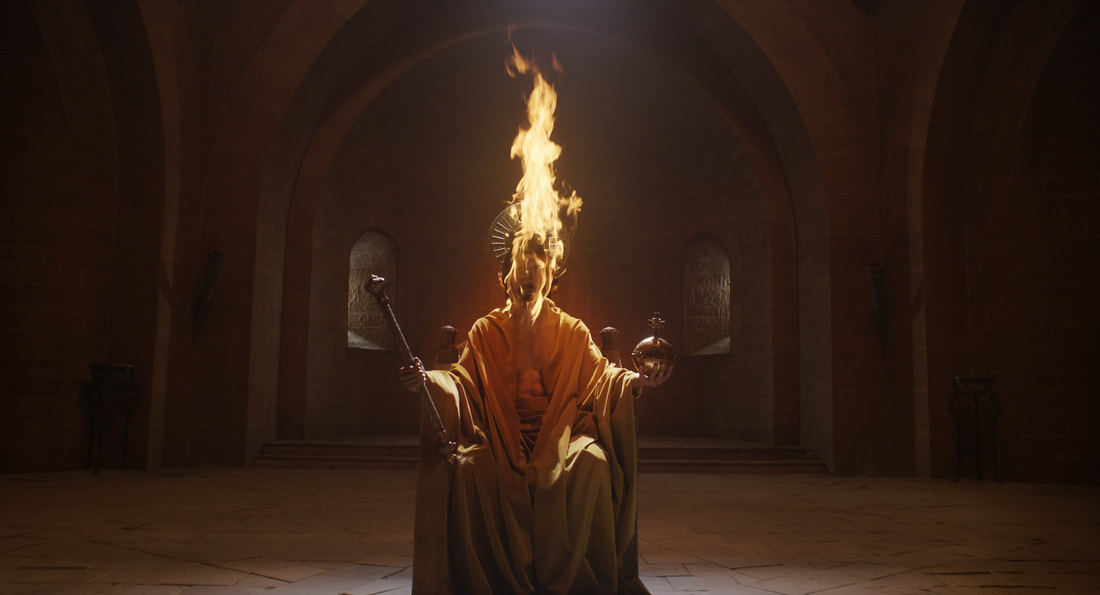
Midsommar is about Dani grieving her relationship with Christian. While rewatching the film and knowing the final scene, I was able to follow Dani’s stages of grief throughout the film. There is a sequence where Christian states that he is going to a party and says Dani does not have to come if she does not feel up to it. Dani denies she is feeling unwell and proceeds to go to the party. The following two scenes show Dani and Christian at the party, then arguing about his trip to Sweden. Once they return home Dani begins to get angry at Christian and when she feels him pulling away she begins to bargain so he will stay. Throughout the whole trip in Sweden Dani is Depressed and feels guilty for asking Christian to go home because she is afraid. It comes to a breaking point when she catches Christian cheating on her with one of the women in the cult. The final sequence, as Dani watches Christian burst into flames, she smiles. This is her full acceptance of her pain and loss. 

Picture
The concept of grief and watching the stages that Dani goes through, without Christian’s support, was the scariest part the second time viewing it. Dani’s smile in the final shot of the film  invoked fear in many of the viewers. Ari Aster rooted this film in Dani and Christian’s breakup while adding folk horror elements to almost give the viewer the worst-case scenario when it comes to a breakup. 

Eternal Recurrence: The Philosophy of the "Timeloop" Movie

10/22/2021

 
by Mason Leaver
Picture
The “time loop” film is a science fiction subgenre which can often feel recycled, but, when done properly, can reveal deep truths about the human condition. In recent years, using a time loop as a narrative device has become increasingly popular. According to Wikipedia’s list of films featuring time loops, 40% of (listed) time loop films released since 1983 have been released in the past 5 years. I expect that as filmmakers reflect on the Covid-19 quarantine, more time loop films will emerge, trying to capture the dreadful repetition of that time in our lives. Besides being able to speak to our recent experiences in quarantine, time loop films can also speak deeply to the human condition, by forcing us to examine our lives in a new way. I want to focus on two films which use the time loop trope to explore deep philosophical concepts. 
Picture
Palm Springs (2019) is the story of a man and a woman stuck in a time loop, forever repeating a wedding that they were both invited to. Nyles (Andy Samberg) has been stuck in the time loop for countless repetitions- so long that he has become completely accustomed to it. After Sarah (Cristin Milioti) becomes stuck in this cycle along with Nyles, the two begin to reflect on what the purpose of their life is in this strange repetitive existence. Nyles has embraced a nihilistic ideology. He does whatever he wants each day as the loop repeats itself, entertaining whatever whim he might have. Nyles does emphasize that pain still matters. When Sarah inflicts injury on someone, and gets Nyles injured in the process, Nyles protests, saying that the pain that they experience is still real, and to be avoided. One of the things which makes Palm Springs such an interesting use of the time loop trope is the fact that the characters are forced to relive their failures each and every day. Nyles must wake up and be reminded that he is a lonely man who is being cheated on. Sarah, on the other hand, must be reminded that she was sleeping with her sister’s fiancé on the day of their wedding. Both characters are constantly confronted with their worst mistakes, and seek to get out of the loop because of this constant reminder. 
Picture
Nyles passes the time by drinking and floating around, day after day. 
One of Friedrich Nietzsche’s most important ideas was his concept of the “eternal recurrence”. The basic concept which Nietzsche invited his readers to consider was the idea that time would repeat itself endlessly, cycling over and over again, for eternity- an eternal recurrence. Any actions which you take in this lifetime would be endlessly repeated in the future, and have already been endlessly repeated in the past. While scholars disagree on what Nietzsche had in mind when he articulated this idea (whether he was proposing an actual view of the nature of the universe, or merely a thought experiment), Nietzsche does use this concept to make us reflect on the nature of our lives. If our lives were to be endlessly repeated, would we feel happy about it? If not, Nietzsche suggests that this suggests that we have been failing to live a good life, and that we ought to reconsider how we live. In Palm Springs, we see an example of the sort of lives which Nietzsche would critique through the eternal recurrence. Each day, Sarah must wake up and relive the mistakes that she has made. Both Nyles and Sarah are confronted with their regrets and mistakes, and are forced to repeat them. Through the use of the time loop trope, Palm Springs examines Nietzsche's concept of the eternal recurrence.  
Picture
Another film, About Time (2013), uses a time loop trope in a slightly different way. After he discovers that he can travel through time, Tim (Domhnall Gleeson) begins to relive his life in order to make it perfect. The method of time travel is fairly interesting- Tim enters his own body at a previous time in his life, and can change things as he likes from there. At first, Tim uses this ability to set up a perfect life- manipulating events to meet a girl and fall in love, to get a good job. But as time goes on, Tim actually begins to change his approach to time travel. Rather than redoing everything to be just as he’d like it, he lives through his day twice. The first time, he lives the day normally. After the day is done, he redoes it, this time appreciating all the small details of the day, changing little things here and there to adjust it to be a bit better. But as his life continues on, Tim decides to stop using his time traveling ability all together, choosing to simply live his life in appreciation of all of the small, happy details of life- no do-over needed. 
In About Time, we are given a more optimistic view of the eternal recurrence. When Tim is given the opportunity to live his life over and over again, exactly how he would like it, he chooses to create a life that would be ideal for him. Once he chooses to not go back in time anymore, simply living his life out in the first try, Tim begins to live the life that Nietzsche wanted us to aim for through this thought experiment. Tim begins to live a life that he actually would be satisfied to repeat endlessly. And we know this because if there was anything that he wasn’t ultimately satisfied with, he could always go back and change it. But by living deliberately and in an attitude that sees meaning in the small details of life, Tim constructs a way of being that leaves him satisfied. The point of Nietzsche’s idea of the eternal recurrence was to encourage us to live a similar sort of life. 
Picture
Tim stops rewinding time, choosing to live in the present
What is behind the popularity of time loop movies from the 1980s to the present? I believe that this trope is popular because it makes us aware of just how free we are. Existentialist philosopher Jean-Paul Sartre wrote about how man is overwhelmingly free. When we live our lives, we discover an enormous number of options that we might pursue. We limit ourselves because of what is expected of us, what we tell ourselves we are capable of. But in reality, Sartre says, there is an incredible variety of possibilities that we encounter in our everyday lives. When we realize this near-infinite possibility, we can become stuck in one of two ways. We might be caught up in our current situation and limitations (what Sartre calls facticity) or we can be paralyzed by the overwhelming amount of possible choices we could make (our transcendence). Sartre saw this as a fundamental problem for humanity, saying that humanity is “condemned to be free”. The time loop film exposes this fundamental tension in the human life. When we watch a film where a person endlessly repeats a day, we can see just how many choices one can make in a single day- how many different ways one’s life could be, if we just made more radical choices. The “time loop” film is a science fiction subgenre which can often feel recycled, but, when done properly, can reveal deep truths about the human condition.
For more on Nietzsche and the Eternal Recurrence, you can read our review of True Detective 

Malignant - Review

10/8/2021

 
by Reed Milliken
Picture
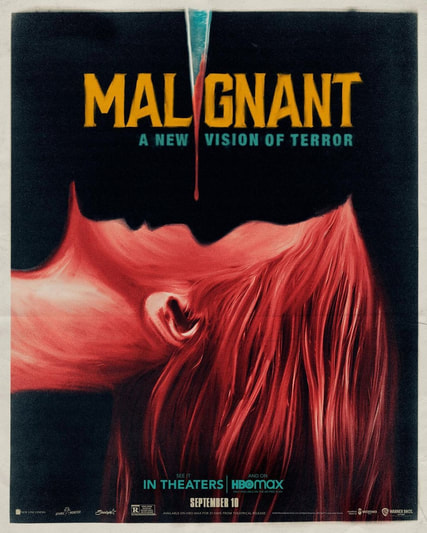
 Malignant (James Wan, 2021) is a mystery horror that uses practical effects, fight choreography, and brief musical cues to pull of Wan’s scariest movie yet. Malignant also features hints of various genres to great effect; buddy cop, murder mystery, and action are all things you can expect to see. Malignant follows widow Madison Mitchell as she suffers from heinous visions of gruesome murders, only to discover that these waking dreams are in fact horrifying realities. Malignant (2021) is great at reminding you just how scary a horror movie can be. Director James Wan serves up the most bloodcurdling, spine-chilling, hair-raising movie of the year so far through his use of great cinematography and fight choreography.
The following review contains spoilers for Malignant, and contains imagery that may be disturbing to some readers. Reader discretion is advised.
To me, Malignant feels like an episode from a prime-time TV cop show where the main characters stumble across some spooky supernatural elements only to have it end with a logical, yet still far-fetched, explanation to all of it. This is by no means a complaint, just an interesting observation on some things that stood out to me while watching. Malignant and a prime-time cop show have many similarities in terms of structure, characters, and plot. Furthermore, a lot of the camera setups feature wide shots and crane shots and a majority of the cast are no-name newbies. While these are not critiques of the movie, they are all aspects very reminiscent of a cheap production with a narrow deadline; furthering my comparison between Malignant and a prime-time TV cop show. Unfortunately, this does bring along a few problems I commonly find within these types of shows, the performances are weak apart from the lead, the writing is sloppy, the set pieces are basic, and the lighting is nothing special.  

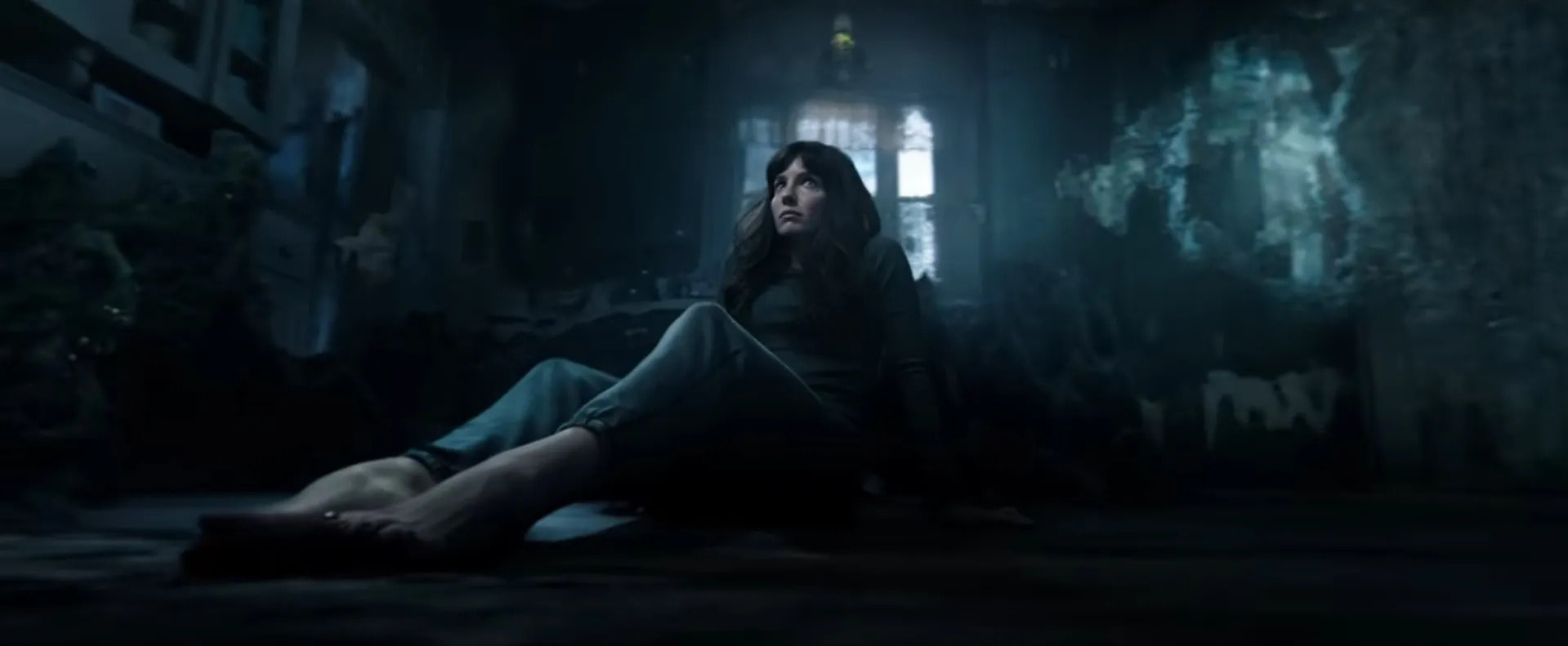
​However, director James Wan didn’t let the aesthetic of the movie inhibit his ability to spook; a couple of sequences from the beginning of the movie are some of the scariest in recent memory. Another area of achievement for Wan is the majority of the production design; the vision-shifting effect and the design for Gabriel as a whole are unique and were a great touch. Speaking of Gabriel’s design, the scene where he fights everyone using the back of Madison's body is a very unique concept and adds the perfect touch to all of the fight scenes. Wan did not hold back on the gore, and it made for some gruesome kills. The gore was done practically, which is always appreciated from horror movies as CGI blood has nothing on practical blood in terms of feeling authentic.
Picture
Maddison during the aforementioned "vision shifting" effect
Unfortunately, some nice-looking blood doesn’t completely forgive the poor CGI found in other aspects of Malignant. Exterior shots of the mental hospital, for example, looked like something stripped from an indie horror game. Another issue is some of the story beats felt a little divergent from the main plot. Take the underground city, for example, it was a cool set piece and concept, but it didn't have anything to do with the story and ended up just feeling tacked on. 
This is more of an observation than a critique, but the main theme sounds exactly like “Where Is My Mind?” by The Pixies, almost to the point where I thought it was the song the first time it played. On the topic of sound, there is an orchestral echo riff that is played anytime something spooky happens, it’s reminiscent of the classic Psycho (1960) soundtrack, and while it worked well for me the first couple of times it was used, it was over-utilized and became stale by the end of the movie. 
Picture
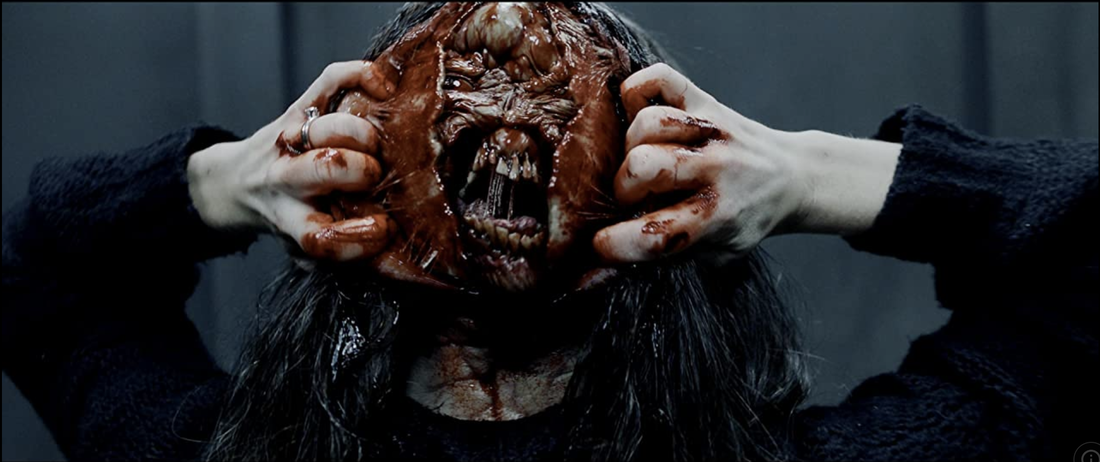
The reveal of Gabriel poking out from the back of Madison’s head was gnarly; it was like if the reveal at the end of Harry Potter and The Philosopher’s Stone (2001) was rated R. I can see myself talking to people ten or twenty years down the line and referring to this as "the movie with the evil parasitic twin" or something along those lines. Also, much like every other movie these days, it was clear they were setting up a sequel with Madison telling Gabriel she'd be ready next time he comes back. Which, if Madison doesn’t just get a lobotomy and remove Gabriel within the first 20 minutes of the next one, you can all expect a very sour follow-up to this review.
Picture
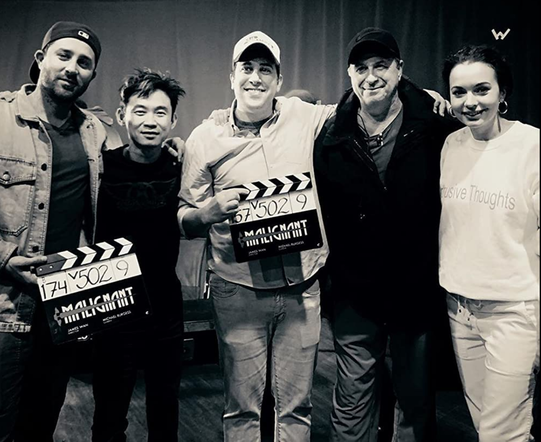
James Wan with members of his crew behind the scenes of Malignant
Malignant is James Wan’s eighth feature horror film, and his tenth feature film overall. I still think my favorite of the bunch is Aquaman, one of his two departures from horror, but The Conjuring (2013) is a close second. It seems like over time Wan has been slowly refining his horror filmmaking skills. His first feature, Saw, is a horror staple and one that I make a note to watch every Halloween. The Conjuring is a masterclass in horror and I did not expect to enjoy it as much as I did. I can tell that Malignant is the love child of all of Wan’s prior work. He’s slowly taken the best of each of his prior films and perfected his craft, creating perhaps his scariest movie in the process.
Picture
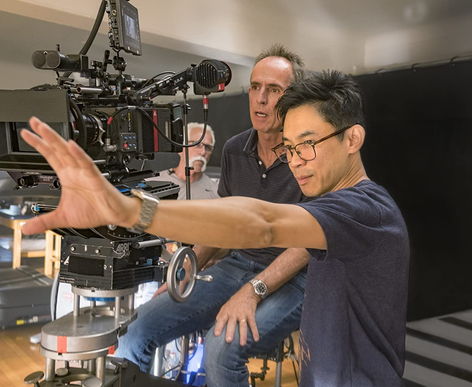
James Wan behind the scenes directing Malignant.
Here’s what I took away from Malignant: James Wan has been at the game for nearly 17 years and he’s still putting out stellar, genre-defining work. Malignant may lack in some minor aspects, but the horror in terms of the practical effects, fight choreography, and overall scares is unmatched. Wan is truly the best at what he does, and I can’t wait to see what he puts out next.
Get Ready to Rumble: Analysis of Fight Scenes in Film

9/30/2021

 
by Aaron Argot
Picture
What makes fight scenes so appealing and have so much weight? People tend to love fight scenes because they are generally the scenes of the film that have the most and best action, and many people may write them off as just the carriers of action. Not that delivering action is at all a weak point or a shallow appreciation of fight scenes, but fights in films often have a greater meaning and purpose to them. Most people actually do notice these things, and sometimes the more it is hidden, the better. The best fights will elevate their respective film, and there are many ways fight scenes can do this. Some of those include the rather surface-level purpose of story progression, displaying the film’s themes, focusing on specific characters, using it as a means of exposition, and to show spectacular aesthetics. Most great fights, such as these 21st century fight scenes, have a combination of these, have all of these, or have even more purpose. ​
Picture
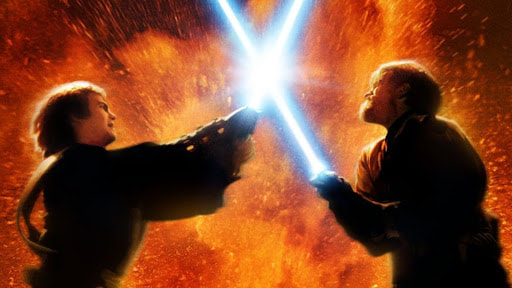
The fight scene between  Anakin Skywalker and Obi-Wan Kenobi at the end of Star Wars: Revenge of the Sith (George Lucas, 2005) shows how fight scenes can be used as a means of story progression. This is the most basic purpose of fight scenes, and generally every one should have this. This fight, however, while doing so much more, is the embodiment of that. This fight between Anakin and Obi-Wan is the bridge between the prequel and sequel trilogies, since this happens at the end of the last film of the prequels. The impact of this scene also comes from context, most viewers in 2005 had already seen the original trilogy and know that Anakin becomes Darth Vader, but they do not know how. Throughout each prequel film, that question is on viewers' minds, and is slowly answered through the three films. This fight after Anakin is named “Darth Vader,” yet still does not have the signature look. The end of the fight is where more insight is given into the look of Vader. It is also the outcome of this fight that would have shaped the entirety of the next three (and eventually six) movies, or could have had them not happen all together. And since everyone had everything connected, it changed the way people think of the original trilogy if only slightly due to what you learn about characters like Anakin and Obi-Wan. This one fight is the culmination of all that happened in the prequels, as well as foreshadows the second fight between them in Star Wars: A New Hope. I think that is the main part that makes this fight so impactful in the series. The fight also has the record for the longest sword fight in film history, which also might be why it is so iconic.
Picture
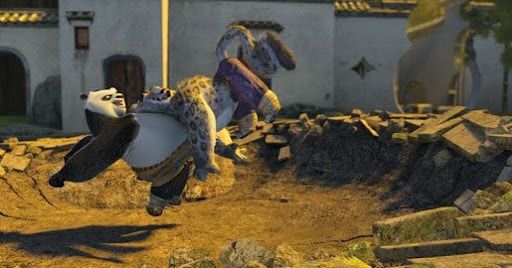
Po utilizes his stark differences in battle
In any one on one fight, it is often a fight between ideals and character differences, and in film, those ideals and differences are aligned with the overall themes as well. The fight between Po and Tai Lung at the end of Kung Fu Panda (Mark Osborne and John Stevenson, 2008) displays the themes of the film brilliantly. Po and Tai Lung are dramatic foils for one another, which contributes to the themes of this film. Tai Lung is the antagonist of the movie, is a leopard, and seemed to be very naturally gifted in the art of Kung Fu from an early age. In contrast, Po is the protagonist, is a panda, and was a fanboy of the kung fu masters, The Furious Five, before getting to train with them, being very bad at it at first. Uniqueness is a major theme of the film. Everyone is different so not everything is going to work the same way for everyone and everyone has different strengths, a lot of the times coming from our differences. Another theme is similar in that “there is no secret ingredient”, no secret to greatness, it all comes from you and what makes you unique. The fight starts off, with Tai Lung at the temple at the top of the mountain, fresh off of his victory against his and Po’s master, Shifu, who is also the thing that connects them. Po meets him at the top, but is visually winded by the climb, highlighting differences between them as Tai Lung basically has everything going for him, while Po seems to not. The entire battle between them is them fighting over something called “the dragon scroll”, which is said to hold the secret to limitless power, which Po already knows is blank and only a reflexive film. Throughout the fight, Tai Lung’s experience shows through his tendency to outmatch Po in traditional fighting techniques. However, Po’s panda nature, being plump and bouncy, allows him to use unique techniques to keep pace with Tai Lung, even defending him from the technique that beat the Furious Five. Eventually Tai Lung gets the scroll and discovers that it is blank, which angers him, something that could be described as his fatal flaw. This, paired with Po’s nature, allowed him to get the upper hand against Tai Lung, and ultimately defeat him. This fight is natural talent and entitlement vs. uniqueness and optimism, and with the film’s themes of uniqueness, it is clear who the victor would be. The fight’s expansion of the film’s core themes during the end of the film help it to display those themes more clearly, making a better overall film.
Picture
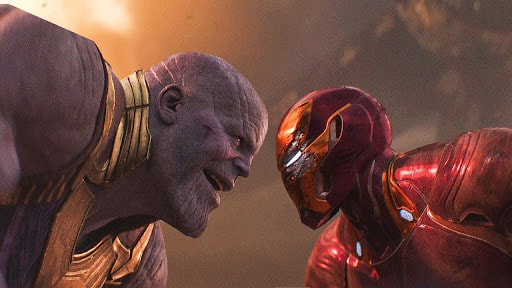
Just like how Po and Tai Lung’s characters made the fight have more weight, characters in every fight and fight scene are truely what make or break it. Who they are and who they are fighting, as well as things like the reasons for doing so can all blend to make for fight scenes to have awesome character moments. Or the fight itself could be a character moment. One of those fights is Iron Man (Tony Stark) vs. Thanos in Avengers: Infinity War (Anthony and Joe Russo, 2018). This is a fight that has been, as a generous estimate, hyped up since 2012, since Thanos showed up in the end credits of The Avengers (2012). But for all of the hype surrounding this fight, it was relatively short, only lasting about two minutes, a testament to Thanos’ strength. Earlier in the movie, Tony states that Thanos has been inside his mind for six years. Going back to the hype statement I made, Tony’s statement here attributes the hype to more of an in-universe hype, as it is unlikely a lot of people in theatres were thinking about a Tony Stark vs. Thanos faceoff after the first Avengers. But with that context that Tony gives, you still feel the magnitude of six years of buildup when Tony and Thanos finally fight one on one. The PTSD that Tony felt after his experiences in the first Avengers has fueled a lot of his problems in MCU installments after that. Thanos was the source of the attack on New York in that film. So when Tony responds to Thanos’ statement saying they were both “cursed with knowledge”, with “my only curse is you”, it holds a lot of weight. And that is the moment that he finally has a clear head about what happened back then and is determined to fight that head on. So even though Thanos dispatched Tony in just two minutes, Tony won in that aspect. That is the reason why lots of people thought Tony was going to die in that instance, as it seemed like his character arc had more or less been completed. This scene is so important because of what we know about specifically Tony’s character and what he’s had to go through, and that six years of buildup also enhances the scene incredibly. The fight not only elevates the film, but the entire Marvel Cinematic Universe.
Picture
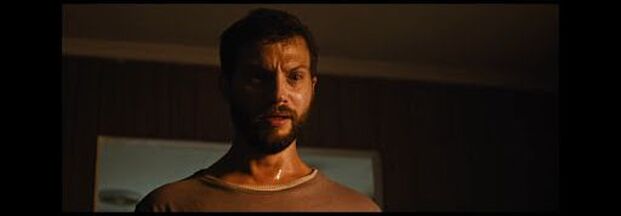
Grey realizes what his body is capable of
The next fight that uses fight scenes to communicate exposition comes from a film that came out in the same year, Upgrade (Leigh Whannell, 2018). The fight scene from this film is one that has been dubbed “The Kitchen Scene.” This scene is the first time that the main character, Grey, fights with the help of the artificial intelligence chip implanted in him. With verbal permission, the A.I. can take over his body and fight for him. In the film, Grey is trying to get revenge on the people who killed his wife and left him formally crippled, and he finds himself in the house of an enemy who then comes home. Grey starts off the fight unaided, and is very clearly losing. But, then the A.I. in his head says that he can help and he needs his permission in order to do so, which Grey gladly grants. What follows is the obvious improvement of Grey fighting prowess as his movements become almost comedically robotic, effortlessly overpowering and ultimately killing his adversary. The main purpose of this fight is to let Grey and the audience know that using the A.I. to fight is a real option in the future and could be very helpful in Grey’s mission to get revenge. This becomes a crucial detail, arguably the main detail, later in the film, and the film introduced it the best way it could, with a fight scene.
Picture
Rengoku prepares an attack, displaying incredible visual effects
The final fight I want to talk about is also the most recent, which is Rengoku vs. Akaza, from Demon Slayer: Kimestu no Yaiba - The Movie: Mugen Train (Haruo Sotozaki, 2020). This fight expertly explains how fight scenes in films can be used for aesthetic purposes. Of course, this fight also has elements of every other point previously mentioned, but what really stands out is how visually stunning it is. Mugen Train is an anime movie, and animation has incredible flexibility with all the technical aspects of filmmaking. With things like camerawork, in some ways it is easier to get the perfect shot. Being adapted from drawings not only gives you a good framework, but allows you basically take out the technical challenges of the aspects of some shots. But what shines through is the animation, the thing that sets it apart from live action movies. This circles back to the general premise that fight scenes are enjoyable because they are concentrated pockets of action, and this fight takes that to the extreme, until you are tilted back in your seat in awe. Music and sound design are also important factors in the aesthetics of a fight scene, the music that plays during the fight is exciting and works incredibly well. The sound effects of different fantasy-inspired attacks also work seamlessly with the animation. It is hard to explain aesthetics further than just saying they are incredible without seeing it, or without going into an incredible amount of detail. But, this fight scene illustrates perfectly how the aesthetics of a scene like this are just as important if not more important than the other aspects listed. The aesthetics can be described as the thing that sells you on the reality of what is happening, and the crazier the content the more challenging it is, but it is also that much more rewarding. The aesthetics of this fight help to accentuate all the other important aspects of the fight, making the fight itself, as well as the film, that much better.

A lot of times the fight scenes in films become staples or descriptions of those films, and that is no mistake. Fights are inerrantly a clash of ideas or motives. The possibilities of ways to work with that in film are almost endless. Some of the ways filmmakers have thought to utilize fight scenes are things like progressing the plot, something baseline but still very important. Another way is to use the clash of two or more characters to better display the themes of the film, which makes it perfect for most audiences to understand. There is also the use of fights to highlight certain characters, and for them to have great moments that help to flesh them out. Fight scenes can also be used practically in a storytelling sense of giving the audience and the characters in the film information crucial due to the fight’s occurrence. The filmmakers can also use fight scenes as a way to construct awesome aesthetics, something all good films have, especially 21st century action movies. A fight scene is often the most memorable part of a film, and if done correctly, can elevate that film to even greater heights . A good fight could possibly be what makes certain films iconic for how that one scene impacts the rest of the film as a whole.  

The Green Knight: A Review

9/30/2021

 
by Mason Leaver
Picture
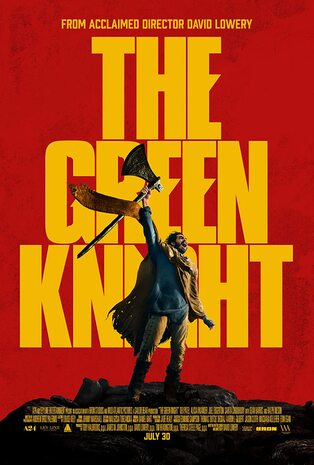
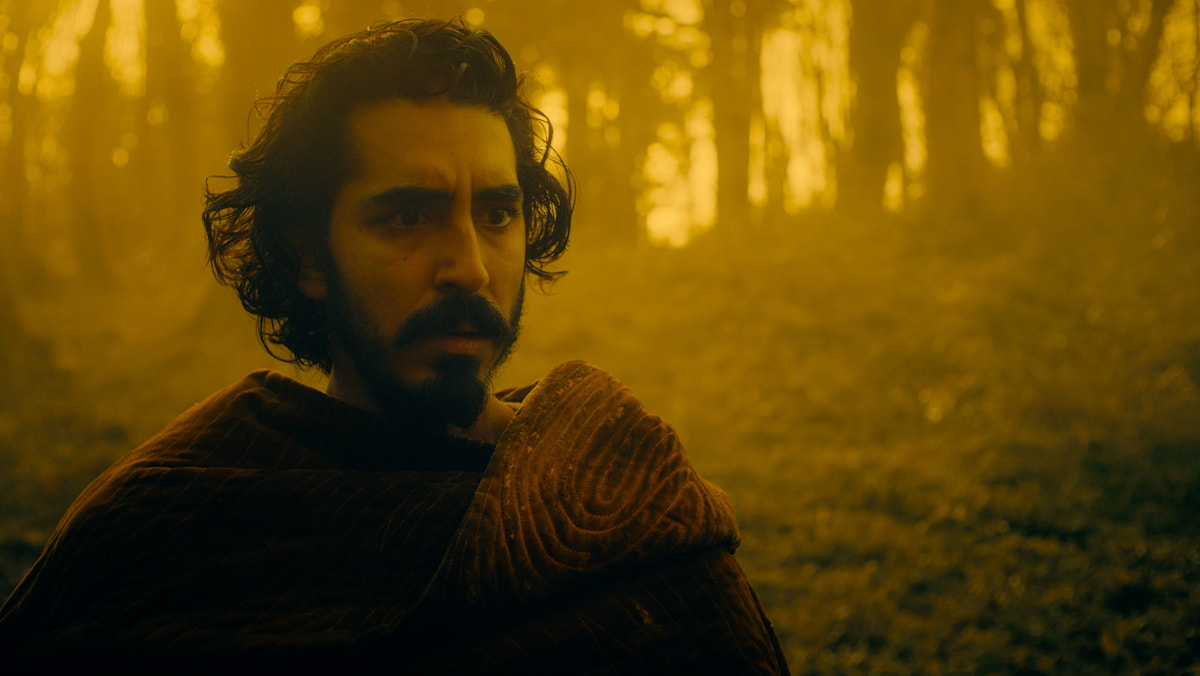
It’s not every day that a film comes along like The Green Knight (2021). The entire premise is weird. The story is based on a folk tale over 600 years old, focusing on the journey of a young knight who enters a bargain with a mysterious green skinned knight. The plot itself is odd, and it doesn’t seem like the sort of tale that would appeal to a modern audience. However, The Green Knight somehow manages to make this story captivating. It’s strangest elements are actually some of its strongest, and writer/director/editor David Lowery dives head first into this Arthurian legend. The Green Knight is a miracle of a film- one which manages to create a sensational cinematic experience from the blueprint of something which, on paper, seems doomed to fail. 
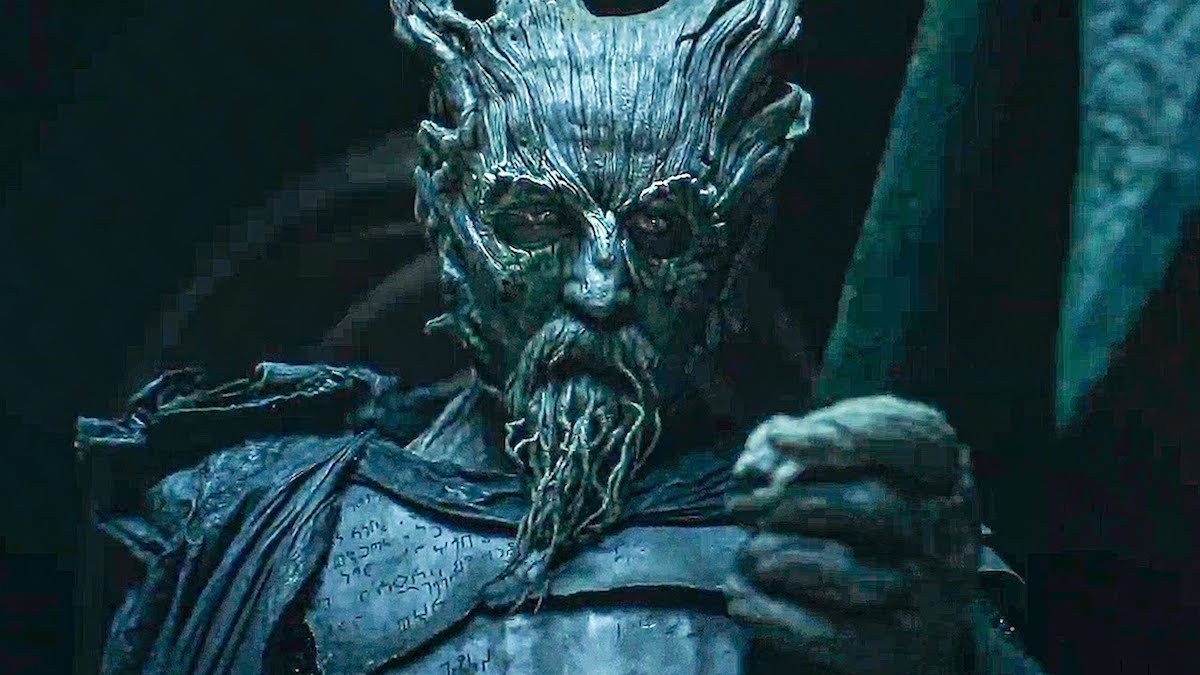
One of the things which I most admire about Lowery’s process for The Green Knight is his willingness to take risks. There are tree-people, wandering naked giants, talking foxes, sorcerers, and so on. Yet all of these elements feel grounded in the world of the film- a strange, dark adaptation of the classic setting of King Arthur’s kingdom. The plot does not hold the audience’s hand. Instead, it forces the audience to interpret much of what is happening. Magic is mysterious and unexplained, and the viewer is left to guess at what exactly is happening at times. All of this leads to a final product which is very open to discussion, debate, and interpretation. It is a risky move for Lowery to leave so much to the audience, but it makes for a rewarding experience for the engaged viewer. 
Picture
One of the stranger elements of The Green Knight
Another incredible aspect of The Green Knight is its use of color. Every frame of the film is masterfully composed. The village and castle of Camelot are rendered in harsh grey and brown tones, with high contrast lighting creating very interesting set pieces. As Gawain goes out on his adventure, the landscape is full of vibrant color. Each major plot point along Gawain’s journey is defined by a color scheme- red, yellow, white, green. This is certainly the largest project that Director of Photography Andrew Droz Palermo has worked on (Palermo previously worked with Lowery on Ghost Story (2017), and he shines through in this film. I could see an Oscar nomination for Best Cinematography for The Green Knight this year. I hope to see him work with Lowery again in the future. Audiences should be looking forward to Palermo’s next project, which is sure to be fantastic. Indeed, if his work in this film is any indicator, Palermo could go on to be a legend in the business. 
Picture
The use of color in The Green Knight
The Green Knight continues to shine through in its thematic explorations. The film manages to strike a balance between inspiring a sense of wonder and a sense of existential dread. The film is thematically centered around the human awareness of our own finitude, what Martin Heidegger called being-toward-death. Gawain is forced to confront two possible scenarios: to live and contribute to the horrors of humanity or to die an honorable death. The film asks us to question whether we could stand in Gawain’s place, journeying bravely towards our deaths. The film also shows that leading a life of kindness, bravery and courage is hard, and it is rarely rewarding. Nevertheless, The Green Knight inspires us to live out such a life for the sake of the adventure itself. 
Picture
The titular Green Knight
Despite all of these strengths, The Green Knight has still proven to be divisive among critics and audiences alike. Some seem to love the film, and others believe it’s pointless. I fall in the camp that says that The Green Knight is an excellent film. Many have commented on the film’s pacing as a serious problem. Green Knight often features lengthy sections of landscape shots, with Gawain travelling across a mythical England on his journey. While the film can be slow at times, the lengthy shots of Gawain’s journey are meant to set a tone and a mood for the viewer. I would liken these sequences to the many colorful space sequences from 2001: A Space Odyssey (Stanley Kubrick, 1968). Indeed, I believe that many of the strengths of 2001 are on display in Green Knight. It’s pacing is largely similar- an episodic adventure with lengthy visual sections interspersed between. During these sections, the score similarly plays a vital role in setting the tone of the film. Both films explore deep questions and themes related to the human experience and human mortality. And both films offer an ambiguous ending which lends itself to discussion and interpretation by the audience. I realize that this is a bold claim, but my hope is that in time The Green Knight will come to be recognized as a film of a similar level of mastery. I would certainly recommend giving it a watch, and perhaps a rewatch. 

Misdirection in Film Conventions: Shutter Island Analysis

9/24/2021

 
Picture

by Samantha Shuma

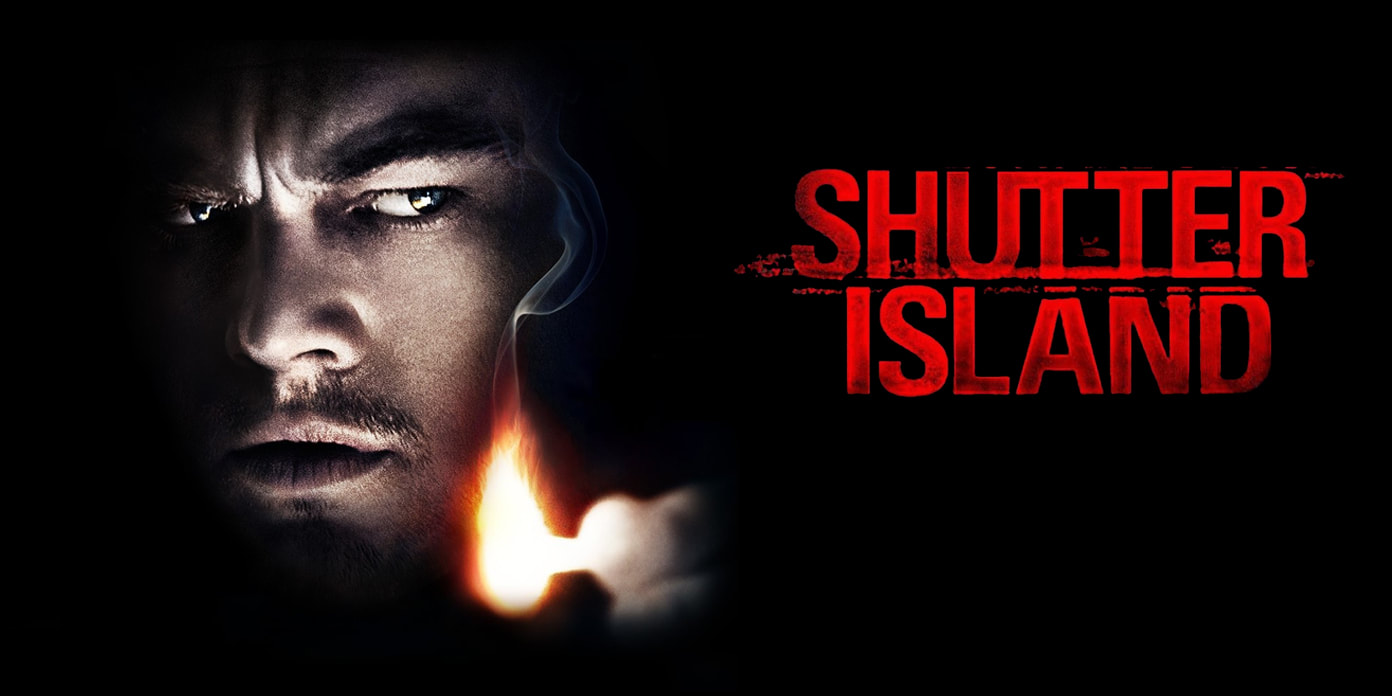
As consumers of digital media, we have formed some assumptions about how films are structured. Especially with fictitious works, we’ve become accustomed to ignoring illogical aspects. This does have its limits, but we are more willing to believe impossibilities in order to enjoy a film. Our suspension of disbelief allows us to ignore fantastical elements and over the top plots in exchange for enjoying a film's story and characters. This also helps us follow along a film’s mapping of reality. We know that when a character wakes from bed that the scene previous was likely a dream sequence, and therefore didn’t really happen. Keeping these ideas in mind, we use our interpretation of film conventions as a tool to impose our own meaning onto a film’s narrative. Since so many film’s follow a certain structure of reality, our impositions are usually correct. We end up imposing meaning, that ends up revealing the truth or covering up what a film’s narrative intends to achieve. Relevant information is lost to preserve one’s assumption of film structure. Our tools of understanding a film’s narrative can be turned against us. Shutter Island (2010, Martin Scorsese) intends to use our ideas of film conventions and genre to displace our sense of reality. 

This remainder of this article contains spoilers for Shutter Island, reader discretion advised.
Picture

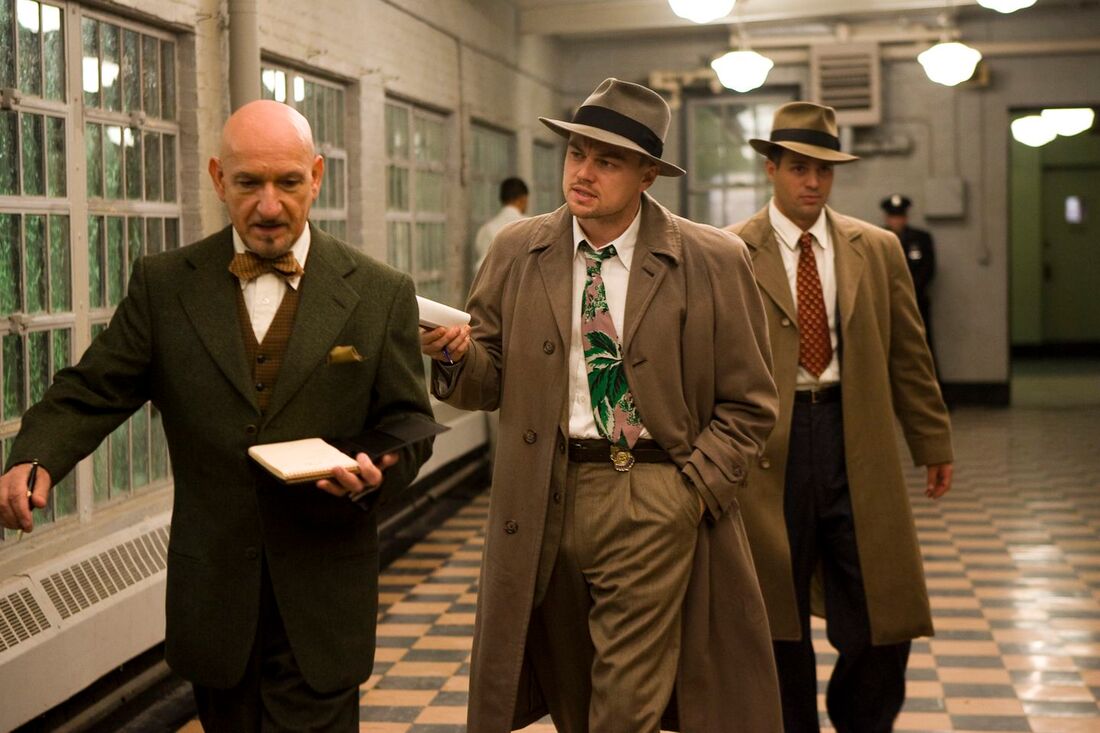
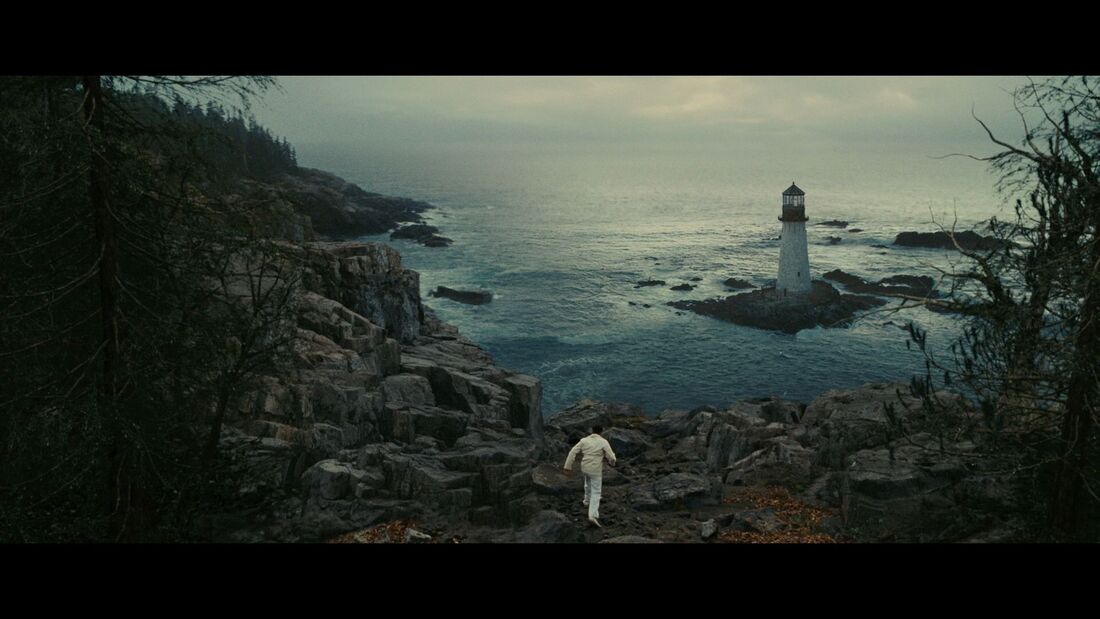
U.S Marshal Teddy Daniels (Leonardo DiCaprio) and partner Chuck Alue (Mark Ruffalo) arrive on an island housing Ashecliffe Hospital, a mental institution, to solve the case of a missing patient, Rachel Solando. Teddy has not only come to solve the case, but has landed in the institution in the hopes of exposing it’s unethical practices on it’s patients. As he digs deeper into the possible truth, Teddy starts to believe that the head doctor, Dr. Cawley (Ben Kingsly), hopes to turn him into a patient and keep him from sharing his findings. By the end, Teddy manages to get into where he believes the patients are taken to be lobotomized, a lighthouse on the far side of the island. It is there we discover the real truth, that Teddy, real name Andrew Laeddis, is a patient at Ashecliffe Hospital, who has just been through an elaborate role playing scenario, where the doctors hoped it would break him out of his psychosis. 
​
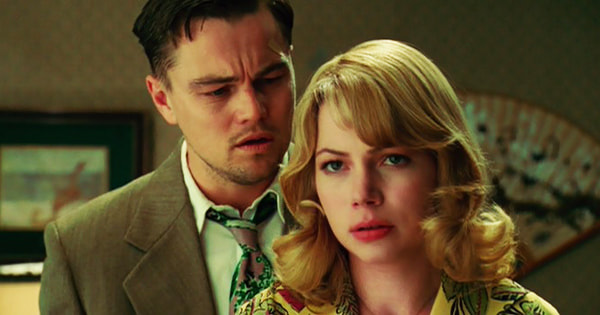
Since the film is shown through Teddy’s perspective, we see what he believes is real. Following his clues, his suspicions, most viewers would never guess the ending. Small actions over the course of the film build our suspicions, not to disbelieve Teddy, but other characters around him. Teddy’s paranoia spreads into the heart of the viewer, as “aspirin” causes Teddy to experience vivid dreams and intense hallucinations. It is in these moments where reality is hidden from the audience, and misleads us into following the story’s imaginary narrative. The dream sequences are obvious to discern, as they take place in places off of the island and are often a conversation between Teddy and someone who has died or doesn’t exist. Through these sequences, the film is drawing on the audience’s idea of a dream sequence as a means of misdirection. By stating that the dream world of Teddy talking to his dead wife is taking place within Teddy’s mind influences our assumption that the investigation of Rachel Solando is real. This line of dream and reality is drawn so clearly in the film, that his hallucinations become unnoticeable or at least are not questioned as being imagined.
Picture
Towards the climax of the film, Teddy leaves Chuck behind to traverse the dangerous edge of the island to infiltrate the lighthouse. Unable to make it there due to the terrain, he heads back to retrieve his partner, only to spot his body, waves crashing on him and the rocky bottom of the cliff’s drop. Teddy climbs down to check on his partner, only to realize the body is only a pattern formed on the discoloration of the rocks. It’s easy to believe that the spot could’ve looked like a body from a great distance. We are given a reasonable excuse for Teddy’s misjudgement, widening our suspension of disbelief. Sneakily, the film is giving us more reasons to dismiss Teddy’s mistakes, and we slowly ignore more and more warning signs of Teddy’s mental illness.

This analysis of Shutter Island techniques of misdirection is drawn from personal experience. Through an initial viewing, this belief of Teddy’s dire investigation felt real to the end. Always wanting to believe Teddy, anything that may have stuck out as odd never swayed my opinion. Even after the truth was revealed, I still did not want to believe Teddy was actually a patient at Ashecliffe Hospital. The film uses many strategies to shape the facts of the film. It is important to understand that not everyone will fall for the film’s tricks. To say that everyone will fall for it, or won’t ever notice the reveal early on is being too general. However, the belief that many film goers will believe Teddy through and through. The more movies you watch, the more you can make assumptions of how a movie will play out. Shutter Island shows itself as a drama, thriller, and a mystery. One would expect to see an exaggerated but interesting story along with endearing characters that will discover the culprit in the end. The film follows that expectation for a while, but ultimately pulls the curtain to show a completely different narrative. 
Picture
While misdirection is an excellent narrative tool that gives a film rewatchability, Shutter Island also uses our sense of film reality and narrative to call out our assumptions. The ending is only unclear to those who impose meaning based on past ideologies. Our ideas of how films are takes place over the intended artistic vision, leaving us to experience a lesser version of what the film hopes to show. Many must realize our assumptions do not construct the law of film, rather they restrict us from viewing a film’s meaning in its entirety. In this way, we are not far off from being like Teddy. He has assumptions about how the world works. His past trauma has led him to see the cruel through a cruel, broken gaze. In order for him to be a U.S Marshall solving a big case, there are events, people, and images that must exist. Whether consciously or not, Teddy is blocking out the truth or his mental illness to live in a reality that allows him to be free from his actual situation. Viewers who believe Teddy’s perspective will go along with his perspective, ignoring any reflags for the sake of preserving their assumptions of how the film will end.

Even when watching films, ideology has the potential to undermine a film’s message. What we believe can be so heavily embedded into our minds that we aren’t able to accept any truth outside of that. That is what Shutter Island is proving to us. Those who always believe a film will play out in a certain way are blinding themselves to new and contrary takes on a film’s reality and story. Although our thoughts on a film’s structure may not have any lasting effects, not understanding or flat out ignoring something that doesn’t follow with what you already believe is a dangerous thing. It limits one from experiencing the world entirely and being open to new ideas. Shutter Island shows the consequences of ignoring the truth for the sake of what we may think is actually going on. Our ideas and personal truths shape our reality, and in Teddy's case, hides reality completely.

Lost in Paris: Review

9/17/2021

 
by Ravi Ahuja
Picture
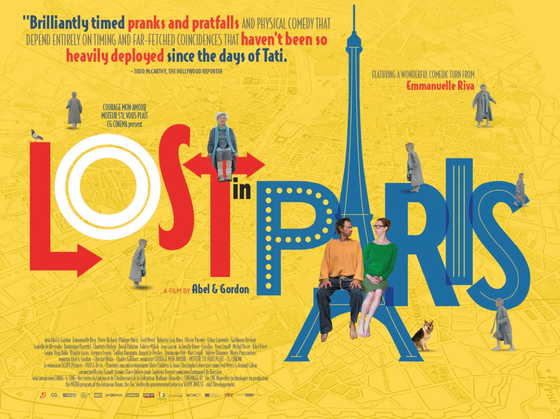
Somewhere in the snowy north of Canada, a woman is telling a secret to her niece, “I’m going away to live in Paris.” The child agrees without much thought saying, “I’m going to live in Paris too.” Decades later, the child, Fiona, now a grown woman and a librarian, is still stuck in the same cold and desolate part of Canada. One day, the door blows open with the mail and Fiona receives word from her aunt Martha. After 48 years of living alone in Paris, ‘they’ want her to live in an assisted living facility. The letter ends with just the word “help”. And like that, Fiona’s journey to Paris begins.
Picture
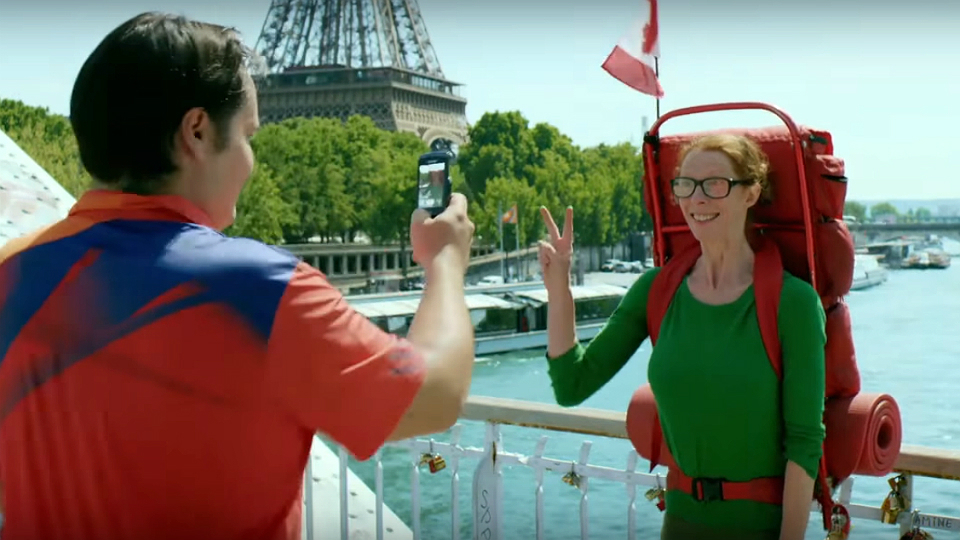
Fiona (Fiona Gordon) gets a picture taken in Paris
Fiona’s trip to Paris is far from simple, losing her comically oversized rucksack on the first day, and being unable to contact or find her aunt. In the midst of her panic and desperation, she finds a few people who are able to help her, not the least of whom is a charming vagabond named Dom who comes across her rucksack. Dom is not the most convenient helping hand, often misunderstanding Fiona’s broken French and stealing her things upon first encounter. Still, the two are drawn together time and time again through both coincidence and their efforts to find Martha. Fiona Gordon and Dominique Abel are not just lead actors through this movie, but also co-writers, directors, and producers, Lost in Paris being their fourth film written together. While the side actors do a fine job, it is unmistakably Dom and Fiona’s movie, with their energy and personality dominating the feel and essence of the movie. Their acting is, as one might imagine, a perfect fit for the deadpan comedic writing of the film, with any scene featuring the both of them being sure to elicit a smile.
Picture
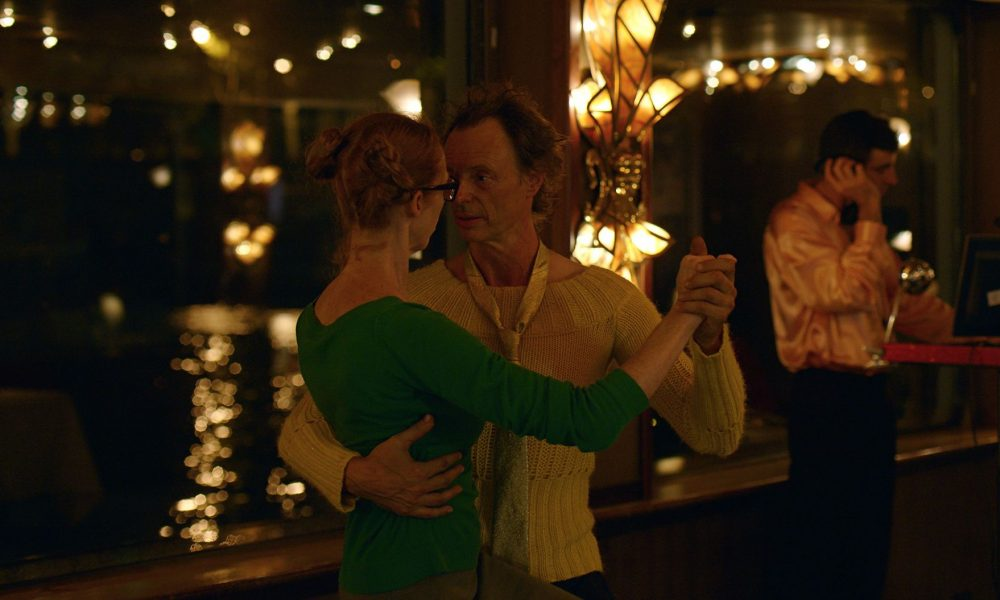
Dom (Dominique Abel) and Fiona dance at a floating restaurant
There isn’t too much more to say about the plot of Lost in Paris, but then that’s not its greatest draw. The movie is great fun, working off of constant physical and visual gags reminiscent of Chaplin and Tati. When the mail arrives in the opening, the door literally blows open with a gust of wind, causing everyone inside to exaggeratedly hang onto something. The acting, delivery, and setting of Lost in Paris also always work together to great comedic effect. Due to an innocent misunderstanding and some bad timing, Martha’s neighbor, Martin, is caught by Fiona and the police going through Martha’s underwear. Perhaps my favorite set-piece is the floating restaurant where Fiona and Dom meet. There are so many threads of visual, physical, awkward, and ironic humor interweaving through the whole dinner until the inevitable climax where Fiona realizes Dom has all of her belongings, and the pacing and humor works terrifically.
Picture
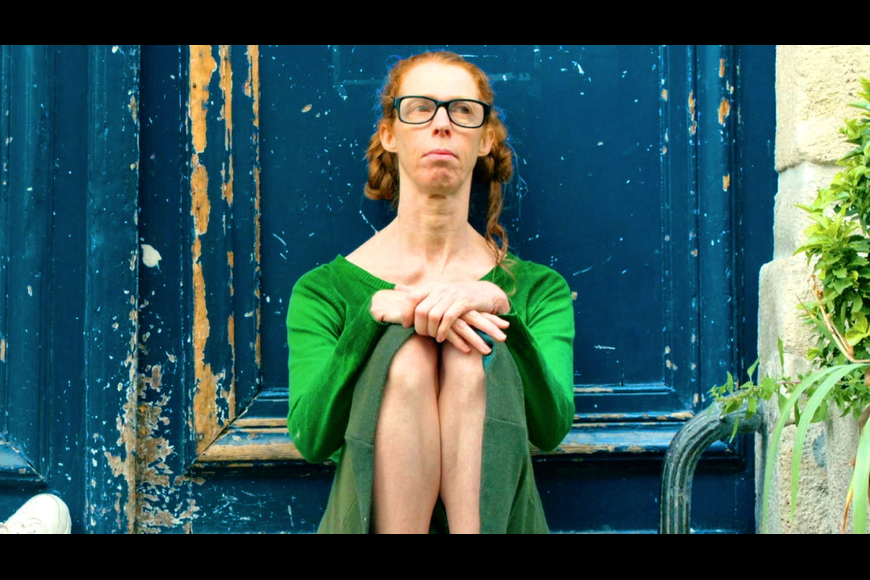
Fiona sits in front of a door
Besides just the old-school physical humor, Lost in Paris is also made great through its neat and colorful visual style. There is an emphasis on bright primary colors and clean, simple compositions. The overall effect is not unlike a watered down Wes Anderson, providing a similar innocent storybook feel to the story. I am reminded also of Amélie in how its bright, colorful visual style is used to help make the viewer fall in love with Paris as a city and a setting. Paris comes across as such a blend of small and big, modern and vintage, clean and dirty, and this is represented not only through the physical details on screen but the characters that live in it. Dom is a roguish, independent vagrant of Paris, and yet he falls in love with the polite and naïve woman from Canada. 

Picture
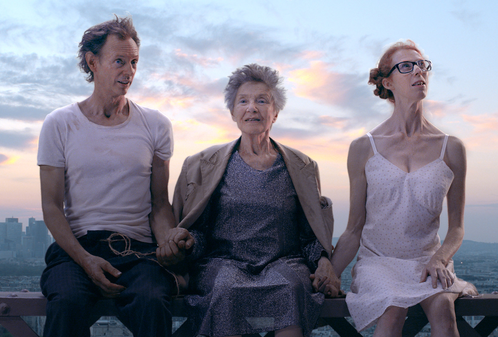
Dom, Martha (Emmanuelle Riva), and Fiona sitting on a beam
Lost in Paris is short, fast-paced, and light, caring more about delighting its audience than making them think. Dominique Abel and Fiona Gordon do a fantastic job of keeping the film fun and fresh with their performances the whole way through. Fans of Tati and Chaplin, or anyone looking for a whimsical, old-fashioned rom-com should be sure to give the movie a watch. Lost in Paris is streaming now on certain Kanopy memberships. 

Isolation: Analyzing the Protagonists of Denis Villeneuve

9/10/2021

 
By Mason Leaver
Picture
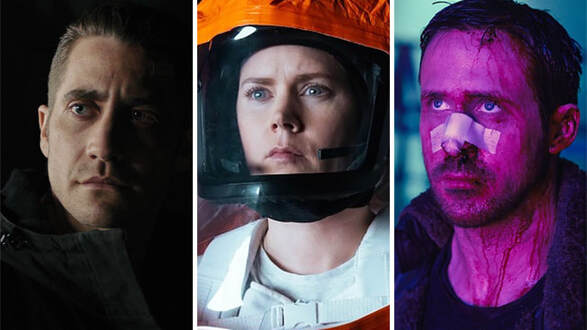
Denis Villeneuve has consistently made films of breathtaking quality, including Prisoners (2013), Sicario (2015), and Arrival (2016). Yet, he is a less recognized name in film when compared with other directors. One of the reasons for this lack of popularity may be due to the fact that the director does not have a specific visual style, unlike contemporaries such as Wes Anderson or Quentin Tarantino (though Villeneuve’s partnership with cinematographer Roger Deakins has led to some visual similarities between his works). While Villeneuve’s filmography may not be held together by a common genre or mise-en-scene, it does still bear certain, less obvious commonalities. One of these commonalities is a repeated characteristic of his protagonists. Denis Villeneuve has demonstrated himself to be an auteur in the quality of his films by the common thematic exploration underlying his work, which examines isolation from a variety of perspectives and contexts. 
Picture
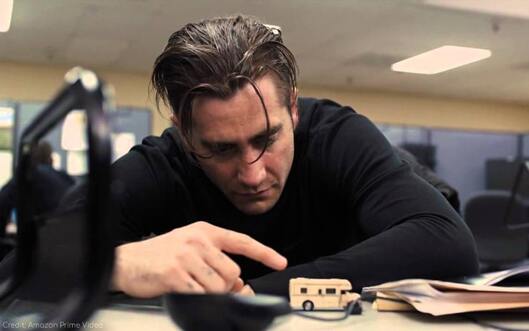
Detective Loki, framed in his cramped office space
Last year I wrote a review of Prisoners and praised it for it’s storytelling and visuals. It is one of Villeneuve’s best films, and it highlights the start of the common trend surrounding the theme of isolation.  The protagonists Loki (Jake Gyllenhaal) and Dover (Hugh Jackman), are  examples of isolated characters. Loki is a man who appears to be completely detached from others. He has given himself completely to his job as a detective. As the film progresses, Loki loses himself in his obsession to solve the case at the heart of the film. Dover, on the other hand, embodies a very different sort of isolation. Dover is a family man, and at the beginning of the movie is a very sociable and engaged person. However, after his daughter goes missing, Dover begins to isolate himself from his family, becoming equally obsessed with finding his kidnapped daughter. On screen, both Dover and Loki are often shown in cramped spaces- Dover in his truck, Loki behind his desk, both men restricted by the frame. Prisoners uses these two men as examples of the isolation which stems from obsession.
Picture
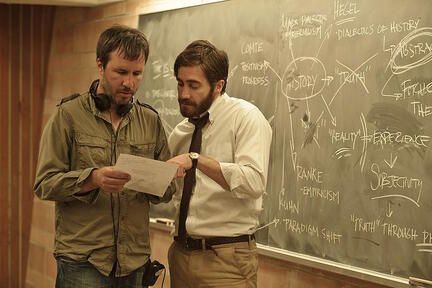
Villeneuve (left) and Gyllenhaal (right) on the set of Enemy
Enemy (2013) was released the same year as Prisoners, and also stars Jake Gyllenhaal. The film centers around Adam (Gyllenhaal), a history professor who discovers a man who looks exactly like him in a film. Adam attempts to track the man down, and begins to lose his mind in the process. Enemy, like Prisoners, examines loneliness and isolation, but Enemy examines two different forms of isolation. Firstly, the film deals with the suffering through a mental breakdown. Adam begins to question his own sanity and he begins to spiral further and further out of control. Yet, he finds out that others cannot relate to, or even understand, his condition. Villeneuve uses the two characters to show the isolation which comes from infidelity and lies. Adam sleeps in a small apartment with very little in it, and has no attachments, save for his girlfriend. Anthony (Gyllenhaal), Adam’s counterpart, is a successful actor with a wife. Yet both men are unsatisfied in their relationships, seeking more than what they have. The two characters come to represent a way of living a double life, with infidelity and selfishness at their core. The final shot of the film shows the ultimate isolation which one is forced into when they must confront their inner demons. 
Picture
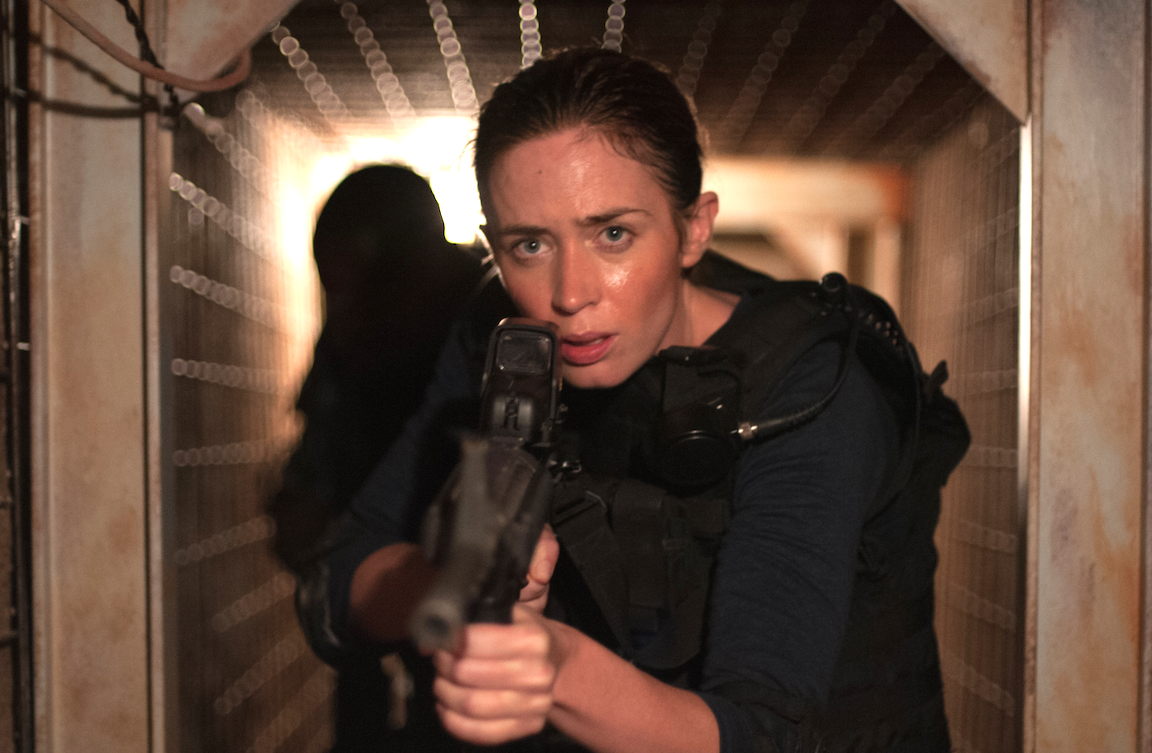
Emily Blunt in Sicario
Sicario (2015) follows Kate Macer (Emily Blunt), an FBI agent who becomes involved in a fight against the cartel. At the beginning of the film, Macer believes that she is fighting the good fight, and is optimistic about her role in serving justice. However, as she is recruited into a secretive mission to arrest high ranking members of the cartel, she crosses lines she never thought she would have to. Macer’s partners resort to torturing criminals for information and using Macer herself as bait in order to further their investigation. By the end of the film, Macer is disillusioned with the system that she has been working with. Nevertheless, she is forced to sign a document stating that everything that she and her team did was legal. Sicario depicts a sort of moral isolation. Macer is the only ethically upstanding person in a wholly corrupt system. As Macer continues with her mission, she becomes immersed in the corruption that she was initially revolted by, until she does not recognize herself- her moral compass tells her that the things she has done are wrong, yet she cannot take them back. Again, Villeneuve depicts an isolation in his protagonist- this time through the corruption of a system much larger than she is.

Picture
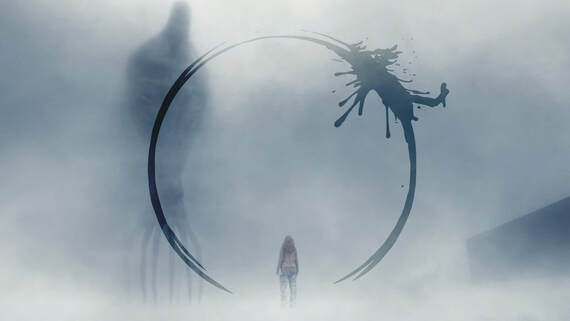
Amy Adams stands alone in Arrival
While Villeneuve’s previous work depicted isolation as a result of some negative circumstance, Arrival (2016) examines this experience as a result of epiphany. As Louise Banks (Amy Adams) begins to study the language of the aliens that have visited Earth, she begins to see the world differently. The aliens understand time in a different way than humans, able to see the present, past and future simultaneously. As Dr. Banks learns their language, she begins to be able to see the world from their perspective. She dreams in the alien language, and as she understands their language more thoroughly, she begins to see time as they do- past, present, and future all at once. The film shows us that as Banks continues her life, this new knowledge of time causes conflict with her husband. Banks is aware that their daughter will die young of an incurable disease, as she has seen it in the future. Nevertheless, Banks chooses to have the child. When Banks reveals this to her husband, it leads to a conflict which results in divorce. Ultimately, Banks’s enlightenment leads her to being isolated from the rest of humanity, as she is able to conceptualize the world in a way no one else can. 
Picture
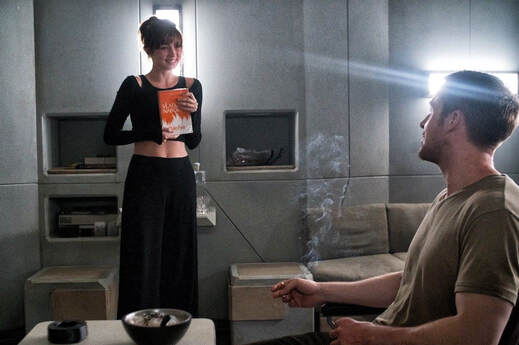
K (Gosling) in his apartment with Joi (de Armas)
Villeneuve’s most recent film, Blade Runner: 2049 (2017), tells the story of K (Ryan Gosling), a detective who tracks down rogue androids known as replicants. K lives a fairly depressing life. He lives in a small apartment, and has no social relationships. His only meaningful connection is to a computer program named Joi (Ani de Armas), who appears to him as a hologram. As the film continues, the hollowness of K’s life begins to become apparent to him, as all of the pseudo-relationships that he had with A.I become useless to him. Of all of Villeneuve’s films, Blade Runner: 2049 offers perhaps the least nuanced examination of isolation, though it is not any less impactful. Gosling captures the sorrow of living a lonely life, and the despair of discovering that one is even more alone than they thought. 

Villeneuve’s authorship does not come from any single stylistic consistency, but rather in the thematic exploration underlying all of his recent films. His work has been dedicated to exploring an aspect of human experience from a variety of perspectives. Some films, such as Sicario or Enemy offer an outlook on seclusion which is cynical, suggesting that we may become overwhelmed by our physical or moral isolation. Other films of his, such as Prisoners or Arrival offer a more hopeful view, depicting characters who still find hope and value even after experiencing an emotionally traumatizing event or an epiphany. No one except Villeneuve himself can say why it is that he seems to have this fixation with various forms of isolation in his protagonists. Regardless, this commitment to a consistent theme has shaped his career and helped him to become the impressive director that he is today. 

​Villeneuve’s next film, Dune, is set to be released in theaters this October. Time will tell if Villeneuve has chosen to continue to explore the themes of isolation and loneliness in his newest film. 
For more on Villeneuve's career, take a look at our articles on ​Arrival, Prisoners,  ​and Blade Runner: 2049

Subverting Expectations: Analyzing the Career of Rian Johnson

4/12/2021

 
by Mason Leaver
This article contains heavy spoilers for most of Rian Johnson’s career
Picture
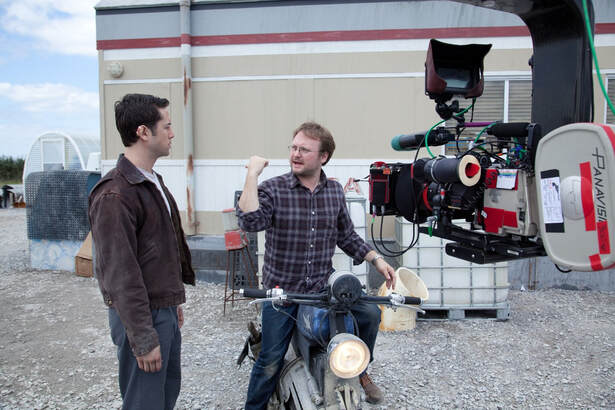
Director Rian Johnson (right) working with Joseph Gordon-Levitt (left) on the set of  "Looper"
Rian Johnson is a director that is both loved and hated for his practice of intentionally subverting audience expectations. This storytelling method can be found across various forms of storytelling media, in books, video games, television, and film, and seems to be becoming more popular recently. “Subverting expectations” is a method of surprising the audience with some element of a story, be it the plot, themes, characters, etc. This goes beyond a “twist” in a film. Expectation subversion actively works within the genre of a story, and attempts to reinterpret or subvert the conventions of that genre, breaking patterns in surprising and interesting ways. However, this method of surprising the audience is not always well received- it can sometimes be the source of heavy criticism from fans of the tropes which have been subverted. Johnson is both famous and infamous for this practice- the man has made a career out of it. His most recent work, Knives Out, is a perfect example of Johnson’s style. With Netflix announcing a $450,000 deal to acquire the rights for a Knives Out 2 and 3, directed by Rian Johnson, it seems like a great time to explore Rian Johnson’s authorship, and how he subverts the audience’s expectations to keep them hooked. 
Picture
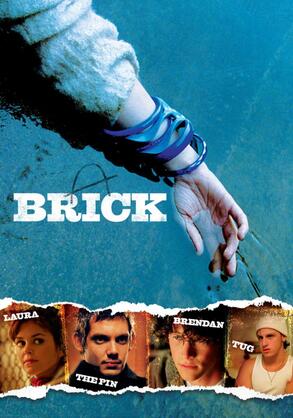
Brick (2005) is Johnson’s debut film. It is the story of a high school student, Brendan, who discovers that his ex-girlfriend has been murdered. Brendan begins to investigate the case, and soon stumbles into a dangerous local crime circuit, led by a young kingpin named “the Pin”. However, Brick is not just a high school mystery. It is styled like a noir film, full of lingo and slang, fast talking, heavy shadows, speakeasies, etc. It doesn’t take long while watching Brick to be surprised by the stark contrast between the style and plot of the film and the film’s setting. This is the first way in which Johnson uses expectation subversion, through the use of genre and setting, to keep his audience engaged. 
Picture
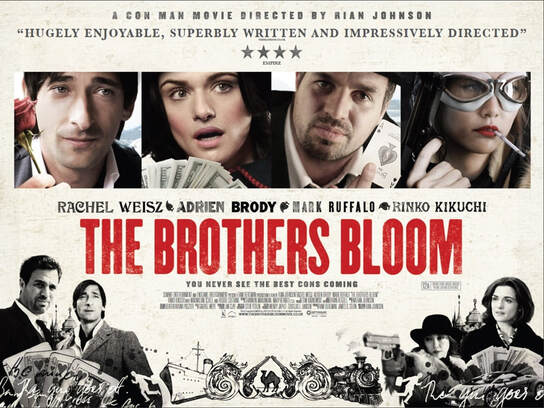
​Johnson’s next film is The Brothers Bloom, a heist film about two brothers that are con men. This is most likely Johnson’s least subversive film, but it still employs the technique in an intriguing way. The style and setting of The Brothers Bloom is not subversive in the same way as Brick was. The characters, Stephen Bloom and Bloom Bloom, and their assistant, Bang Bang, fit the standard genre tropes of the heist movie- they are two con men and their dangerous demolitions expert assistant. What is subversive about The Brothers Bloom is the film's structure. The film begins with an extended narration, depicting some crucial events from the Bloom brothers’ lives, establishing their characters and personalities. However, this childhood sequence is fairly stylized, the children speak unusually for their age, and it all feels “fairy-tale” like. As the film progresses, the narrator drops out, and the majority of the film lacks any narration, preferring the standard approach. The film’s second subversion of expectations is almost paradoxical- it is the doubling down of genre tropes to such a degree that it is actually surprising. One of the classic tropes of the heist genre is the reversal, or the twist toward the end of act II or in Act III. Johnson uses this in The Brothers Bloom, but he actually doubles down on it. The film could conclude at the end of Act II- the Brothers have separated, and Bloom has given up Penelope, his love interest. However, at the very start of Act III, Johnson actually has the characters begin a whole new heist- it’s almost like a sequel built right into the third act. At the very end of Act III, there’s a rapid series of reversals- you think characters are dead, and then they’re not, but then they really are again, and then you’re not quite sure. It’s extremely rapid, and can be a bit jarring. But Johnson is tapping into the very essence of what makes heist films great and is turning it up to 11, to such a degree that it feels ridiculous, and as such, subverts our expectations. 
Picture
Walter White hunts a fly in "Breaking Bad"
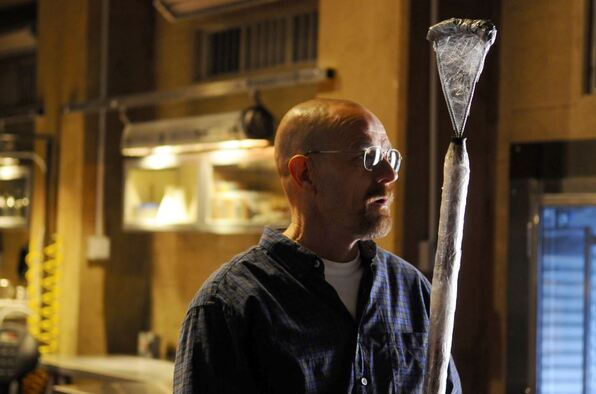
It is important to briefly mention Johnson’s work on the television series Breaking Bad (AMC, 2008-2013). Johnson directed three episodes for the series, and they are widely regarded as some of the best episodes of the show, if not some of the best episodes in television history. I would like to focus on his first episode, titled “Fly”. Fly is the tenth episode of season 3, a season which consistently raised the stakes for Walter and Jesse. However, all of that momentum comes to a grinding halt for episode 10, where the only concern of Walter and Jesse is to kill a fly in their meth lab before it contaminates the meth. The episode is such a change of course from the reset of the season, it can be funny and refreshing. While Johnson did not write the episode, it is interesting to note that he directed one of the most subversive episodes of Breaking Bad. 
Picture
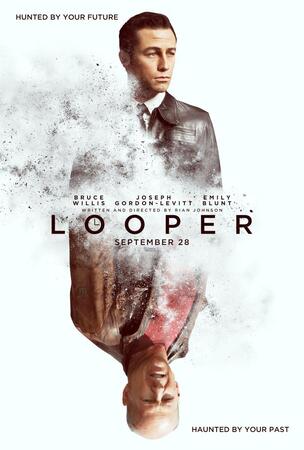
Johnson’s next film, Looper (2012) is about a hitman named Joe, who is a “looper”- a man who kills people that have been sent back in time for him to execute. Joe works for the mob of the future, where time travel has become possible, and when the mob wants someone dead, they send them to Joe so that the victim cannot be traced. It’s an interesting enough time-travel concept, but Johnson once again subverts the audience’s expectations, when he sends Joe from the future, referred to in the script as Old Joe, back in time to be killed by Young Joe- the two begin to fight, as Old Joe wants to kill someone that Young Joe is determined to save. In creating this set up, Johnson has actually created a film in which the hero and the villain are the same person. Because of this, Johnson is able to subvert all kinds of expectations of time-travel movies, including, mainly, the actual time travelling. Young Joe doesn’t travel in time at all throughout the film. Instead, he uses his memories, which Old Joe has, to communicate with his future self. It’s mind-bending at times, but it winds up creating a unique time-travel film.
Picture
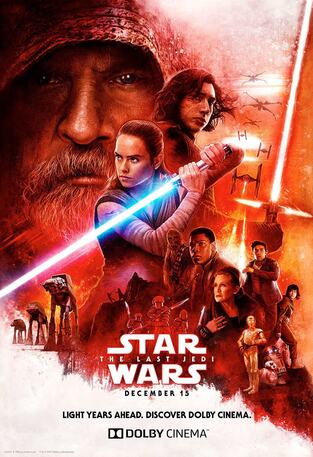
Now we come to The Last Jedi (2017), which is Johnson’s most divisive film. Whether you love it or hate it, it’s clear that The Last Jedi subverts expectations in a major way. Johnson takes many of the “genre tropes” of the Star Wars series and subverts them. Luke, the hero of the original trilogy, who was set up in The Force Awakens to be a mentor figure to Rey, is actually a depressed hermit, intentionally exiling himself from society. Secondly, there is the reveal regarding Rey’s lineage. The Star Wars series is full of characters who are from important families, the Skywalker lineage most among them, but Johnson chose to reveal that Rey was not actually from any important family; instead, she came from two drunken scrappers on a backwater planet. Finally, Johnson’s choice to kill off Snoke, who had previously been set up to be the main villain of the sequel trilogy, is a major subversion of the standard Star Wars formula. However, these subversions were not popular with everyone that watched the film. Many thought these twists were unwarranted- they simply changed the Star Wars formula for the sake of shock value. Johnson’s other work is relatively uncontroversial because they are self contained- they rely on no other intellectual property. However, Johnson’s work in The Last Jedi is built upon many previous films, and as such, some fans felt these surprises were unearned. At the same time, many other viewers loved The Last Jedi- many have called it the best film of the sequel trilogy. Regardless of what you think about Johnson’s choices in The Last Jedi, it’s obvious that he was centrally focused on subverting audience expectations. 
Picture
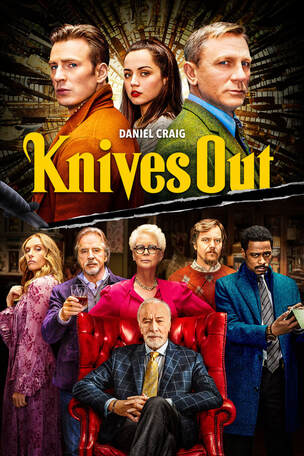
Johnson’s most recent film, Knives Out (2019), is a return to form for the director. It is back into an area he’s comfortable within- the mystery thriller. Once again, Johnson is committed to playing with aspects of the genre to create a new and surprising experience. Knives Out was advertised as a gentleman detective story, much like Murder on the Orient Express, centered around Mr. Blanc, played by Daniel Craig. The film begins by making us think that is what we will get- we are shown a dead body, and a detective is called quickly. But after a short while, the audience is made aware that Marta, the victim’s nurse, is responsible for his death, but that the victim did not want Marta to be blamed. All of a sudden, Marta becomes the protagonist of the film, and we are on the edge of our seats as she tries to hide the evidence of what happened, and as she eventually realizes the greater mystery behind it. This rapid change of perspective is what makes Knives Out such a great mystery film- it completely subverts the audience’s expectations about who they would be rooting for, and why. Johnson almost immediately solves what we expected would be the central mystery of the film, and simultaneously slowly alludes to the fact that there is more than meets the eye. It may be his finest work yet, and it’s certainly the greatest example of his practice of expectation subversion. 
Rian Johnson’s career has consistently shown a commitment to subverting the audience’s expectations. At times he does this through the setting or genre conventions, such as Brick, Looper, The Last Jedi, and Fly. At other times, he does this through the plot itself, such as The Brothers Bloom and Knives Out. While this has given Johnson success in varying degrees up to today, it’s unclear whether he will able to maintain this trend into the future. After all, how can you subvert an audience’s expectation of subversion? Perhaps Johnson’s next film, Knives Out 2, will actually be a relatively straight-forward detective story? I can’t say for sure. However, Johnson has proven himself to be a skilled director and writer, and as such, I’m very excited to see his future work. 

​For more on Knives Out, read our review here: http://www.cinemablography.org/blog/knives-out-a-revew

Time (dir. Kim Ki-Duk) Review

4/9/2021

 
By Ravi Ahuja
Picture
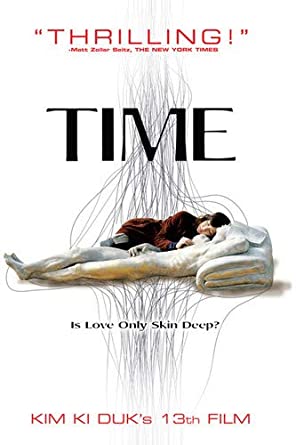
Kim Ki-Duk is not one of the three big Korean directors (Bong Joon-Ho, Park Chan-Wook, Lee Chang-Dong) who have achieved household name status (in film buff households, at least) in the west, but this does not make him in any way their lesser. He is in fact the only Korean director ever to win major awards at each of the Cannes, Venice, and Berlin film festivals, winning each award with a different movie. His most famous film, Spring, Summer, Fall, Winter… and Spring (2003) garnered much critical attention and love, and he is very well-known in the Korean film scene, but his films still remain popular mostly only among foreign arthouse fans. Sadly, Kim Ki-Duk died only a few months ago in December due to the Covid-19 pandemic, but his movies remain here for audiences to enjoy and remember him. Among his large catalog of low-budget thrillers and dramas is his 2006 film, Time, a bizarre character drama following two lovers and their relationship struggles, to put it lightly.

Picture
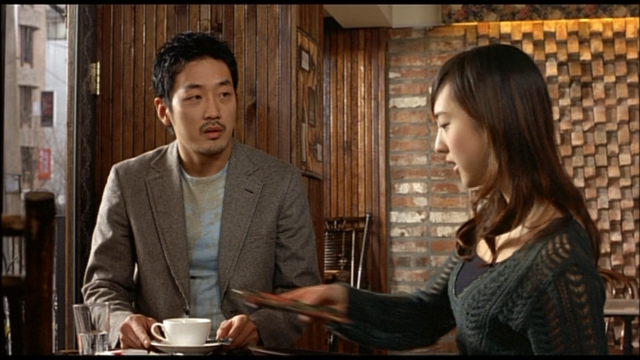
Ji-Woo (Ha Jung-woo) being served at a cafe
Seh-hee and Ji-woo are a couple in love, but after two years together their conflicts have risen to catastrophic levels. Ji-woo is charming, attractive, and gets plenty of attention from women, which drives Seh-hee insane with jealousy and paranoia. Despite not being unattractive herself, she feels insecure and stale, blaming her appearance on why Ji-woo sometimes looks at other women. After a huge fight in a cafe, Seh-hee moves out of her place and disappears without a trace. Ji-woo discovers that Seh-hee undertook a plastic surgery operation and will return to him in 6 months with an entirely new face. But when she eventually does return, their problems have not been all solved, leading to a climax of regret, insecurity, and insanity. 
Despite a simple plot and short runtime (or perhaps because of it), the film and the characters within it are captivating. The cinematography and score are simple but effective, letting the story and acting  carry this movie. Ji-woo and Seh-hee are both brilliantly written characters that showcase the madness that love sometimes drives people into, going from relatable and sympathetic to horrifying at the drop of a hat. While their relationship seems crazy  when it is first introduced, the longer we get to know the couple, the more their pain and grief can be understood and their actions make sense, even if they aren’t justifiable.
Picture
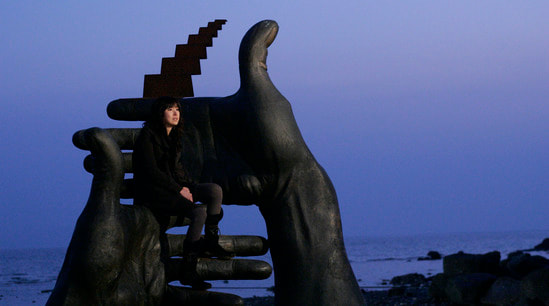
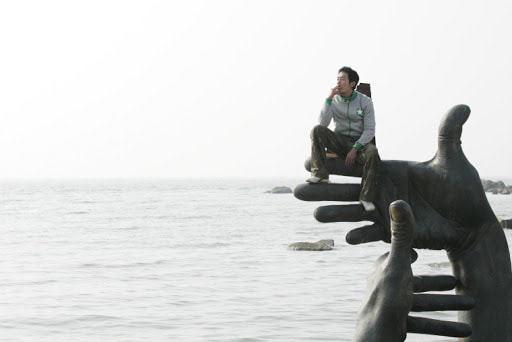
Seh-hee (Sung Hyun-ah) alone at the sculpture park
Because we only take the perspective of one character at a time when they are separated rather than an omniscient perspective, the audience feels the same confusion and uncertainty that Ji-woo and Seh-hee feel, making their predicament much easier to empathize with. And once you get past the extremeness of their actions, they really are easy to empathize with. Time feels very Shakespearean in how outwardly simple, yet deeply complex the story is, raising universally humanistic questions and themes of identity, love, and moving on. What does it mean to be someone, and then change who you are? How different are we from each other really? What does loving and moving on from someone entail? The questioning gets even deeper with the mysterious and abrupt ending that is impossible to interpret literally. Yet despite the fact the film rewards deep thought and analysis, it is still highly entertaining and enjoyable on a pure story level, allowing the viewer to interact with it as much as they choose to.
Picture
Ji-Woo alone and waiting for Seh-hee at the same sculpture park
There are some flaws with Time, mainly in other non-narrative departments. The visual style with its high-key, often natural lighting has aged poorly, with some scenes appearing more like a telenovela than a modern blockbuster drama. This is perhaps an unfair standard for a low-budget foreign drama however, as it does look good in many if not most scenes. The sound design is likewise a little low-budget and occasionally cheesy, but also doesn’t distract from the story except for rare occasions. Overall, however, Time more than manages to be the exciting and philosophical relationship-based drama it tries to be. I strongly recommend it to foreign film fans looking to explore Korean cinema, especially those with a bent towards Shakespeare. Time is streaming now on Kanopy with certain library memberships.

<<Previous
Forward>>

    Archives

    October 2024
    April 2024
    February 2024
    January 2024
    December 2023
    November 2023
    October 2023
    April 2023
    March 2023
    February 2023
    April 2022
    March 2022
    February 2022
    January 2022
    December 2021
    November 2021
    October 2021
    September 2021
    April 2021
    March 2021
    February 2021
    January 2021
    December 2020
    November 2020
    October 2020
    September 2020
    May 2020
    April 2020
    March 2020
    February 2020
    January 2020
    December 2019
    November 2019
    October 2019
    September 2019
    May 2019
    April 2019
    March 2019
    December 2018
    November 2018
    May 2018
    April 2018
    March 2018
    February 2018
    December 2017
    November 2017
    October 2017
    September 2017
    May 2017
    April 2017
    March 2017
    February 2017
    January 2017
    December 2016
    November 2016
    October 2016
    September 2016
    May 2016
    April 2016
    March 2016
    February 2016
    December 2015
    November 2015
    October 2015
    September 2015
    April 2015
    March 2015
    February 2015
    December 2014
    November 2014
    October 2014
    May 2014
    April 2014
    March 2014
    February 2014
    January 2014
    July 2013
    April 2013
    March 2013
    February 2013
    December 2012
    November 2012
    October 2012
    September 2012
    June 2012
    May 2012

Powered by Create your own unique website with customizable templates.