[email protected]
Cinemablography
  • Home
  • About
  • Blog
  • Articles by Category
  • Videographic Essays
  • Contributors
  • Journal
    • Existentialism in Film >
      • The Existential Philosophy of Melancholia
      • The Philosophy of Camus in The Dead Don't Die
      • The Existentialist Subtext of Dear Evan Hansen
      • An Existentialist Reading of "The Turin Horse"
    • A Woman's Perspective: Gender, and Identity in the Romanian New Wave
    • Film Theory Issue 1
    • Film Theory Issue 2
    • Science Fiction
    • Science Fiction Issue 2
    • Pan's Labyrinth
    • Kathryn Bigelow >
      • Opening Scene
      • Supermarket Scene
      • Round Table Discussion
  • Our Work
    • Links

If I Had Wings: A Review on Inside Llewyn Davis

3/17/2014

 
Picture
by Michael Hoffman
            Of all the films from this past year, perhaps the most overlooked was the Coen brothers’ Inside Llewyn Davis, which tells the melancholy story of a struggling musician from the early 1960s, who is searching for success in New York’s folk scene. From the very first shot where Llewyn Davis (played by Oscar Isaac) performs “Hang Me, Oh Hang Me” at the Gaslight, it is evident that Llewyn sings with a good amount of sincerity, which reveals his tortured nature stemming from an inability to achieve success. However, unlike some of the other characters present in films made by the Coen brothers, Llewyn is a genuinely talented individual that still has a good bit of control over his fate. Nevertheless, Llewyn’s self-defeating attitude hinders him from escaping past sorrows and tosses him into a circulating wasteland of aimless and fruitless pursuits.

            In many ways, Inside Llewyn Davis seems like a matured rebuttal to the Coen brothers’ earlier film, O Brother, Where Art Thou? (2000). Whereas their earlier film focused on the strength of companionship, perseverance, and reward through the confident pursuit of an end goal, Inside Llewyn Davis presents the story of an isolated man who is visibly worn by sorrow and frustrated by past failures and grievances. At several points in the movie, Llewyn reminds us of his former music partner’s passing, a tragic event that he seems unable to circumvent, and likely the catalyst provoking his bad mannered, explosive temper. However, Llewyn never really opens himself up to anyone in the film in an attempt to bring closure to his troubling past, which makes the title of his latest album, “Inside Llewyn Davis,” rather ironic.

            Another huge topic tackled by the film deals with the issue of deciding whether to keep true to your artistic roots, even if that means experiencing failure, or to make commercial compromises for the betterment of your career. Although the latter option was virtually out of the question for Llewyn, at one point in the film, he did agree to be a session guitarist for the recording of a goofy single entitled “Please Mr. Kennedy,” which seemed destined to be a hit. However, perhaps out of both desperation for money and the fear of “selling out,” Llewyn forgoes any claim to royalties in exchange for a larger amount of money upfront. With that said, in some respects, Inside Llewyn Davis seems slightly allegorical to the Coen brothers’ decision to make this film. Although they certainly possess enough talent that they could opt to “sell out” and turn a huge profit, they decided to instead create a movie that feels very comparable to some of their critically acclaimed earlier films, like Barton Fink (1991) or Fargo (1996), knowing fully well that “failure” (or at least less recognition) was likely.

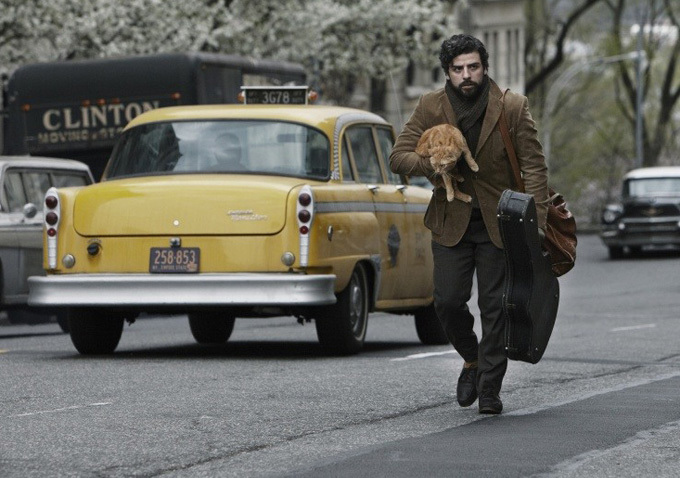
            Although Inside Llewyn Davis has many powerfully striking scenes of devastating circumstances, the film really hits hard with a subplot involving Llewyn’s interactions with the Gorfein’s cat (one of the families who lets Llewyn sleep at their house). Through the ongoing saga of the Gorfein’s missing cat, the Coen brothers successfully communicate Llewyn’s desire to alleviate his troubled conscience from the problems he has caused, heighten the dramatic tension of Llewyn’s chaotic life, and echo the journey motif through the travels that the cat itself undergoes (fittingly, the cat is also named Ulysses).

            Personally, I also found the musical performances in the film to be particularly vital in capturing its intended message. Although Llewyn never allows his sorrows to be fully disclosed, the little that we do know of Llewyn’s humanity and past circumstances are revealed most clearly through the words of his songs. Moreover, although Llewyn himself is rather unlikeable, his songs manage to evoke moments of peace and comfort, which reveals what I consider to be the central theme of the movie; although humans are often selfish and fallible, somehow we remain capable of expressing beauty through our songs and stories.
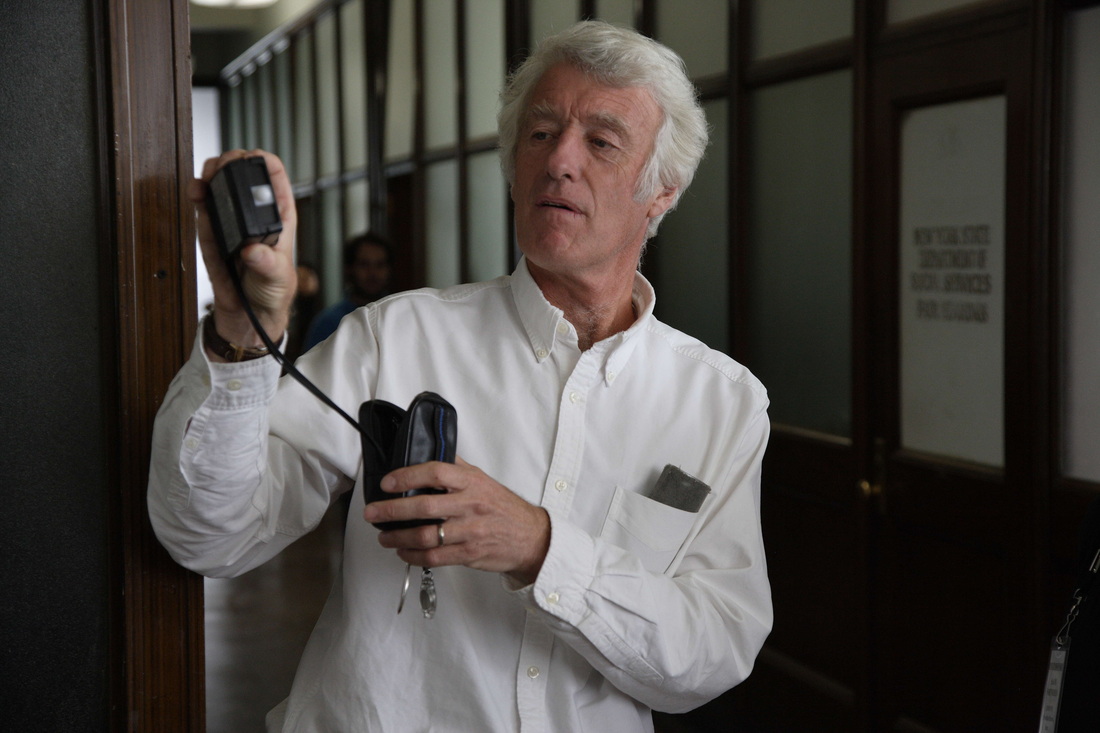
Roger Deakins; Master Cinematographer

3/15/2014

 
by Kyle Kull
Picture
Roger Deakins has been nominated an astounding eleven times for the Academy Award for Best Cinematography, (however has never won the award) and has been labeled as one of the premier cinematographers in the field today. Notable works include of his include:
  • The Shawshank Redemption (1994)
  • Fargo (1996)
  • O Brother, Where Art Thou? (2000)
  • No Country for Old Men (2007)
  • Skyfall (2012)
  • Prisoners (2013)
All of these films were nominated for Best Cinematography, and rightly so. Roger Deakins has easily become one of the most recognizable cinematographers on the market, and we will look at some of the beautiful shots he created, as well as his background and the journey he took to become one of the elites in his field.
Picture
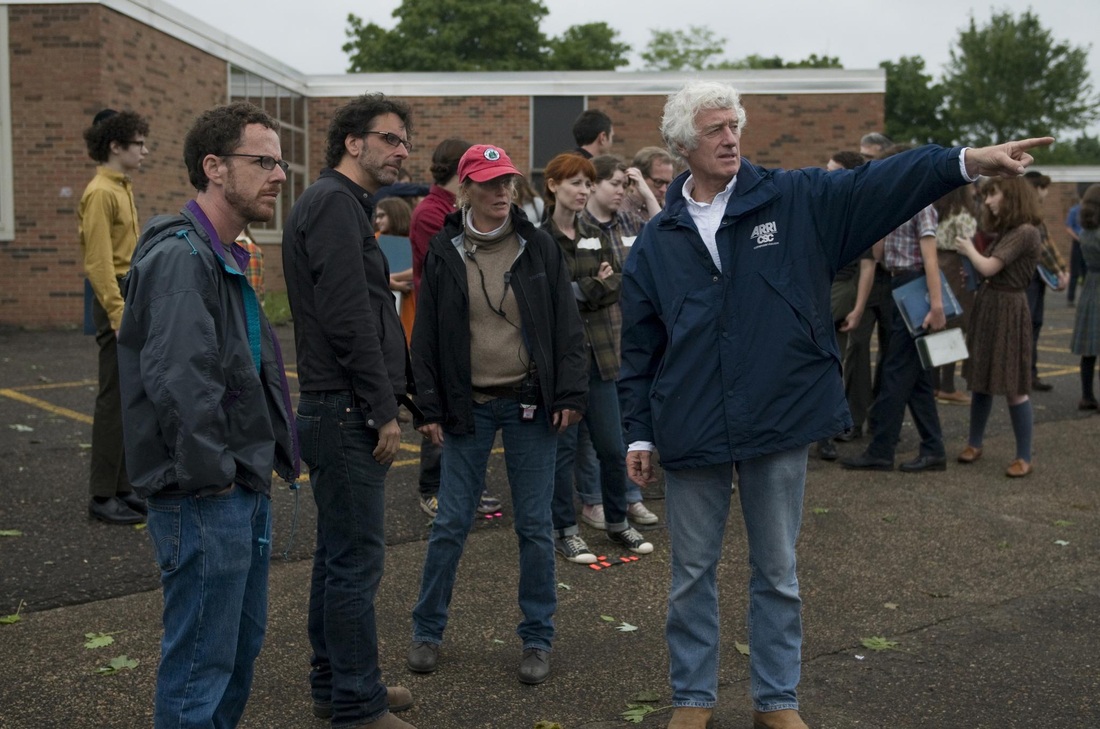
Deakins with Directors Joel and Ethan Coen
Deakins grew up as an Englishman, and discovered a passion for photography from an early age. Because this passion was accompanied with a talent for the art, he quickly created documentaries which were praised for their beautiful and powerful images, even though the was not well known in the genre. He specifically worked in Africa on films such as Zimbabwe and Eritrea, both of which were created and directed by Deakins. Before heading to the narrative filmmaking scene in the early 1990's, he also created a few music videos as a transition. 

Deakins first true work as a cinematographer was for the film Mountains of the Moon (1990), which also focused on Africa. However, the move that truly made a name for Roger Deakins as a professional artist was his collaboration with the critically acclaimed directors The Coen Brothers, starting with the film Barton Fink (1991). The Coen Brothers had seen a few of Deakins' films and were particularly impressed with the interior scenes in the film Stormy Monday (1988). They sent Roger Deakins a script and asked him to the project. Deakins accepted the invitation immediately and the group began working together on the project. The collaboration worked so well, that Roger Deakins became the directors' first choice for the next two decades. 

Surprisingly, as many of The Coen Brothers' films have won numerous awards throughout the years, Deakins has yet to win an Oscar. However, Deakins has been awarded by the American Society of Cinematographers for three of his films. Beginning with The Shawshank Redemption in 1994, Deakins also won for The Man Who Wasn't There in 2001 and the James Bond film Skyfall in 2012. He has since been invited to become a part of both the American Society of Cinematographers and the British Society of Cinematographers. Both of these groups are organized of cinematographers who have received distinguished credits in the field, and are considered of the ultimate status as a cinematographer. The American Society of Cinematographers has even given him the Lifetime Achievement Award in 2011 for his work.

Let's look at some of Roger Deakins' iconic shots that have been praised:
Picture
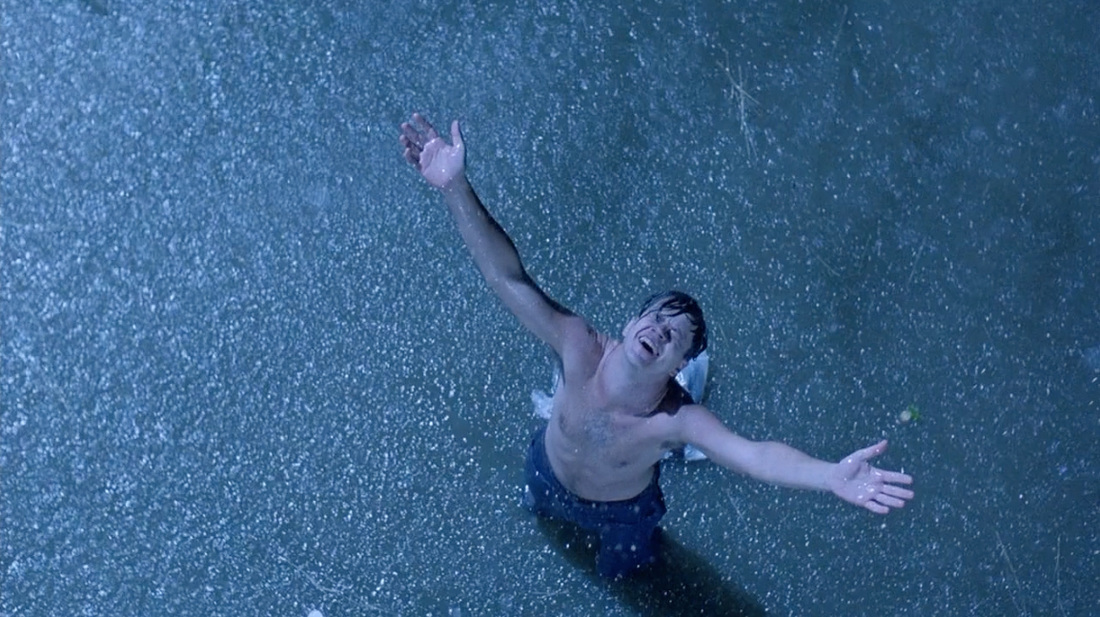
Here we see the most famous shot from The Shawshank Redemption, where the wrongly accused Andy Dufresne has finally escaped from prison. Supposedly the crew had been overbooked for the night shots, wanting to shoot a few sequences of Tim Robbins running from the prison. However, the filmmakers were running out of time, and Deakins suggested that they simply get a shot of the character putting his arms in the air for the final shot of the scene. Surprisingly, this shot became an icon for the film and stands out as one of the most inspiring and memorable shots in all of film. His victory is epitomized when he is finally given the liberty to wash himself in the cool rain unrestrained. Deakins showed his expertise in this beautiful shot and how he understood the film as a whole.
Fargo is a film which is not well known in non-cinephile groups, but is considered one of The Coen Brothers best films. The movie is focused on a woman detective in Minnesota investigating a string of murders during a harsh winter. The film opens during a blizzard with a car traveling down the road through the thick snow. This scene sets the tone for the whole movie. From here we see the clouded setting and how it reflects the clouded nature of the events taking place in the film. Take a look at the scene above to see the mastery that Roger Deakins displays in this opening scene.
One of the most difficult tasks in filming a scene occurs in daylight, when light is changing. This is what makes Deakins say that the gripping opening scene in No Country for Old Men was one of the most difficult scenes for him to shoot. Here we see a man who has just stumbled upon recently murdered men in the desert at dawn and is on the run from the killers. Given that the scene was at sunrise, Deakins had a difficult time being consistent with the lighting. He shot over a period of days during the two magic hours of the days (sunrise and sunset), trying to convince the audience that the scene happened all over the course of a single morning. Although it may be hidden from us as the viewers, Deakins says that he can notice which shots were filmed at night and which were filmed in the morning, being slightly unsatisfied with the scene. Nevertheless, Deakins was able to provide audiences with a dark and gripping opening scene to a notable dark and gripping film. Check out the scene above.

Deakins is gifted to say the least, and is someone who has influenced numerous modern cinematographers. Make sure you stay tuned to what this man is working on and go view his films; they are beautiful works of art.

Crowdfunding & Its Impact On Film

3/13/2014

 
Picture
by Mark Young

Today I would like to depart from my normal topics of awards, festivals, and trailers and talk about an amazing new phenomenon in the film industry: crowdfunding.  Crowd funding websites such as Kickstarter, IndieGoGo, and GoFundMe are sites where the users set up a profile, similar to Facebook, and ask people for money.  The users offer a variety of incentives to the would be donors.  These incentives are often based on ascending price points.  So again, the basic idea is people ask for money to fund their projects and, if they are fully funded and able to make their projects, they give the donors gifts.

This weekend we will see the opening of a movie called Veronica Mars.  Now this film is not the first to take a television show from the small screen to the big screen.  Nor is it the first time a movie was funded through Kickstarter.  However, this film is the first feature length project of this kind to get the big budget Hollywood treatment.  And this film has begun a cascade of celebrities looking to their fans for the funding of their pet projects.

Celebrities such as Zach Braff star of the hit series Scrubs, James Franco star of 127 hours, and Spike Lee Director of Inside Man, Malcolm X, and Do The Right Thing have all started their own crowdfunding campaigns.  And each has met and exceeded their multi-million dollar goals.  Now, some have questioned the necessity of these celebrities asking funding from fans and the unfairness in the amount of publicity they can self-generate via these funding campaigns.  After all aren’t celebrities already rich?  Can’t they fund their own projects?  And aren’t these sites supposed to be for people who can’t get their own money?

Personally I cannot vouch for or against the validity of any of these projects.  I do however know that within the Hollywood system dealing with studios can be frustrating, and money talks.  I believe that crowdfunding is offering a new way for movies to gain funding.  These films are not just the average films being produced by the hundreds in Hollywood.  With private citizens funding these projects these movies are sending a personal message about what people want to see.  These are truly movies of the people, by the people, and for the people.  These are movies of a new generation.


Behind-the-Scenes: Making of the Jaws Opening Scene

3/12/2014

 
Picture
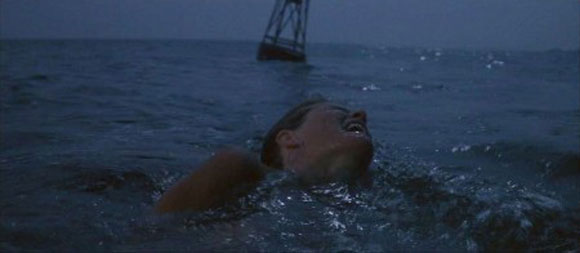
            One of the most famous and unforgettable opening scenes in the history of film is the start of Steven Spielberg’s Jaws. The film, credited as being the first ever “blockbuster” and responsible for launching the blockbuster genre that we know today, has an extremely memorable opening. In the scene, Chrissie Watkins (Susan Backlinie) leaves a beach party after dusk and goes for a swim. Alone (or so she thinks) in the water, she suddenly feels something pull at her from underneath. She is shaken violently from beneath and dragged side to side before eventually being pulled underwater, not to be seen again.

            The scene is certainly an attention getter for the audience, as we don’t see exactly what attacked Chrissie. One of the most interesting aspects (in my opinion) is how it was accomplished. So how exactly was it pulled off by Spielberg and his crew?

            In many of the shark attack scenes in the film, the original plan was for the audience to actually see the shark. However, due to the many mechanical problems with the robotic shark (named “Bruce”), Spielberg was forced to use the camera to simulate the point-of-view of the shark. This most likely ended up actually “saving” the film and helped it become such a success. In the opening scene, however, Spielberg had decided up front to not show the shark to the audience. He noted, “I thought that what could really be scary was not seeing the shark and just seeing the water; because we all are familiar with the water---very few of us have been in the water with a shark, but we’ve all gone swimming. And the idea of this girl going swimming and the audience going swimming with her would’ve been too extraordinary if, like a leviathan, the shark had come out of the water with its jaws agape and had come down on her…it would’ve been a spectacular opening for the film. But there would’ve been nothing primal about it—it would just have been a ‘monster moment’ that we’ve all seen” (Making of Jaws). Ultimately, during the attack, Spielberg wanted the audience to imagine what was happening underneath, rather than showing it. This ended being a fantastic technique, as one’s imagination can really run wild and think of just about anything that is attacking the character.

Picture
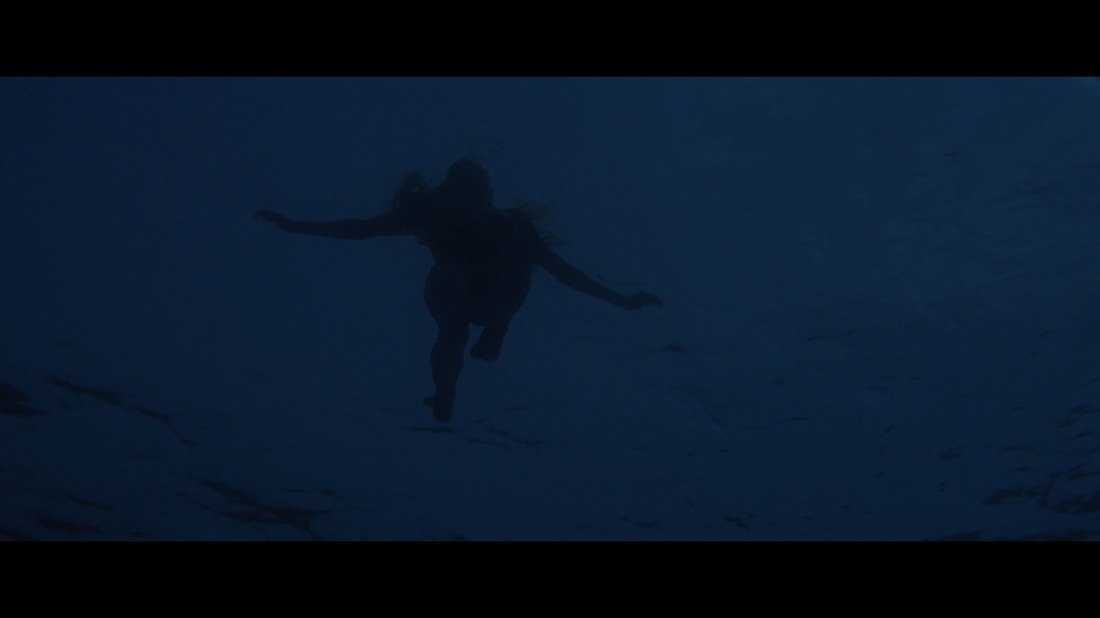
For the opening scene (and for most of the other shark attack scenes), Spielberg shot from the point-of-view of the shark, allowing the audience to fully share in the experience. 
In regard to exactly how the jerking motion was accomplished for the scene, Susan Backlinie (Chrissie) quoted, “The first jerk-down Steven [Spielberg] did. He had a cable that came to the front of my stomach and went to an anchor that was laying at the bottom of the ocean…and then he just sat and when he wanted that pulled he just would pull” (Making of Jaws).

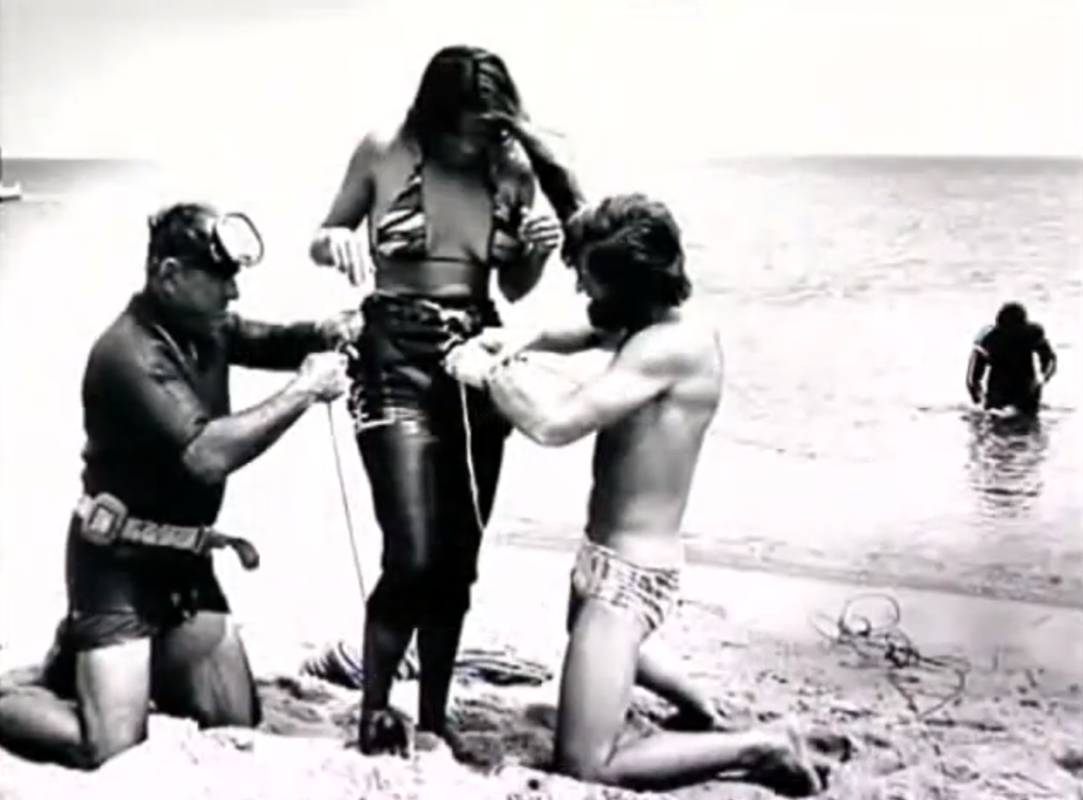
To accomplish the side-to-side “thrashing” from the shark, cables on either side were attached to Backlinie and run to two pilings. The cables were then run to the beach, where 5-6 men on each line would pull the cables by running back and forth to two different marks placed on the beach. To ensure Backlinie’s safety, she was outfitted with a special string that she could pull to release herself from the cables that were pulling her. 

Picture
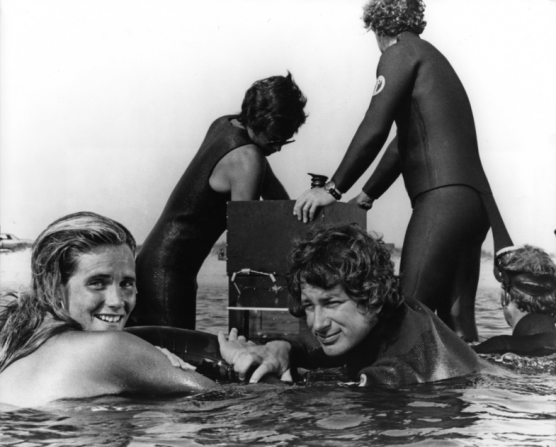
Actress Susan Backlinie (left) and director Steven Spielberg (right) during production of the opening scene.
Picture
Backlinie being outfitted with the cables for the opening shark attack scene in Jaws.
One other minor detail of note in the making of the scene was Chrissie’s gurgling sound during the attack. To accomplish this drowning sound effect, Backlinie was positioned, head upturned, in front of a microphone, where water from above was poured down her throat (IMDB).

Written by Anthony Watkins

WORKS CITED
Jaws. Screenplay by Peter Benchley and Carl Gottlieb. Dir. Steven Spielberg. Prod. David Brown and Richard B. Zanuck. 1975. Special Edition Blu-Ray. Universal Pictures, 1975.

IMDB. 2014. 01 March. 2014. <http://www.imdb.com>.


Below you will find the opening scene of Jaws.

The Documentary Genre: Recording Reality

3/11/2014

 
Picture
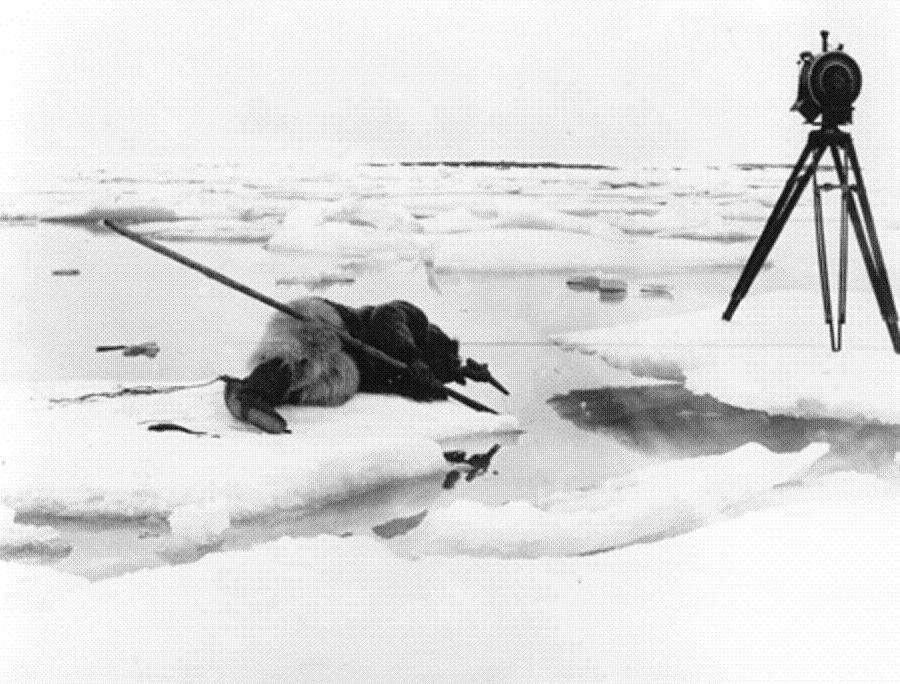
Image from Nanook of the North (Flaherty, 1922)
by Michael Hoffman
            Generally speaking, documentaries are nonfictional films that attempt to portray some aspect of reality, largely for the purposes of instruction or persuasion. With this definition in mind, just like the comedy genre, the documentary genre’s roots can be seen extending back to the establishment of film as a viable storytelling medium, since the earliest films were single-shot moments of ordinary events. However, given the shorter nature of these early films, various commentators have found it more appropriate to label them as precursors to the documentary genre, so often these films are referred to as “actuality” films (“Documentary Film History”). Typically, the film that is often credited as the first true documentary piece is Robert Flaherty’s Nanook of the North (1922). With this film, Flaherty embraced the notion of creatively interpreting reality by staging certain scenes in a manner that adequately conveyed his message.

            Given the effectiveness of the documentary genre to persuade its viewers through the presentation of “reality,” documentaries were heavily exploited for propagandist means around the dawn of World War II (and have been used for propaganda in many wars since then). Some of the more notorious propaganda documentaries of the time included Leni Riefenstahl’s Triumph of the Will (1935) and Frank Capra’s Why We Fight series (1942-45). However, with the 1950s and 1960s, documentaries began to embrace the styles of “cinema truth” and direct cinema, which were movements that aimed to present social and political issues in a direct, unmediated way. In essence, these movements came about as a reaction against studio-based film production constraints, and preferred to shot on location with smaller crews and handheld cameras (“Documentary Film History”). Moreover, both styles opted for longer camera takes on people to capture more personal reactions, and shied away from any form of sit-down interview. Basically, the belief was that through the capturing of an enormous amount of undirected and natural footage, editors could sculpt the material into a truly authentic story. Nevertheless, as the previous sentence indicates, films that sought to embrace this movement typically gave off a false notion of reality, since the filmmaker was still in full control during the editing process.

            Since the heyday of “cinema truth” and direct cinema, the documentary has continued to evolve and experience tremendous success. With landmark films like The Thin Blue Line (Morris, 1988), which incorporated highly stylized re-enactments of key moments in the story, and Roger and Me (Moore, 1989), which placed far more interpretive control in the hands of the director, the documentary genre demonstrated its potential for flexibility and innovation. In addition, since documentaries typically have far lower budgets than dramatic narrative films, they tend to be rather attractive to film companies who know that documentaries can be highly profitable even as a limited theatrical release due to the genre’s relative popularity. Moreover, since documentaries tend to have lower budgets and digital cameras have become more affordable, the genre offers a very feasible route for new filmmakers to pursue. In summation, while the documentary genre has been around since the dawn of film, its continued evolution and potential for growth makes it a very exciting genre for the future of filmmaking.

Works Cited

"Documentary Film History." Documentary Archive. <http://documentaryarchive.com/documentary_history.html>.

The Wind Rises; A Masterpiece

3/10/2014

 
by Kyle Kull
Picture
Hayao Miyazaki is known as one of the greatest animators of all time, creating award winning films such as Spirited Away (2001) and Howl’s Moving Castle (2004). Miyazaki recently announced his most recent film, The Wind Rises, will be his last, saying that his time as a brilliant filmmaker and animator has come to an end. Although he has spoken multiple times of his retiring, only to return to the film industry, it was evident in seeing The Wind Rises that Miyazaki has used this film as a final thesis on his career and the themes he has built throughout the course of his films.

Hayao Miyazaki was inspired to create the story when he read, “All I wanted to do was make something beautiful” from Jiro Horikoshi, the main protagonist of The Wind Rises, a real engineer who inspired the story. He plays with this theme of beauty and love from beginning until end, showing the brilliant and caring mind of Jiro and his unrelenting passion for building airplanes. Along with this passion that the engineer has for his work, Miyazaki introduces a love interest during the course of the film, and parallels the two. By showing the comparison between Jiro’s love for Naoko and his love for aircraft, Hiyazaki shows his finesse for providing the audience with carefully crafted themes and subtle messages.
Picture
Along with love, we often see a theme of destruction throughout The Wind Rises, and the difficulty that Jiro has when confronting the reality of death and destruction. This is seen in the beginning when Jiro shares a dream with the Italian Aeronautical engineer named Caproni. Caproni tells Jiro that he creates aircraft understanding that they are primarily going to be used for the purpose of war; however his dream is that he can create vessels which will instead carry passengers safely over long distances. Jiro understands from the beginning of the film that he is going to have to accept the idea that in order to create airplanes like he dreams, he is going to need to create machines that will be used to destroy. Destruction is also seen accompanied with love, when Jiro’s train is stopped by the Great Kanto Earthquake in 1923, and massive fires spread throughout the country. Jiro helps a girl (which later turns out to be Naoko) and her maid get back to their home through the panicking crowds.  We see Jiro’s most important relationship being built in the midst of massive destruction throughout the Tokyo region. This theme continues in the film, showing Jiro visiting pre-World War II Germany to look at their future aeronautical war machines and having to accept the truth that his fiancée is slowly dying of tuberculosis. Take a look at the earthquake scene below.
There has been quite a bit of controversy after Miyazaki released The Wind Rises, particularly in the underlying message which Hayao conveyed in the film. People have postulated that because of the wealth of destruction and death present in the film and how contrasted the character of Jiro was to these themes, that Hayao was actively trying to promote a pacifist message. However, I believe that Hayao was making a different claim about the nature of destruction, which is particularly visible when looking at the love between Jiro and Naoko. Although Jiro understood that Naoko was going to die soon, he accepted this pain and decided to marry her anyways. Likewise, although Caproni explained to Jiro in his dream as a child that people were going to use Jiro’s airplanes to destroy and go to war, he accepted this, and instead focused his work on doing what he loved: designing airplanes. Therefore, Miyazaki was not conveying a clear-cut message of peace and passivity, but rather that we need to understand that evil and suffering is eventually going to distort the things we love, and therefore it is important to devote focus solely to indulging in our passions and true loves in life. 

It is this particular message that is what proves The Wind Rises to be a final thesis of the great animator Hayao Miyazaki. While we see the unrelenting passion and desire that Jiro has for creating these majestic airplanes, we can’t help but think of the filmmaker and animator in his own design. Miyazaki shows us that he understands the negative impacts his creations could potentially create; however he has chosen to overlook these possibilities and instead focus on his passion in filmmaking. When you understand this, you see the film in an even more beautiful way, understanding the depth, hard work and love which Miyazaki has for creating the images which you see of the screen. It is this connection that makes me believe that The Wind Rises is Hayao Miyazaki’s best film to date, solely because it helps you understand him as a filmmaker and then look back to his previous features with a respect for his passion in making each film.

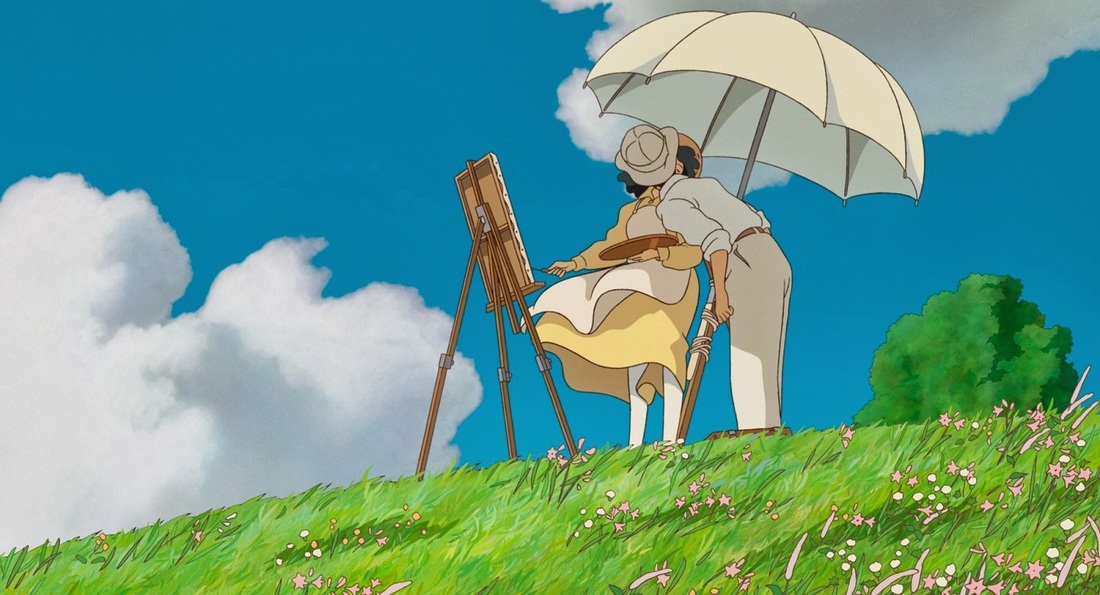
On top of all this development of theme, it’s hard not to marvel at the honest beauty of some of scenery that is shown in The Wind Rises. Take a look at some of these shots below:
Picture
Picture
Picture
Picture
Like always, it’s hard not to be awed by Hayao Miyazaki’s animations.

In conclusion, try to go see this film in the theater before it’s too late. You may never get a chance to go see a film with as much beauty again. Hayao Miyazaki presents you with a film that offers the same breathtaking shots he always provides, but this time with a level of maturity and development that truly asks for you to think about themes such as love and destruction. Whether or not Miyazaki creates another film, his legacy is definitely complete with The Wind Rises.

Production Profile: 12 Years a Slave

3/7/2014

 
by Kyle Kull
Picture
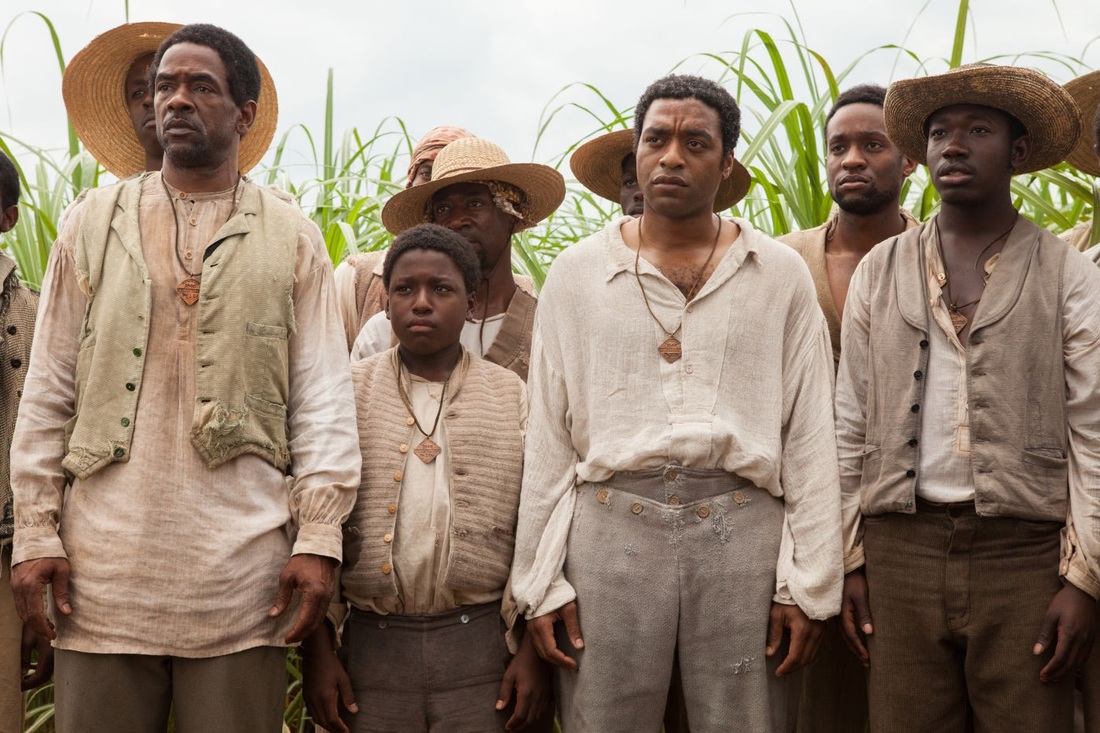
Due to its recent Academy Award Best Picture win, I thought it would be smart to talk about how the Best Picture film was created. Let’s dive in to the production of 12 Years a Slave (Steve McQueen, 2013).
Picture
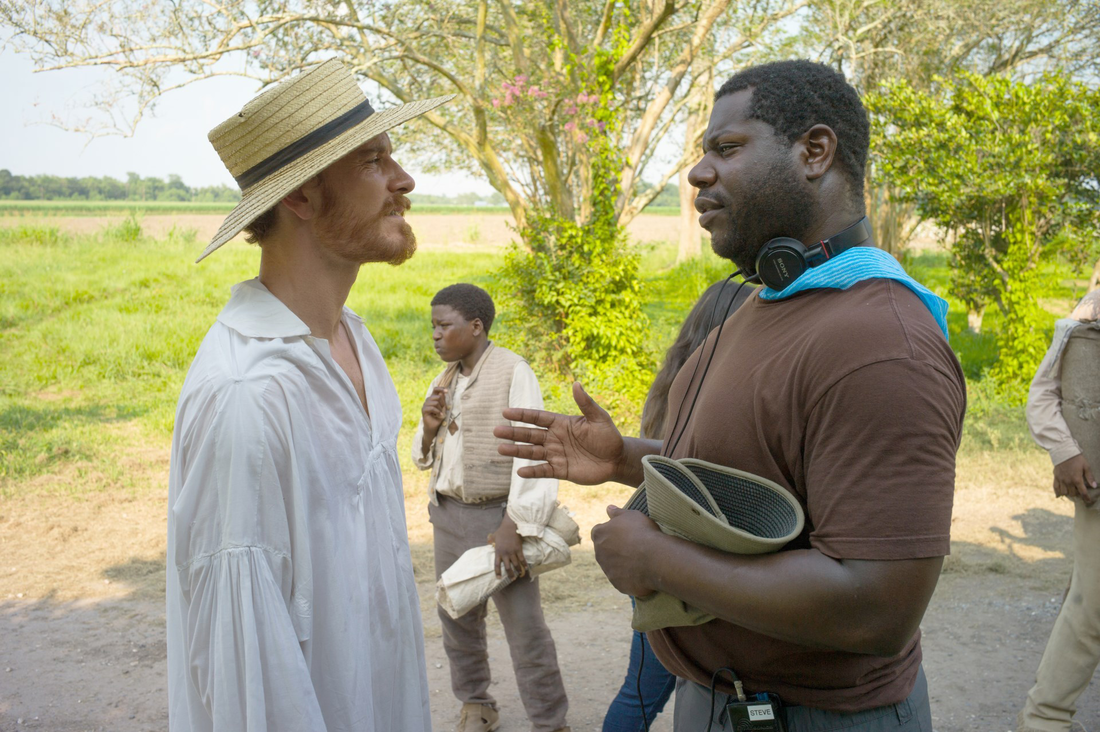
Steve McQueen giving pointers to Michael Fassbender on set.
Filming began in June of 2012, and concluded on August 13, 2012, spending most of the summer for production. An interesting fact about the filming is that the producers and directors chose to film in Louisiana, around the same area where Solomon Northup (the protagonist of the film) was enslaved. While they chose the Red River country in the northern area of Louisiana specifically for this reason, they decided not to venture far from the area merely because of a low production budget.  However, they were able to find some stellar locations for the plantations in the film. This included the Magnolia plantation in Natchitoches, Louisiana, which is only a few miles from the town in which the actual Solomon Northup was held. So when you are watching this film, you are honestly getting an almost perfect portrait of the life that Solomon lived when he was a slave.
Picture
The Magnolia plantation which was used as a location for filming.
The Cinematographer for 12 Years a Slave was Sean Bobbitt, who had previously worked on films such as Oldboy (Spike Lee, 2012) and Hunger (2008), in which he had worked with director Steve McQueen. As is typical with most directors, they will usually choose cinematographers who they have already worked with and trust, hence the employment of Bobbitt. Bobbitt was also the primary camera operator, showing that the film crew was minimalist and compact. 

Sean Bobbitt decided to film 12 Years a Slave using the Arricam LT and ST, which are some of the newest 35mm film cameras produced by Arri. Although digital filmmaking has become overwhelmingly popular in the recent film industry, Bobbitt decided to use 35mm film instead, saying that, “for a period piece, film gives the audience a definite sense of period and quality." McQueen and Bobbitt also selected to film in widescreen, in order to provide the audience with a sense of the story’s epic nature. 

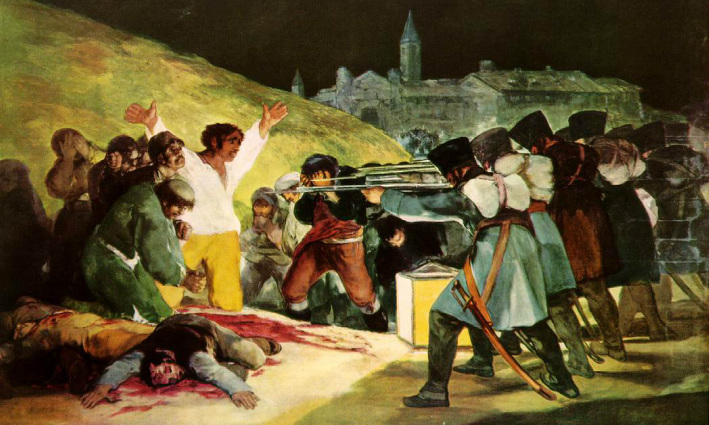
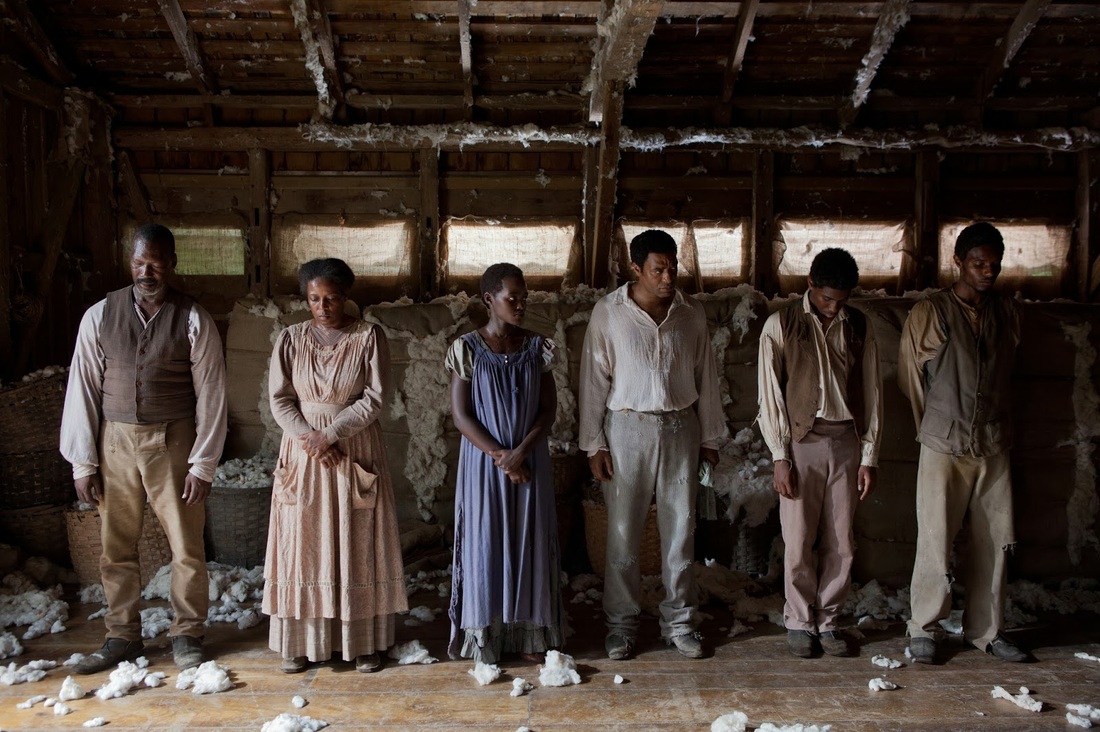
Another interesting comparison that McQueen wanted to make with 12 Years a Slave was the direct visual comparison to the Spanish painter Francisco Goya. 
Picture
A painting by Francisco Goya.
Picture
Along with all of this intuitive camera work and stylizing, the production design was rather extensive. The filmmakers studied the artwork of the era, as well as the garments and clothing worn by each social class during the time in that area of Louisiana. By doing this, the filmmakers were trying to be as accurate as possible in portraying the environment in which Solomon Northup was enslaved. 

Production of this film was taken with tremendous seriousness, and shows the research and development that is required in order to win the Academy Award for Best Picture. It also is a sign of the dedication Steve McQueen and his fellow filmmakers had for their story and project.

Academy Awards: A Follow-Up & Look Forward.

3/6/2014

 
Picture
by Mark Young
The Oscars aired Sunday Night and what a great show it was.  Ellen was her ever charming self and carried hosting duties with dignity and a refined wit that brings hearty laughs to even the most cynical person.

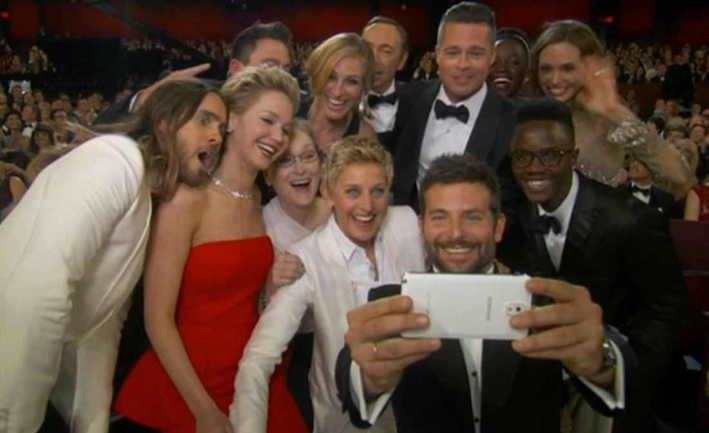
Ellen created quite the social media surge with her celebrity filled selfie.  This photo is still being talked about days after the show and continues to shatter twitter records.  The picture garnered a whopping 2.7 million retweet(s at the writing of this article) and did temporarily crash the twitter servers.

In my opinion the biggest surprise of the evening was Matthew McConaughey’s Best Actor win.  That is not to say he didn’t give an outstanding performance in the Dallas Buyer’s Club.  He did.  However, with the social media campaigns pushing for a Leonardo Dicaprio win, and the other outstanding performances by actors such as Bruce Dern and Chiwetel Ejiofor I think the media coverage of his performance had fallen in the shadows.

Now that the Hollywood award season has come to a close we begin to look forward to next year.  There are some films that are already garnering Oscar buzz for next years show.  These predictions may be entirely premature but perhaps if we look out for them now we may have a chance of actually seeing the entirety of Oscar nominated pictures.

Unbroken, Angelina Jolie’s sophomore director credit is about an Olympic runner turned soldier and his experience in a WWII POW camp.

Interstellar, This film starring Matthew McConaughey as worm hole discovering scientist could gain Christopher Nolan his first Best Director nod from the Academy.

Exodus, A Biblical epic premiering late in the year, starring Christian Bale, and directed by Ridley Scott has Oscar written all over it and would be a justifiable acknowledgement of the many Bible based movies coming out this year.

The Grand Budapest Hotel has already premiered in much of Europe.  With an all-star cast and twice nominated writer/director Wes Anderson this movie has already legitimately generated Oscar buzz.

The Hobbit: There and Back Again, with the third and final installment of this journey to Middle-Earth the academy may finally make the effort to recognize this film series.

Keep an eye out for the films listed above.  Watch for technical quality, great performances, and new and unique ideas.  And remember to have fun at the cinema.

Behind-the-Scenes: Jurassic Park T-Rex Entrance Scene

3/5/2014

 
Picture
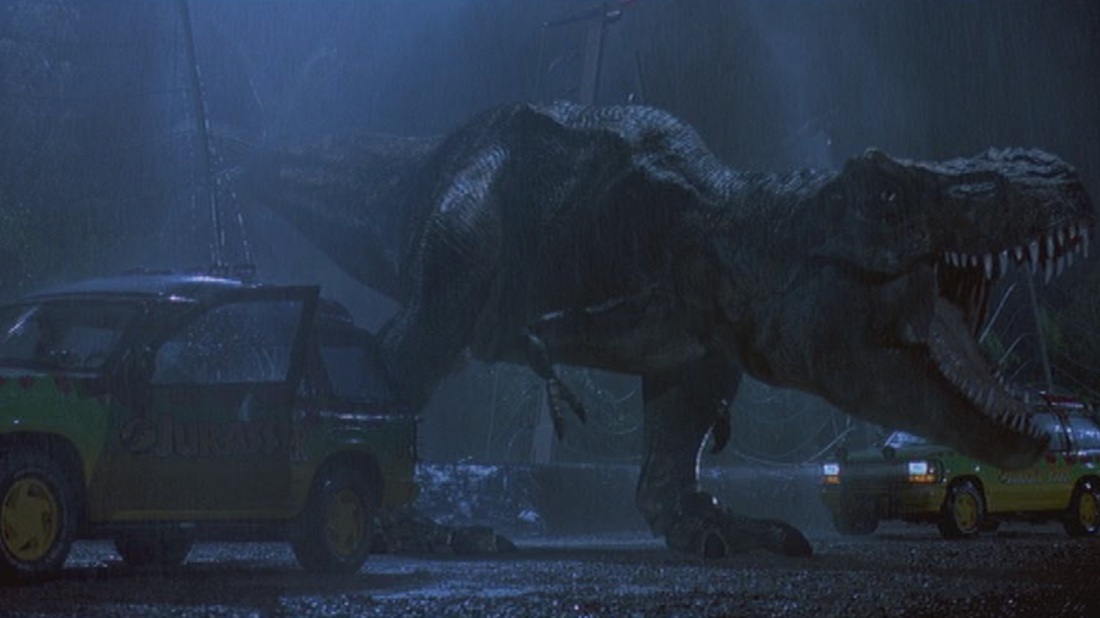
One of Steven Spielberg’s most well-known and celebrated films (yes there are many) is his 1993 science fiction film Jurassic Park. The film, which won 3 Oscars, is famous for its groundbreaking special effects that remarkably hold up very well today, over 20 years later.

One of the most pivotal scenes in the film occurs about halfway through. During a strong thunderstorm on the island, the park’s electricity goes out, cutting the power to the electric fences that contain the genetically-created dinosaurs. The tour cars, which are run by an electric track, are stopped at the most dangerous place on the tour---the T-Rex paddock.

As with all scenes that showed dinosaurs on screen, a lot of work went into the making of the scenes. This scene in particular, however, had some very interesting aspects to it. First of all, the scene was shot in a sound stage. Earlier in the film, the tour car passed the paddock with a no-show from the T-Rex. That scene was filmed on location on Kaua’i island, Hawaii. However, due to this scene taking place during a storm, the production crew needed to control the elements, and thus they re-created the T-Rex paddock and surrounding areas from Hawaii for the scene (Jurassic Park DVD).
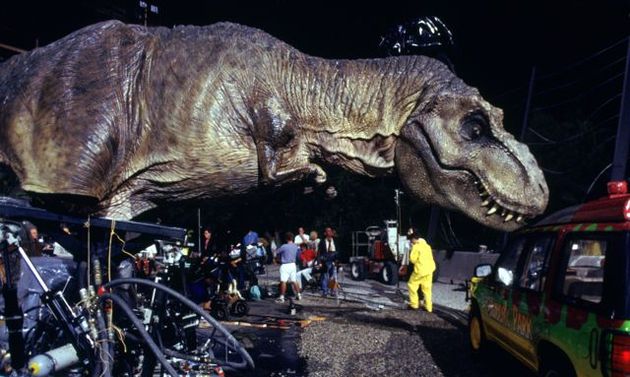
Ultimately, both live-action (animatronic) and computer generated versions of the T-Rex were used for the scene. Generally, the close-up shots used the animatronic T-Rex, while the full-view shots used CGI. One of the biggest problems the crew encountered during the scene was the effect the “rain” had on the animatronic T-Rex. The animatronic  T-Rex (weighing 9,000 pounds and 40 feet long) was robotic, and thereby electrically powered. When the animatronic became wet, it would start not functioning properly. The “skin” of the animatronic T-Rex would soak up the water, which would cause its weight to change. Furthermore, the T-Rex’s head would start to shake, forcing the crew to wipe the animatronic down with towels. This problem occurred several times as the T-Rex was constantly being rained on from the set (Jurassic Park DVD).

Picture
The animatronic T-Rex that was used for most of the scene. A CGI version was created for full-length shots.
One other issue that was initially seen as very small turned into a big puzzling problem. As the T-Rex approaches our main characters, we hear it before we see it. In particular, we see a cup of water start to form “rings” from the T-Rex’s approaching footsteps. Spielberg got the idea after listening to loud music in his car and seeing his rear-view mirror vibrate from the heavy bass. He quotes, “I was on my way to do storyboards for Jurassic Park and I never forgot what it looked like when the bass rhythm went off. I thought in the middle of storyboarding ‘hey wouldn’t it be cool if, when the T-Rex began to approach, the low-end vibration of all that tonnage hitting the ground was causing these little concentric circles.’” The crew thought the gag would be really simple to pull off. As it turned out, however, forming these “concentric circles” proved to be much more arduous than anticipated. Everyone on the production team was puzzled. Sound engineers, physics specialists, and wave tank generators were called in and used to try to achieve the circles, but to no avail. Finally, a solution was found. Michael Lantieri, who was part of the special effects team, quotes, “The night before the shot, I’m at home and I’m still playing around and I took a guitar that I had at home and set a glass of water on the guitar and plucked the string, and it vibrated and did it.” So in the end, the gag was achieved by feeding a guitar string from the cup through the tour car down to the ground, where a guy laying under the vehicle plucked the guitar string (Jurassic Park DVD).

Picture
The "concentric circles" or "rings" that formed in the cup of water from the T-Rex approaching. Ultimately, this was achieved by connecting the cup to a guitar string and plucking the string.
As you can see, a great deal of work went into making this famous scene. Using the animatronic T-Rex in the “rain” was easily the biggest challenge. However, even something as simple as forming rings in a cup of water turned out to be much more difficult than expected. Perhaps a lesson that can be taken from this scene is to not think of a task as simple until you actually do it.


Written by Anthony Watkins

BELOW you'll find the "T-Rex Breakout" scene from Jurassic Park. The clip starts with the cup of water vibrating from the T-Rex's footsteps.
WORKS CITED
Jurassic Park. Screenplay by Michael Crichton and David Koepp. Dir. Steven Spielberg. Special Edition DVD. Universal Pictures, 1993. 

The Comedy Genre: Film’s First Cinematic Movement

3/4/2014

 
Picture
Image from The Sprinkler Sprinkled (Lumiere, 1895)
by Michael Hoffman
            Ever since film established itself as a viable storytelling medium, one of its largest goals has been to entertain viewers through laughter. In fact, one of the Lumiere Brother’s first films was a comedy piece entitled The Sprinkler Sprinkled (or Watering the Gardener). Included in their first public screening in 1895, the film’s predicable subject matter featured a man with a garden hose who is tricked into being soaked by a young prankster (Dirks). Given the initial technological limitations of film, comedy quickly became an ideal genre for the early silent films, since it could successfully be conveyed through visual action and physical humor. This early form of comedy in cinema was entitled slapstick, and brought fame to three silent clowns – Charlie Chaplin, Buster Keaton, and Harold Lloyd.

            However, with the advent of sound, the popularity of slapstick comedy declined and the genre underwent a significant transformation. Instead of relying exclusively on physical mishap and acrobatic stunts, comedic humor of the 1930s focused much more on witty dialogue, which was most notably displayed in the zany humor of the Marx Brothers. Moreover, with the Marx Brothers, comedy developed into a satirical tool for mocking the establishment through situations that were often absurd and risqué (e.g. their 1933 film, Duck Soup, which functioned as a political, anti-war satire piece). Nevertheless, with Laurel & Hardy and the Three Stooges rising to fame during the 1930s, the slapstick subgenre still managed to demonstrate its comedic worth to talkies.

            The comedy genre continued to evolve throughout the course of the 1930s with the screwball comedy subgenre, which offered escapist entertainment for Depression-era audiences and was characterized by social satire that often took an anarchic tone or irreverent view of domestic or romantic conflicts. Frank Capra was the star director of this particular subgenre, and his film It Happened One Night (1934) provides a seminal example of the screwball comedy. German director Ernst Lubitsch also left his mark on comedy at the time by poking fun at the idle rich and embracing a sophisticated comedy style that was aptly named “The Lubitsch Touch (Dirks).” When the 1940s were ushered in, most comedy films embraced a more serious tone and focused on topics pertaining to politics, materialism, and the war, which were geared towards a more mature audience (e.g. Sturges’ satires The Lady Eve, released in 1940, and Sullivan’s Travel, released in 1941). With the 1950s, the comedy genre welcomed the comic duo of Dean Martin and Jerry Lewis (who starred in films such as 1955’s, You’re Never Too Young), but was largely characterized by an era of sanitized, formulaic, courtship romantic comedies, such as Pillow Talk (Gordon, 1959). This trend of comedies catering to a more mature audience continued throughout the 1960s, with Dr. Strangelove (Kubrick, 1964) using satire to address social change, and The Graduate (Nichols, 1967) acknowledging the sexual revolution.

            In the 1970s and 1980s, the comedy genre really embraced satirical humor and parody, allowing directors like Woody Allen and Mel Brooks to thrive. Around this time, the British comedy troupe, Monty Python, also established themselves as significant contributors to the genre, embracing an over-the-top approach to humor similar to that of the Marx Brothers. The 1980s additionally saw a flood of teen comedies that included Fast Times at Ridgemont High (Heckerling, 1982) and Sixteen Candles (Hughes, 1984). As for the 1990s, during this period of time, actors created larger-than-life characters that relied on exaggerated speaking, movement, and expression, similar to slapstick comedy from the silent era. Of all the comedic actors from the 1990s, Mike Myers, Jim Carrey, and Adam Sandler particularly dominated the genre and became household names.

            This ultimately led into the comedy genre’s latest trend of adopting a “no limits” approach to the bounds of propriety. Typically, comedy films from the 21st century are R-rated films that contain generous portions of profanity, sex, and debauchery. This inclusion of raunchier lines and content seems pretty alarming in regards to what society deems humorous, and really begs the question of whether or not the comedy genre can continue to be taken seriously. Although the comedy genre’s intended goal has always been to entertain viewers, the recently adopted gratuitous inclusion of shocking content makes me wonder how the comedy genre will continue to evolve (or devolve for that matter). Nevertheless, the history of the comedy genre remains a fascinating subject for discussion and given its longevity, should be recognized and appreciated as a significant aspect of film history.

Works Cited

Dirks, Tim, ed. "Comedy Films." Filmsite. <http://www.filmsite.org/comedyfilms.html>.

<<Previous
Forward>>

    Archives

    October 2024
    April 2024
    February 2024
    January 2024
    December 2023
    November 2023
    October 2023
    April 2023
    March 2023
    February 2023
    April 2022
    March 2022
    February 2022
    January 2022
    December 2021
    November 2021
    October 2021
    September 2021
    April 2021
    March 2021
    February 2021
    January 2021
    December 2020
    November 2020
    October 2020
    September 2020
    May 2020
    April 2020
    March 2020
    February 2020
    January 2020
    December 2019
    November 2019
    October 2019
    September 2019
    May 2019
    April 2019
    March 2019
    December 2018
    November 2018
    May 2018
    April 2018
    March 2018
    February 2018
    December 2017
    November 2017
    October 2017
    September 2017
    May 2017
    April 2017
    March 2017
    February 2017
    January 2017
    December 2016
    November 2016
    October 2016
    September 2016
    May 2016
    April 2016
    March 2016
    February 2016
    December 2015
    November 2015
    October 2015
    September 2015
    April 2015
    March 2015
    February 2015
    December 2014
    November 2014
    October 2014
    May 2014
    April 2014
    March 2014
    February 2014
    January 2014
    July 2013
    April 2013
    March 2013
    February 2013
    December 2012
    November 2012
    October 2012
    September 2012
    June 2012
    May 2012

Powered by Create your own unique website with customizable templates.